The Silence of Friends and the Decisive War for Baloch Survival
By Shahdad Baloch
In the end, the Baloch will remember the silence of their friends, if any remain—as genocidal policies of occupying states Iran and Pakistan continue to suffocate the nation.
Dr. Martin Luther King Jr. once warned, “In the end, we will remember not the words of our enemies, but the silence of our friends.” That warning now echoes across the fading corridors of humanity, vanishing brotherhood and weakening bonds between neighbours.
The Baloch are being pushed to a critical juncture: What next? As the movement approaches its defining moment, the Baloch people cling to their fundamental right to survive—despite global and regional powers responding with indifference, complicity, or silence.
This war for independence can still be fought through diplomatic means. The Baloch movement does not seek conquest; it demands the restoration of historical rights, stolen by the partition and oppression of both Iran and Pakistan. However, in the face of violent suppression and international apathy, armed resistance increasingly becomes the only language understood. Silence has now become a tool of oppression—wielded by the very nations that claim to uphold justice.
Ignoring the Baloch struggle for freedom will not stop it. But it will expose the hypocrisy and selective enforcement of international humanitarian laws. Many global powers, including the United States, align themselves with oppressive regimes—through trade or politics—under the guise of diplomacy and stability. Yet these alliances often backfire. Baloch guerrilla forces have successfully disrupted Pakistan’s logistical supply chains between Punjab and occupied Balochistan, transforming conventional warfare into effective asymmetric resistance.
These fighters have outmanoeuvred the Pakistan Army, which has resorted to brutal “kill-and-dump” operations—a last resort for a crumbling, nuclear-armed colonial state. Balochistan is rapidly becoming a graveyard for Pakistan’s occupying forces. While Pakistan boasts of victories against India, it is being hollowed out by the very resistance it underestimated. In desperation, its army chief makes empty threats like, “Even ten generations of Baloch cannot gain independence.”
This is not just a challenge to Baloch leader and strategist Hyrbyair Marri—it is an affront to the dignity and will of the Baloch nation. The real question is: does the Punjabi-dominated army possess the courage to face the unbroken spirit of a new generation of Baloch guerrillas? The answer will not come from propaganda but from the resilience of a people long ignored by a world that refuses to see the brilliance of their strategy, sacrifice, and sovereignty.
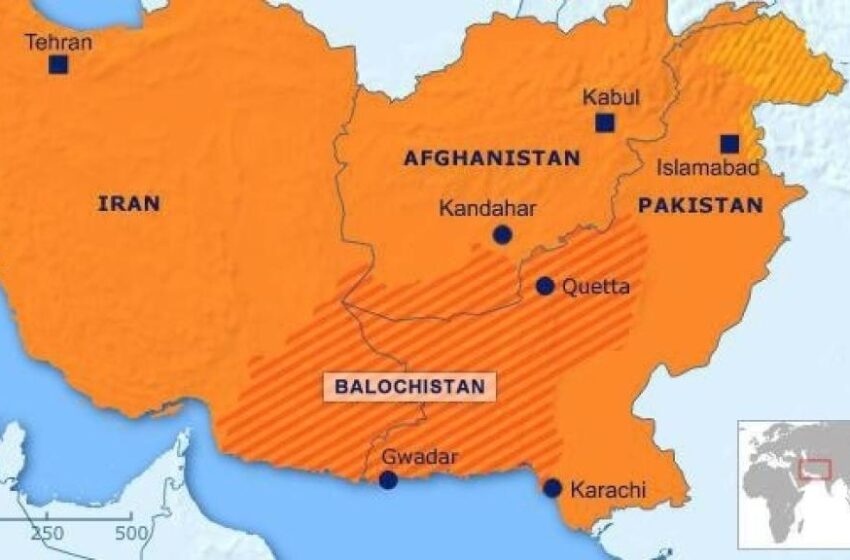
From the Goldsmith Line to the Durand Line, the enemies of Balochistan are stunned by the tactical intelligence and endurance of its leaders and fighters. What Iran and Pakistan truly fear is not just the Baloch Liberation Army (BLA), but what it represents: hope, resistance, and cultural pride.
A well-considered military and diplomatic coalition, grounded in regional awareness and foresight, could ensure peace—not only for Balochistan but for all who value justice and the fair distribution of natural wealth. This vision is enshrined in the Balochistan Liberation Charter (BLC). Despite limited resources, the Baloch movement remains ideologically united—a rare example of integrity in an era of fragmented struggles.
The world must acknowledge that wisdom cannot be applied indiscriminately. One cannot discuss the ocean with a frog, nor snow with a mosquito. Context, history and survival are not seasonal phenomena—they are foundational truths.
If global indifference persists, the Baloch future will not be built on dreams, but on struggle—as both conquest and endurance. The Baloch are not idealists; they are realists. And when it comes to their land, the answer is simple: “He who holds a true opinion without understanding is like a blind man on the right path.”
Today, Baloch mothers, daughters, and sons face imprisonment and execution. The guerrillas must take full responsibility—not only to defend militarily, but to protect civilians from abductions and killings. The road to liberation requires both urgency and dignity, especially in a world where sovereignty is manipulated, international laws are selectively enforced because of vested interests, and the voices of the oppressed are drowned by the well-funded lies of tyrants.
Balochistan calls upon its sons to protect the innocent, punish the oppressor, and uphold ancient honour with wisdom. Victory will come not only through force, but by targeting and disrupting the informal economic lifelines of the enemy—cutting trade links, collapsing exploitative partnerships, and decisively confronting all those who profit from Balochistan’s suffering.
Only then will freedom, justice, and equality be possible.
Disclaimer: The views and opinions expressed in this article are solely those of the author and do not necessarily reflect the official policy or position of Baloch Warna News. The publication provides a platform for diverse perspectives.