Balochistan: Two Baloch Activists Killed in Pakistani Forces’ Attack in Dalbandin
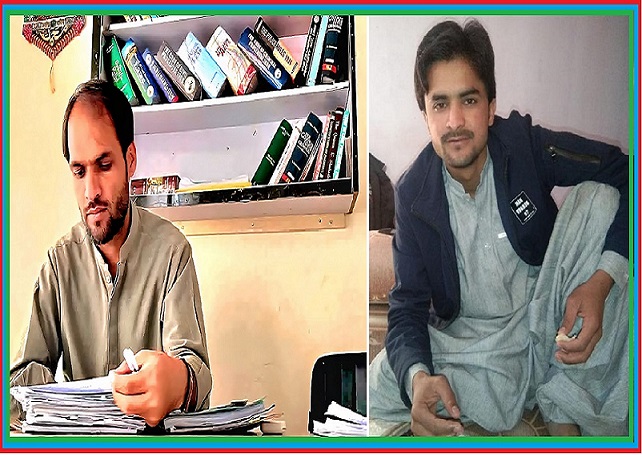
SHAAL (QUETTA), In an early morning offensive on Wednesday, Pakistani military forces stormed a house in Dalbandin, a town in Balochistan’s Chagai district, killing two individuals, including prominent Baloch political activist, lawyer and former student leader, Zubair Baloch.
Authorities claimed the offensive attack was carried out based on “intelligence information.” According to official statements, Zubair Baloch and his associate Nasir were killed in what the military described as a “gun battle” after they allegedly opened fire on the raiding forces. Another associate, Jehanzeb, was reportedly arrested during the raid.
However, the official narrative has drawn sharp criticism and rejection from Baloch political and human rights groups, who claim the incident was an extrajudicial killing disguised as a staged encounter.
The so-called Chief Minister of Balochistan, Sarfaraz Bugti, widely regarded by Baloch activists as a proxy of the Pakistani military, claimed that Zubair Baloch shot himself during the clash to avoid capture.
Zubair Baloch, a former chairman of the Baloch Students Organisation (Pajjar) and a practicing lawyer, was known for his outspoken activism against state violence in Balochistan. He had repeatedly accused powerful figures, including Sarfaraz Bugti, former caretaker Prime Minister Anwar Kakar, and army-backed militia leaders, of orchestrating a policy of Baloch genocide through enforced disappearances, extrajudicial killings and intimidation.
In political circles across Balochistan, Zubair was considered a bold and unyielding voice who fearlessly advocated for the rights of the Baloch people, especially in the face of Pakistan’s growing militarisation of Balochistan.
The Baloch Yakjehti Committee (BYC), a prominent Human rights group advocating for Baloch rights, condemned the killing as an “extrajudicial execution” and part of a broader state policy of suppressing dissent in Balochistan.
In a strongly worded statement, the BYC’s central spokesperson said:
“The killing of Chairman Zubair Baloch by state forces is a continuation of the policy of Baloch genocide and represents the peak of state oppression and brutality against political activists. This tragic incident has once again made it clear that the state prefers to silence political voices through bullets rather than dialogue.”
The spokesperson accused the state of turning Balochistan into a “slaughterhouse,” citing a pattern of enforced disappearances, torture, staged encounters and harassment of activists. The statement noted that in the past week alone, four individuals were killed in fake encounters, and three mutilated bodies of previously disappeared persons were recovered.
“Zubair Baloch was not just a political activist. He was a lawyer, a human rights defender, and a fearless voice against tyranny,” the statement added. “His murder is a loss for the entire Baloch nation.”
The BYC urged the Baloch population not to remain silent, warning that silence in the face of systematic oppression amounts to “collective death.” The group stressed that only public resistance can put an end to the deepening cycle of violence and repression in Balochistan.
“History shows that such atrocities have never been able to silence the voice of the people, and they never will,” the BYC stated. “The only way to end state repression is through unified public resistance.”
Balochistan has long been a centre of insurgency and political unrest, with pro-freedom groups saying that Pakistani state was plundering the region’s vast natural resources while denying the local population basic rights. Over the past two decades, numerous human rights organisations have documented widespread abuses including enforced disappearances, torture, collective punishment, and extrajudicial killings, particularly targeting students, intellectuals, journalists, lawyers and political workers.