
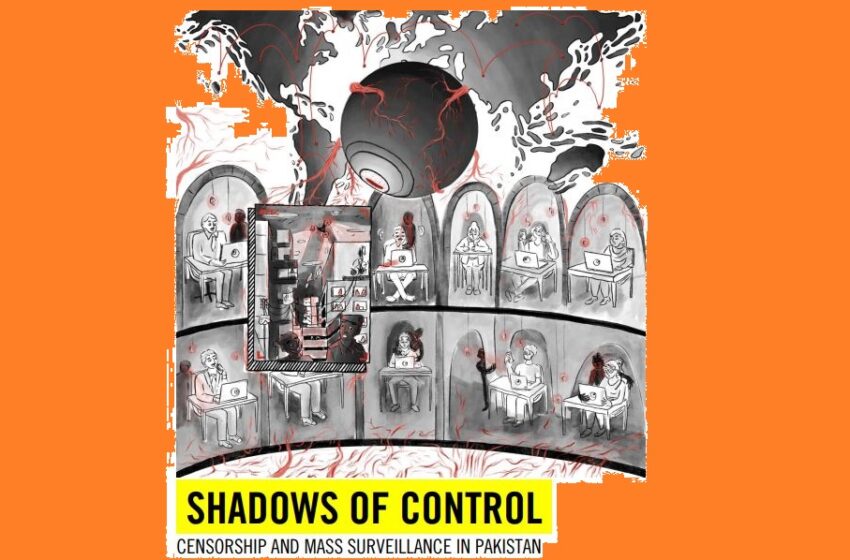
Photo Credit: Amnesty International
Pakistan Using Chinese Firewall, Phone Tapping System to Monitor Millions of its citizens: Amnesty
BW News Web Desk: Pakistan is operating a mass surveillance system that monitors millions of its citizens using advanced phone tapping technology and a Chinese-developed internet firewall, according to a new report released by Amnesty International.
The report reveals that Pakistan’s surveillance capabilities have grown to become one of the most expansive in the world, second only to China. The systems in place allow the government to intercept phone calls, monitor text messages, and censor online activity on a massive scale.
At the center of this surveillance network are two key systems: the Lawful Intercept Management System (LIMS) and Web Monitoring System 2.0 (WMS 2.0). LIMS enables intelligence agencies to monitor at least 4 million mobile phones simultaneously, while WMS 2.0—a Chinese-designed firewall—can block up to 2 million internet sessions at any given time. Together, these tools give state agencies direct access to private communications and online behaviour.
Amnesty’s technologist Jurre van Berge told Reuters that the actual number of monitored phones may be much higher than reported. He noted that all four of Pakistan’s major mobile operators were compelled to integrate the LIMS system into their infrastructure.
The findings are partially based on court documents from a case heard in the Islamabad High Court in 2024. The case was prompted by the leak of a private audio recording involving former Prime Minister Imran Khan’s wife, Bushra Bibi.
During the court proceedings, the Ministry of Defence and intelligence agencies denied possessing phone tapping capabilities. However, the Pakistan Telecommunication Authority admitted under questioning that telecom companies had already been ordered to install LIMS, allowing certain agencies to access communications.
Amnesty’s report also highlights the widespread censorship being enforced through WMS 2.0. An estimated 650,000 web links are currently blocked in Pakistan. Platforms like YouTube, Facebook, and X (formerly Twitter) have also faced frequent restrictions. These censorship efforts have been particularly aggressive in regions like Balochistan, where internet blackouts and platform bans are commonly used to limit dissent.
Despite repeated inquiries, the Ministry of Interior, the Ministry of Technology, and the telecom regulator did not respond to questions from Amnesty International or international news agency Reuters.
Amnesty confirmed that none of its official correspondence with the authorities received a response.
The report notes that the technologies enabling this surveillance network are supplied by companies based in China, Europe, the United Arab Emirates, and North America.
Amnesty warned that global corporations are fuelling a growing surveillance economy, providing tools to governments that use them to violate human rights and suppress freedom of expression.
Amnesty International has called on both governments and companies involved to take responsibility and end the supply of surveillance technologies to countries where they are used for repression.