Balochistan: 24 Years of Disappearance, Son Appeals For Father’s Release
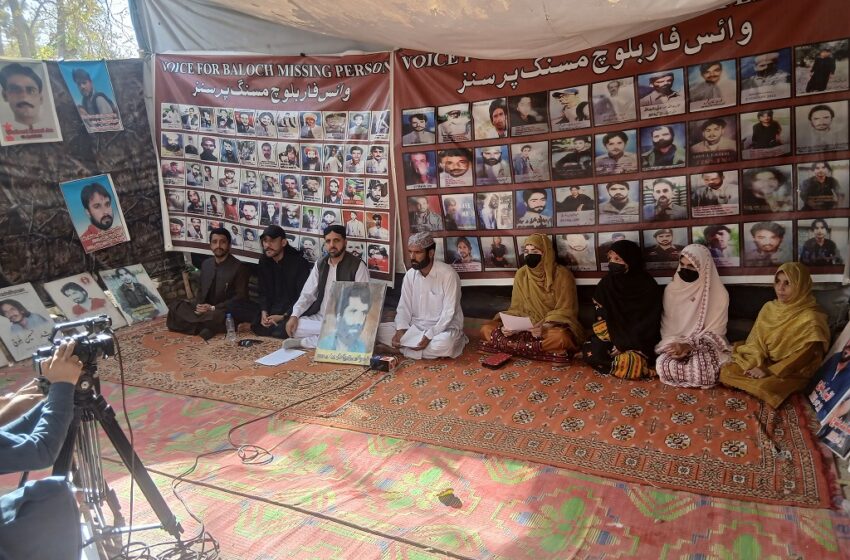
SHAAL (QUETTA): Ghulam Farooq Bangulzai, the son of long-missing Baloch political activist Ali Asghar Bangulzai, held a press conference in Quetta today, marking 24 years since his father was forcibly disappeared by Pakistan state forces. Farooq issued an emotional appeal to the government and state institutions, urging them to end the prolonged suffering of his family and ensure justice.
Ali Asghar was first abducted in June 2000 by personnel of state agencies from Shahwani Road, Quetta. He was released after 14 days. A second and more lasting disappearance occurred on October 18, 2001, when he was abducted along with Mohammad Iqbal from outside Degree College Quetta. While Iqbal was released after 24 days, Ali Asghar has never returned. “Today marks 24 painful years since that day,” said Farooq.
During the press conference, Farooq described how his family has endured two and a half decades of uncertainty, trauma and hardship. “We have knocked on every door—courts, commissions and governments. Yet we have received no justice,” he said. “Despite our peaceful and constitutional struggle, no institution has fulfilled its responsibility to provide justice under the law.”
He explained that the long absence of their father has left the family psychologically and financially devastated. “Our mental health has deteriorated. We were unable to complete our education. Our lives have been frozen in place.”
Farooq also highlighted the broader human tragedy of enforced disappearances in Balochistan, calling it a serious violation of national and international law and a direct attack on the fundamental rights of citizens. “This is not just our pain, this is a human crisis. Taking living people outside the law and denying their families any information is inhumane and unjust,” he said.
He criticised successive Pakistani governments for failing to take meaningful action. “Every government has acknowledged enforced disappearances. Promises were made, ordinances were passed in assemblies—but even after two decades, no practical steps have been taken. Instead, legal frameworks have been introduced that protect those who carry out such actions, making the problem even more complicated,” he stated.
Farooq emphasised that if Pakistan is to be considered a democratic state, it must uphold human rights. “These disappearances damage the public’s trust in the justice system and raise serious questions about state institutions.”
Calling on the judiciary and parliament, he said, “It is your constitutional and moral responsibility to take practical steps to permanently end enforced disappearances and ensure the safe return of all missing persons. There must be comprehensive legislation that aligns with human values.”
He concluded with a direct appeal to state authorities: “If my father is alive, bring him back to us. If he is not, at least let us know the truth so we can end this 24-year-long agony. We demand the immediate end of enforced disappearances and the recovery of all missing persons.”
Farooq reiterated that the issue of missing persons is not only about the Baloch people but about justice, human dignity and the credibility of a civilised society. “Silence in the face of such injustice is not just harmful to the victims, but poisonous to all of humanity.”