Balochistan: Pakistan Offers Strategic Port Access to U.S. Amid Growing Foreign Footprint
BW News Web Desk: Pakistan has reportedly offered the United States the opportunity to develop and manage a new deep-sea port in Pasni, a coastal town in southern Balochistan, in what analysts are calling a geopolitical manoeuvre that risks turning the already restive region into a battleground for global powers.
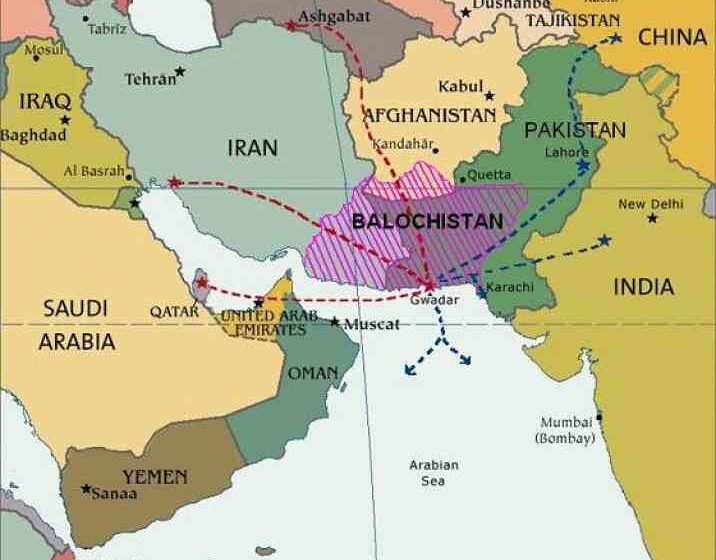
According to a recent Financial Times report, advisors to Pakistani military boss Asim Munir approached U.S. officials with a proposal to construct a modern commercial terminal in Pasni, Balochistan, just 70 miles from the China-backed Gwadar Port and 100 miles from the Iranian border. The project, if accepted, would give Washington a significant strategic foothold in a region increasingly dominated by Chinese influence.
While the plan is not yet formalised as state policy, its emergence signals Islamabad’s intent to capitalise on shifting geopolitical currents in South Asia. The port proposal was reportedly raised during a time when Pakistan Army Chief General Asim Munir was scheduled to meet with U.S. President Donald Trump at the White House.
This latest move adds a new layer to Balochistan’s already complex geopolitical landscape. Gwadar Port has been leased to China as part of the China-Pakistan Economic Corridor (CPEC), a flagship Belt and Road Initiative project. Meanwhile, the lucrative Reko Diq mining project, one of the world’s largest untapped copper and gold reserves, has been handed over to Barrick Gold, a Canadian multinational.
Now, with Islamabad offering strategic access to the U.S., Pakistan is effectively inviting three major powers, China, Canada, and the United States, to plant their stakes in Balochistan, a region long wracked by conflict, militarisation, and demands for independence.
Critics argue that rather than fostering stability, this internationalisation of Balochistan’s resources risks intensifying regional tensions and further marginalising local communities. Baloch activists have already raised alarm over growing militarisation, forced displacements, and human rights violations linked to foreign-backed development projects especially the so called China-Pakistan Economic Corridor (CPEC).
“Pakistan is playing a dangerous game,” said one regional analyst. “By leasing Gwadar to China, awarding Reko Diq to a Canadian company and now courting the U.S. in Pasni, Islamabad is effectively turning Balochistan into a strategic chessboard, with little regard for the will or welfare of its own people.”
According to The Financial Times, the Pasni port is estimated to cost around $1.2 billion, with partial funding proposed through American development finance institutions and Pakistani federal resources. The port would be connected via rail to inland mining areas rich in copper and antimony, critical minerals used in batteries, defence systems, and fireproof materials.
The plan is being interpreted as part of Pakistan’s broader “balancing strategy” amid rising U.S.-China rivalry. Islamabad is reportedly seeking to maintain relationships with multiple global players, including Washington, Beijing, Riyadh, and Tehran, without fully aligning with any one bloc.
American companies are also showing increasing interest in Pakistan’s (Balochistan’s) mineral wealth. U.S. Strategic Metals, based in Missouri, has signed an agreement with Pakistan’s military engineering body and held meetings with port authorities in Karachi and Gwadar.
Observers warn that by opening Balochistan to competing international powers, Pakistan may deepen the region’s instability and fuel further unrest. The region has long been the site of freedom movement and Pakistan’s so called counterinsurgency has resulted in massive enforced disappearances and heavy-handed military offensives, issues that may only be exacerbated by a new scramble for influence and resources.
Despite these concerns, Pakistan’s military leadership appears committed to positioning Balochistan as a hub for foreign investment, regardless of the potential consequences for regional peace and the aspirations of the Baloch people.
As one Baloch rights activist stated, “They are inviting the world to exploit our land while silencing our voices. This is not development. It is exploitation and occupation by other means.”