File Photo
Balochistan: Sarfraz Bugti Faces Backlash Over Remarks to Female Students
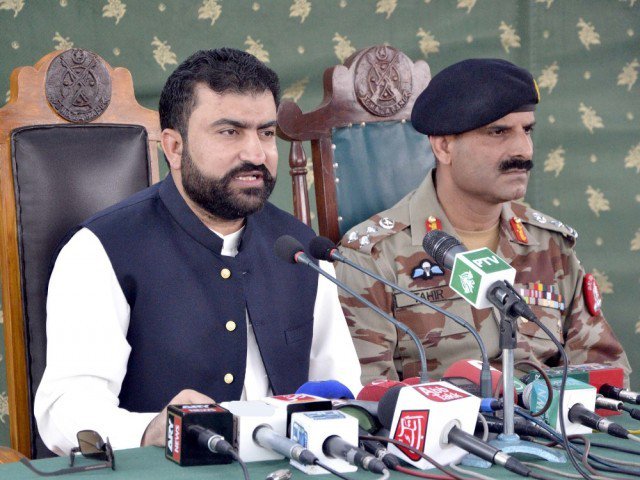
SHAAL (QUETTA): The Pakistan Peoples Party (PPP) selected Chief Minister of Balochistan, Sarfraz Bugti, has come under intense criticism after a recent visit to the Government Girls Degree College in Quetta, where he urged students to take an oath to promote pro-Pakistan narratives on social media, a move that has sparked concern among civil society, student groups, and political leaders.
During his address to the students, the Chief Minister asked them to “promise” that they would return home and post daily in support of Pakistan on social media. “You must promote the Pakistani narrative,” he said.
The incident took a controversial turn when some students declined to comply, stating they did not wish to be part of any political agenda as students. In response, CM Bugti issued a stern warning, saying, “If you have the courage, stand up and identify yourself.” He further added, “Pakistan will survive without you. Not even anybody’s father can harm it. If you don’t become soldiers [for the cause], the sky won’t fall.”
The Chief Minister also framed the act of promoting the state narrative as a religious obligation, warning that failing to do so would result in “shame on the Day of Judgment before the Prophet (PBUH).”
Following the circulation of a video clip from the event on social media, the Chief Minister’s remarks triggered strong reactions from various quarters. Many criticised the speech as a form of coercion and harassment of students in an academic setting.
Students and rights activists pointed to a Balochistan High Court ruling that explicitly bans political activities within educational institutions. They argued that this decision has been used to stifle student organisations and curtail academic freedom, yet the government itself, including CM Bugti and military officials, regularly visits campuses to conduct pro-government programs.
Baloch political and civil society voices have expressed concern that the state is using educational institutions to impose a controlled narrative, while systematically suppressing dissent. “This approach of silencing opposition and promoting state propaganda has never yielded positive results,” concern activists added.
They also criticised the apparent double standard, while student organisations face crackdowns and bans in the name of maintaining neutrality in education, the government itself engages in overtly political messaging within the same spaces.
The incident has reignited debate over the role of educational institutions in political discourse, the limits of state authority, and the right of students to remain free from coercion.
Activists and legal experts have called for adherence to the High Court’s ruling and an end to political interference in academic environments.
As public pressure mounts, it remains to be seen whether the PPP or the provincial government will respond to the growing criticism or continue its approach of promoting state narratives through official channels in schools and colleges.