Fuel Smuggling Under Monopoly: Corruption and Favouritism Deepen at Rotek Border
DOZZAAP, BALOCHISTAN: A growing wave of corruption and favouritism has reportedly tightened control over fuel transport operations at the Rotek border, where only select individuals with connections to tribal leaders and the Islamic Revolutionary Guard Corps (IRGC) are being permitted to cross, according to sources from the Baloch Activists Campaign.
A local Baloch fuel transporter told the campaign that a small number of powerful tribal leaders, in coordination with IRGC officials, have monopolised fuel trade routes. “Only those who are connected or willing to pay are allowed to move their fuel vehicles across the border,” he said, describing a system riddled with extortion and discrimination.
Sources added that while authorities announced a symbolic reopening of the Rotek border for a few days, in reality, access remains restricted to a handful of groups closely affiliated with military institutions. Independent fuel traders are being forced to pay large sums to intermediaries appointed by tribal figures aligned with the IRGC, while others are denied passage altogether.
“This level of corruption and favouritism has caused deep frustration among fuel traders from Khash and Mirjaveh,” one transporter explained. “The heavy payments demanded at the border have made our work unprofitable. We are being driven into poverty.”
Reports suggest that IRGC-affiliated agents have openly told traders that “only those who pay can cross the border.”
For nearly six months, border routes in Balochistan — long considered the lifeline for local livelihoods — have remained largely closed under IRGC control. The closures have been justified by officials as part of the ‘Fuel Tanker Plan’ and ‘Cooperation Program’, initiatives said to be aimed at regulating fuel transport.
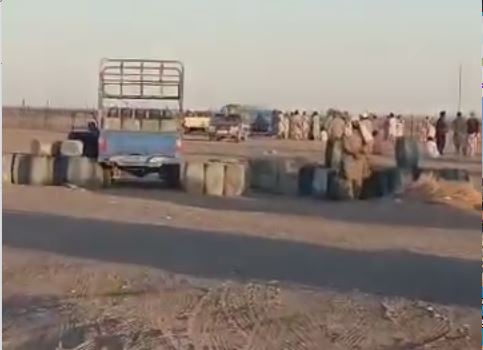
However, locals claim these programs have primarily benefited military-linked networks and select tribal leaders, deepening existing inequalities. When the plans were introduced earlier this year, residents of Mirjaveh — from Reg Malek to Rotek — staged a two-day road blockade to protest what they described as “a plan to monopolise poverty.”
The ongoing restrictions have left thousands of Baloch fuel carriers without income, amplifying economic despair in already impoverished Iranian Occupied Balochistan. Activists argue that without transparency and fair regulation, border control in Balochistan will remain a source of corruption, exploitation, and systemic discrimination.