Iran’s Delegation to UN Faces Criticism Over Attempt to Whitewash Crimes Against Baloch People
LONDON: Iran’s recent participation in the United Nations annual session, aimed at discussing human rights issues, has come under sharp criticism from human rights activists and Baloch organisations.
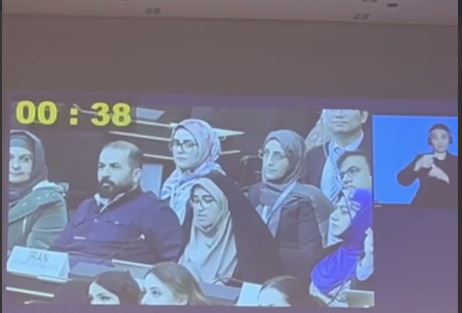
The Islamic Republic’s decision to send Humeira Rigi and Nasir Derakhshan, along with other figures aligned with the government, as its representatives in the UN session is being viewed as an effort to present a misleading image of respect for ethnic and religious minority rights in Iran.
Rigi and Derakhshan were appointed as “representatives of the Baloch people,” despite their longstanding association with the Iranian government and their roles in justifying its policies. Critics argue that their participation in such international forums is not a genuine representation of Baloch interests but rather a calculated attempt to whitewash the Iran’s history of human rights abuses against Baloch citizens.
The timing of Iran’s decision to send these representatives is significant, as it coincides with ongoing international investigations into major human rights violations, including the “Bloody Friday of Zahedan” (September 30, 2022), where hundreds of Baloch citizens were killed or injured by Iranian security forces, and the “Bloody Friday of Khash” (November 4, 2022), in which more than twenty Baloch citizens lost their lives.
These incidents, among others, have been referred to the United Nations as major cases of human rights violations. Human rights groups and activists believe that Iran’s participation in the UN session with individuals like Rigi and Derakhshan is aimed at downplaying these crimes and diverting attention from the regime’s violent crackdown on Baloch protesters.
The Iranian government has used the appearance of ethnic diversity by sending representatives like Rigi and Derakhshan as a means to project the image that it respects the rights oppressed nations including Baloch, Kurds, and Zoroastrians. However, the reality on the ground in Iran tells a different story. Baloch citizens, along with other ethnic and religious minorities, continue to face systemic discrimination, arbitrary arrests, forced disappearances, and executions. Despite this, individuals like Rigi and Derakhshan have long been part of the Iranian political structure, which has been responsible for suppressing the rights and freedoms of these communities.
Human rights organisations have condemned the participation of Rigi and Derakhshan in the UN session, calling it a “betrayal” of the Baloch people. They argue that the Iranian state’s use of these figures in international forums is a form of propaganda designed to cover up the crimes committed by Iranian security forces, particularly the killings in Zahedan and Khash.
The presence of these government-appointed representatives at the UN is seen as an attempt by Iran to gain international legitimacy and deflect attention from the ongoing human rights abuses in Balochistan. While the government touts its commitment to “ethnic and religious diversity,” the lives of Baloch, Kurdish, Zoroastrian and other minorities in Iran remain under constant threat.