Representative image
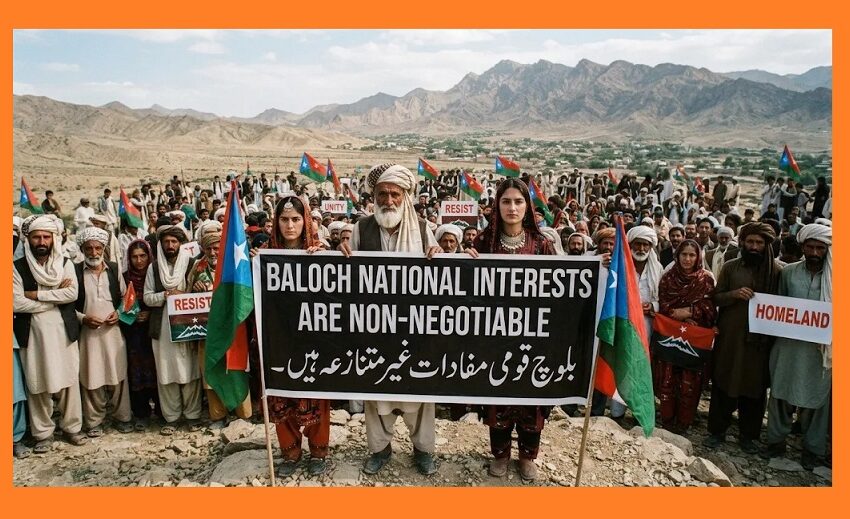
Baloch National Interests Are Non-Negotiable
By Shahdad Baloch
History shows that freedom movements gain momentum through political and national evolution. Some nations have secured their freedom, while others have suffered setbacks because of immature political strategies, misguided foreign policies, and failures of diplomatic judgement. The Baloch nation is one of the occupied nations that is still fighting to regain its national freedom. The Baloch nation wishes to remind the international community, particularly neighbouring countries, that its national interests are fundamental, irrevocable, and non-negotiable.
It is important to acknowledge that political and intellectual circles within the Baloch national movement are engaged in discussions about the emerging world order and the strategic direction of the contemporary Baloch struggle under the statesmanship and political vision of Mr. Hyrbyair Marri. The Baloch nation understands the meaning of statehood, sovereignty, and national dignity. For decades and centuries, Baloch men and women have carried forward their struggle united by the aspiration for a free and united Balochistan and the protection of Baloch national interests.
The Baloch nation has never sought to interfere in the internal affairs of other nations. We believe in mutual respect, political independence, and the fundamental principle of non-interference. Just as we expect the international community to respect our national aspirations, we respect the sovereignty and political choices of others. Any attempt to interfere in the internal affairs of the Baloch national movement should therefore be understood as an unacceptable departure from these principles.
No sovereign or occupied nation is entirely free from internal differences, political hurdles or organisational disagreements. Such challenges are part of the political and national evolution of societies. History, however, has repeatedly demonstrated how oppressive and colonial states exploit internal differences through policies of division and political manipulation to weaken national unity and undermine movements seeking their freedom.
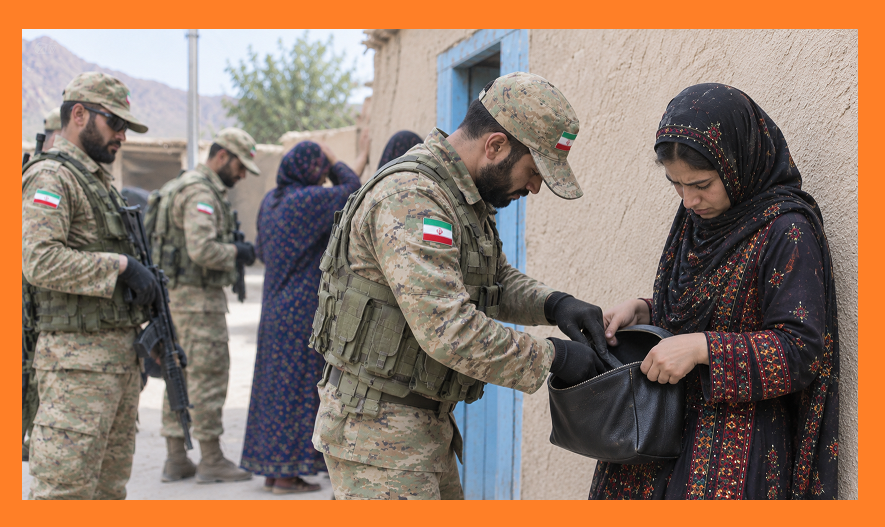
The British colonial administration, for instance, employed divide-and-rule policies in the Indian subcontinent, contributing to political divisions that ultimately accompanied the partition of United India and the creation of Pakistan. Similarly, the ongoing policies and efforts of Iran and Pakistan to maintain their occupation and colonial rule over Balochistan, including attempts to divide the Baloch homeland into different administrative units, reflect the broader political challenges confronting the Baloch national question. These states are also exploiting political and organisational differences by attempting to create divisions and rivalries among Baloch political and armed organisations. Their interference can be understood in the context of their interest in preserving their occupation over Balochistan and preventing the emergence of a united national voice for Baloch national sovereignty.
However, those who identify themselves as friends, supporters, and well-wishers of the Baloch nation should exercise particular responsibility and refrain from interfering in the internal affairs of the Baloch national struggle. Differences and disagreements within a national movement should be addressed by the people and organisations concerned through political dialogue, mutual respect, understanding, and maturity. International friends and supporters can play a constructive role by encouraging reconciliation, facilitating dialogue, and promoting mutual understanding. Their role, however, should never be to take sides, deepen existing divisions, impose political preferences, or dictate the direction of the national struggle. The resolution of internal differences must respect the political agency, independence, and collective will of the Baloch people. Lasting national unity cannot be imposed from outside; it must emerge from within the nation itself.
To those who presume to dictate the political direction of the Baloch nation or question its national leadership, our message is straightforward: respect our political space and our national dignity. The Baloch are a proud and dignified people, but equally determined when it comes to defending their national interests.
India, as a neighbouring country, should encourage its intellectuals and political commentators to study the Baloch national struggle through an objective historical and political lens. There are historical parallels between the Baloch aspiration for freedom and the sacrifices of India’s revolutionary figures, including Bhagat Singh and his comrades, who challenged British colonial supremacy and gave their lives for their convictions. Such historical connections should encourage mutual understanding rather than political interference.
South Asia and the Middle East continue to confront poverty, corruption, political instability, and serious social challenges. Yet the Baloch nation has not made interference in the domestic affairs of neighbouring countries its political agenda. We understand the importance of diplomacy, regional coexistence, and people-to-people relations. Our expectation is simply that the same principles be extended to the Baloch national question.
The involvement of individuals such as journalist Mark Kinra in debates concerning Baloch internal affairs, particularly questions surrounding the integrity and political standing of Mr. Hyrbyair Marri, raises legitimate concerns about political neutrality and respect for the Baloch people’s right to determine their own political direction. Every intellectual has the right to examine, analyse, and criticise political movements and their leadership. However, such engagement must be grounded in factual understanding, impartiality, and respect for the political agency of the people concerned.
The international community should understand one fundamental principle: the Baloch national question cannot be resolved through external pressure, political manipulation, or attempts to undermine its national aspirations. Our response to interference will remain grounded in political resolve, diplomatic engagement, and the legitimate assertion of our national rights.
India is an important neighbouring country, and the Baloch nation expects a constructive intellectual and diplomatic environment in which non-interference in one another’s political and national affairs is respected at both governmental and public levels. Respectful relations between nations must be founded upon mutual dignity and recognition of each other’s political aspirations.
Every scholar, journalist, and political observer has the right to study and comment on the Baloch national struggle. However, intellectual engagement must be objective, responsible, and free from predetermined political agendas. The Baloch struggle deserves to be understood on its historical merits rather than through external political narratives.
The Baloch nation has demonstrated extraordinary resilience throughout its history. Its determination, political consciousness, and aspiration for national freedom cannot be dismissed as temporary developments. Whatever the changing geopolitical circumstances or emerging world order, one principle remains constant: Baloch national interests are not bargaining chips, national dignity is not negotiable, and the political future of the Baloch people must be determined by the Baloch themselves.
No external pressure can erase national aspirations, and no changing world order can diminish the importance of national dignity.
Disclaimer: The views and opinions expressed in this article are solely those of the author and do not necessarily reflect the official policy or position of BalochWarna News. The publication provides a platform for diverse perspectives.