Two Highlands, One Spirit: Remembering Mir Balach Marri
By Basham Baloch
History across continents is often shaped by leaders who refuse to bend when submission would be far easier. In late 13th-century Scotland, William Wallace, remembered across the world as Braveheart, rose from the minor gentry to defy a powerful crown in the mist-covered Scottish Highlands. More than seven centuries later, in the rugged, sun-scorched mountains of Balochistan, Mir Balach Marri embodied that same unyielding spirit, although his journey began from the opposite end of society. While Wallace rose from relatively modest origins to challenge an empire, Balach Marri willingly relinquished the privileges of Baloch tribal aristocracy, foreign education, and parliamentary life to stand alongside ordinary fighters in the mountains.
Nineteen years after his death on November 21, 2007, the story of Mir Balach Marri endures not merely as a chapter in Baloch political history, but as a profound testament to personal sacrifice and conviction.
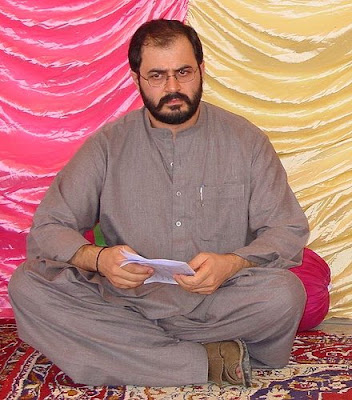
From Moscow’s Classrooms to the Crossroads of Destiny: Born on January 17, 1966, in Quetta, the capital of Pakistan-occupied Balochistan, Balach Marri grew up at the intersection of political exile and intellectual rigour. As the son of veteran Baloch nationalist leader Nawab Khair Bakhsh Marri, he belonged to the prominent Sardari lineage of the Marri tribe, a background that carried immense social stature and historical significance.
Yet his youth was far removed from the conventional comforts associated with his aristocratic background. Raised and educated abroad, he qualified as an engineer in Moscow, earning credentials that could easily have secured him a quiet and prosperous life almost anywhere in the world.
Instead, his return to Balochistan placed him squarely at the centre of his people’s struggle.
Stepping Down from Privilege to the Ridges of Kohlu: In 2002, Balach Marri entered mainstream politics and was elected to the Balochistan Provincial Assembly. For someone of his lineage, a parliamentary seat could have served as a natural instrument of influence and authority. For Balach, however, legislative politics soon proved inadequate in the face of escalating conflict and the deep-rooted, unresolved grievances across Balochistan.
Unlike many Scottish nobles of Wallace’s era, who were often reluctant to risk their estates and privileges in the pursuit of freedom, Balach made an uncompromising break with his own privileged position. By the mid-2000s, he had walked away from the corridors of parliament, the relative security of urban life, and the comforts of aristocratic birth, choosing instead to retreat to the stark and unforgiving mountains of Kohlu and Kahan, where he joined the resistance.
Those who knew him during those years consistently spoke of his remarkable austerity. He rejected special treatment, sharing the same meagre rations, harsh weather, and constant dangers as the youngest fighters alongside him. For Balach, leadership was never an entitlement inherited through blood; it was a responsibility demonstrated through shared hardship.
November 2007: A Sudden Silence in the Borderlands: That journey came to a sudden end in November 2007. At the age of 41, Balach physically separated from his homeland. The circumstances surrounding his death remain subject to competing official and local accounts, but its immediate shockwaves were felt across Balochistan.
His death created a profound leadership vacuum and reshaped the trajectory of the movement he had helped lead. Yet, as history repeatedly demonstrates, the loss of a leader does not necessarily erase the ideals he represents. In death, Balach Marri evolved from a resistance commander into a symbol whose significance transcended tribal and regional boundaries.
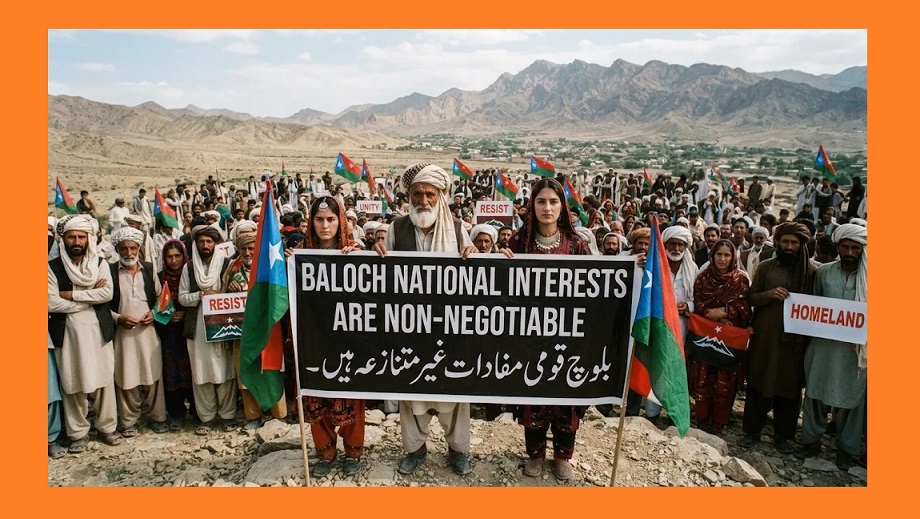
Enduring Echoes Across Time: Nearly two decades later, the memory of Mir Balach Marri continues to resonate deeply among younger generations of Baloch thinkers, writers, and activists. He is remembered not only for the path he chose, but also for the rare sincerity of someone who had everything to lose yet chose principle over privilege.
Centuries and thousands of miles separate the windswept glens of Scotland from the jagged ridges of Balochistan, yet the human spirit recognises its own reflection across time. Scotland remembers William Wallace for rising from humble origins and refusing to submit to a crown’s demands; Balochistan remembers Mir Balach Marri for relinquishing privilege and walking the hardest road alongside his people.
Different in birth, united in resolve, both remain enduring emblems of courage in the historical memory of their respective nations.