Martyr Balach Marri’s Unwavering Commitment
By Sobdar Baloch
A son of the soil who rejected the comforts of London to keep the flame of Balochistan’s freedom alive
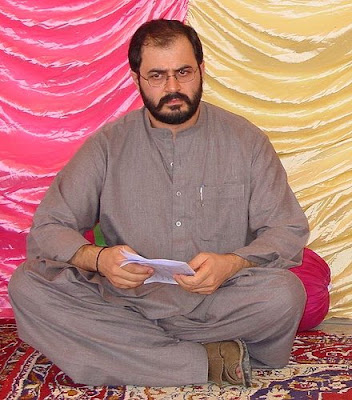
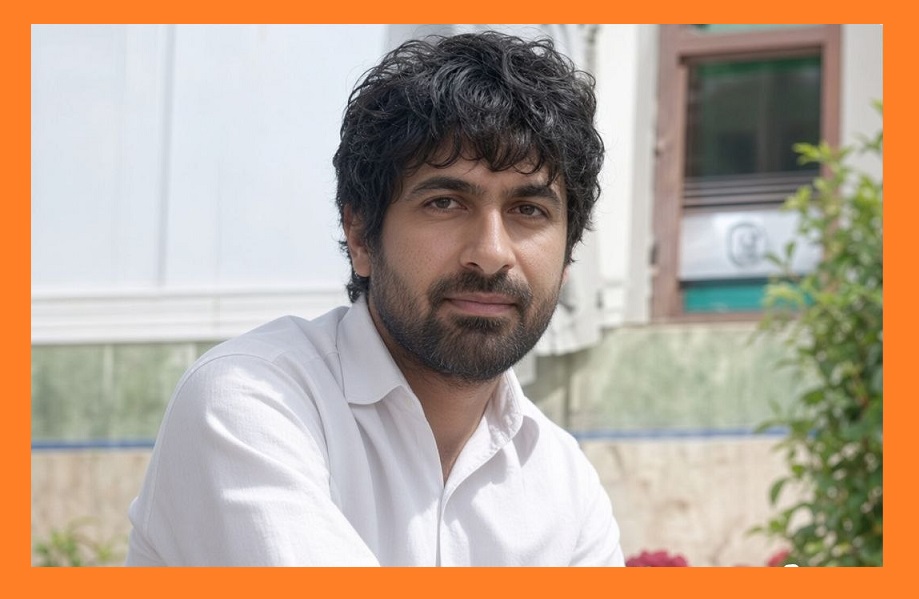
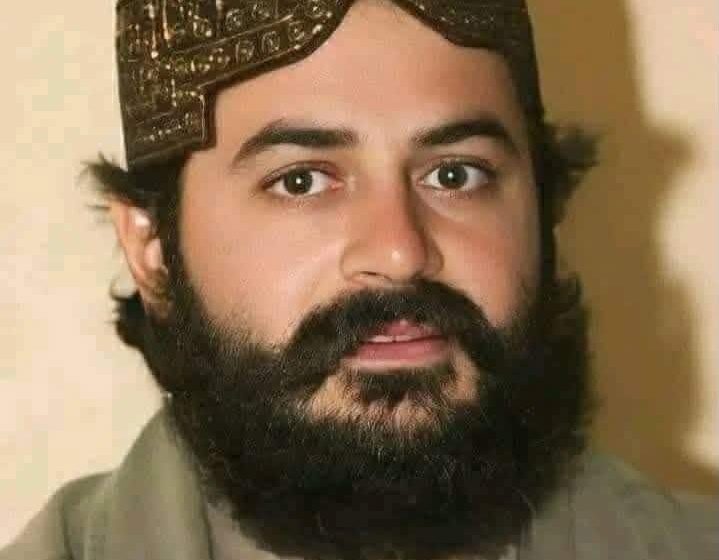
Martyr Balach Marri was the son of Nawab Khair Bakhsh Marri. He was born into a family where national freedom, political consciousness, and loyalty to one’s homeland were not merely ideals expressed in words, but principles that defined an entire way of life. Balach Marri rejected the privileges and comforts of an affluent life in London, along with the security and opportunities it offered, and instead devoted himself to the struggle for Balochistan’s freedom. He carried his share of the struggle forward, keeping the flame of hope alive so that his nation, wandering through the darkness of oppression, could find its way towards its destination.
Throughout successive periods, Pakistan’s military and so-called political rulers have maintained before the international community that the Baloch understand only the language of arms, that their struggle lacks public support, and that it represents nothing more than the activities of a handful of individuals. History, however, tells a different story. The Baloch national struggle has never been confined to the battlefield; it has also continued through political institutions, intellectual discourse, diplomatic engagement, and public consciousness.
Baloch political leadership has responded to state policies and tactics through various political, intellectual, and practical platforms. Nawab Khair Bakhsh Marri’s sons, including Nawab Jangyz Khan Marri, Gazain Marri, and Sangat Hyrbyair Marri, have participated in Pakistan’s parliamentary politics. However, Balach Marri and Hyrbyair Marri’s political approach differed considerably from that of their brothers. Even while serving within Pakistan’s political institutions, they continued to raise the national voice of the Baloch people.
When Hyrbyair took the oath of office as the youngest minister, rather than declaring, “I would be loyal to Pakistan,” he would say, “I will be loyal to my nation.” This was far more than a simple statement; it was a carefully considered and unequivocal political message challenging the established understanding of loyalty and authority within Pakistan’s parliamentary institutions.
Later, when Balach contested the elections and became a minister, he refused to take his oath of office in Urdu and instead insisted on taking it in the Balochi language.
In his interviews, Hyrbyair Marri explained that other Baloch assembly members regularly attended iftar (fast-breaking) gatherings and private social functions hosted by Pakistani military officers and political parties, whereas he deliberately kept his distance from such gatherings.
The Pakistani state was particularly uncomfortable with Hyrbyair Marri because, despite occupying a position within its parliamentary system, he refused to compromise on his national identity or political convictions. He even scheduled his office hours in the evenings rather than the mornings. During his ministerial tenure, he also utilised the resources available to him to support the Baloch national struggle.
Among other initiatives, he provided assistance towards the construction of houses for Marri Baloch families living in New Kahan, Quetta. The name New Kahan was coined by Sangat Hyrbyair Marri because the settlement had previously been known as Marri Camp, a name associated with a temporary makeshift settlement.
He also supported self-initiated schools for children in New Kahan. Many of the students who attended these schools have since become well-educated young men and continue to contribute to the Baloch national struggle. He also helped many young people who were unable to continue their education because of financial constraints.
Martyr Balach Marri was not simply another name associated with this struggle. He was an integral part of the movement, someone who had witnessed its evolution up close, experienced its challenges and setbacks, and personally understood the suffering of his people.
After obtaining an engineering degree from Russia, he returned to Balochistan alongside thousands of Marri Baloch who had spent years in exile, far from their homeland, following the collapse of Shaheed Dr Najib’s government and the subsequent occupation of Afghanistan by pro-Pakistan religious fanatics.
Later, to escape the Pakistani state’s policies of collective punishment, he was compelled to move to London.
In this context, it is important to recall that Pakistan’s military and intelligence agency, the ISI, accused Nawab Khair Bakhsh Marri and his sons of involvement in the murder of Justice Nawaz Marri, who belonged to the Bijjari subsection of the Marri tribe. Using this incident as a pretext, approximately 1,500 Marri Baloch and other political associates of Nawab Marri were picked up from New Kahan, Quetta and other areas. They were subjected to brutal and inhumane torture. Many subsequently died, while others were left permanently disabled.
This was not merely the story of a single tribe. It was a chapter of collective suffering that further deepened political consciousness and the spirit of resistance among the Baloch people.
Parliament, A Means to the Ultimate Goal of Freedom: During his exile in London, Balach Marri contested the 2002 elections. Although he remained abroad, he submitted his nomination papers and contested the provincial assembly seat from Kohlu against Mohabbat Khan Marri. He won his seat with an overwhelming majority.
His decision to participate in parliamentary politics was not motivated by a desire for power, a ministerial position, or political privileges. He did not seek an assembly seat as an end in itself. Rather, he viewed it as an opportunity to communicate the message of freedom to people across Balochistan.
He attended only two sessions of the provincial assembly and never returned afterwards. For Balach Marri, the assembly was not a destination but a political platform through which a broader objective could be pursued. He understood that the question of national freedom could never be confined to a single parliamentary chamber, political position, or Pakistani system of governance.
In 2005, when Pakistan’s former military ruler, General Pervez Musharraf, invited Balach Marri to attend a gathering during his visit to Kohlu, Balach released a statement to the media which continues to carry political significance.
He remarked: “General Musharraf has come from outside and is inviting me. In other words, someone who has come from outside is inviting the owner of the house.”
This was not merely a political response. It was an unmistakable declaration of the Baloch people’s right to determine their own future in their homeland. Beneath the simplicity of his words lay a profound political message: the future of Balochistan must be decided by the people of Balochistan themselves.
During the same period, an incident occurred in Kohlu in which General Musharraf’s helicopter was fired upon, leaving one military personnel injured.
From Tribal Divisions to National Unity: Drawing lessons from the experiences of previous generations, Balach Marri, Baba Khair Bakhsh Marri, and Sangat Hyrbyair Marri recognised the need to take the national struggle beyond the geographical and tribal boundaries of Kohlu and Kahan and extend it throughout Balochistan.
This represented an important historical shift. Efforts were being made to bring Baloch people from Makran, Gwadar, the Koh-e-Suleman, Quetta, and Karachi into the wider national struggle. The objective was to transform what had previously been perceived as a tribal or regionally confined movement into a broader national movement representing the aspirations of the Baloch people as a whole.
One of the most important steps towards achieving this objective was ending the three-decade-long conflict, bloodshed, and mutual hostility between the Marri and Bugti tribes.
Baba Marri and Hyrbyair Marri entrusted Martyr Balach Marri with the responsibility and authority to pursue this crucial reconciliation. Similarly, Nawab Shaheed Akbar Khan Bugti had given Brahumdagh Bugti full authority to make decisions aimed at resolving the longstanding dispute.
Through the efforts of Balach Marri and Brahumdagh Bugti, this historic conflict was brought to an amicable conclusion.
There had been a time when members of the Marri and Bugti tribes could not move freely through one another’s territories because of longstanding rivalries. The reconciliation, however, opened a new chapter, creating an atmosphere of renewed communication, mutual understanding, closeness, and trust between the two tribes.
Balach Marri travelled to Dera Bugti at least twice a month to meet Nawab Akbar Khan Bugti. These meetings were far more significant than ordinary encounters between two political or tribal figures. They represented the beginning of a new chapter in Balochistan’s national struggle.
The alliance injected fresh energy into the movement. Voices of resistance against the Pakistani state began emerging from Dera Bugti, creating considerable unease within political circles in Punjab.
Nawab Akbar Khan Bugti assumed leadership of the armed resistance, while Balach Marri extended every possible form of assistance and support to Nawab Bugti’s companions, associates, and fellow activists.
It was a defining moment, marking the entry of Balochistan’s national struggle into an entirely new phase.
One Nation, One Voice, One Collective Struggle: Meanwhile, the national movement was also gaining momentum in Makran and Balochistan’s coastal regions. Shaheed Ghulam Muhammad Baloch had travelled to Sui and Dera Bugti, where he declared Makran’s full support for the national struggle.
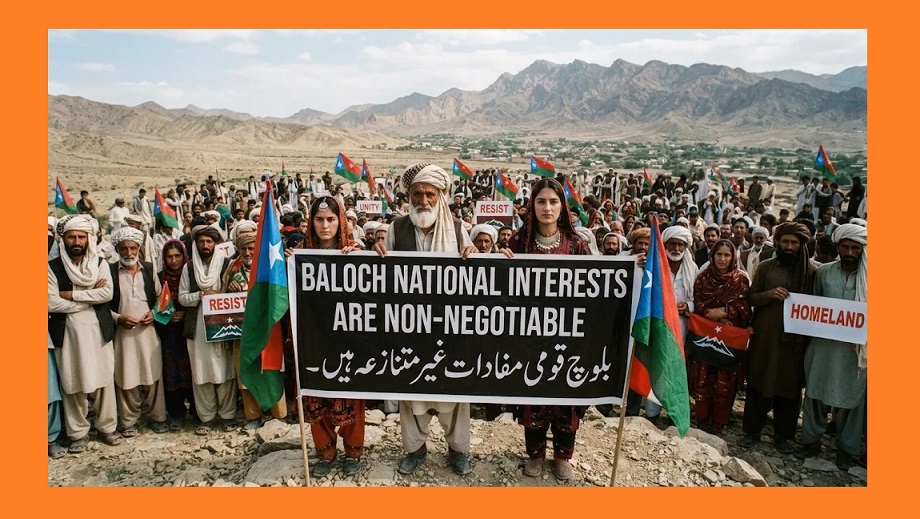
By this stage, the movement was no longer confined to a single tribe, geographical region, or handful of political personalities. It was evolving into a broad national movement in which people from different parts of Balochistan, representing different tribes and political perspectives, were coming together around a common objective.
At the international level, Sangat Hyrbyair Marri strove hard to represent the Baloch national struggle. His efforts were directed towards bringing the issue of Balochistan before international forums and making the world aware of the political position and aspirations of the Baloch people.
During this period, Baloch leaders maintained close working relationships, political coordination, and cooperation. Such understanding was particularly important because advancing a national struggle required a shared commitment to common objectives, even in the presence of political and personal differences.
Those who today attempt to discredit Sangat Hyrbyair Marri by describing him as a “dictator” or accusing him of promoting a “personality cult” should consider an important question: If Hyrbyair Marri had genuinely sought authoritarian control or the dominance of a single individual, why would he have supported Nawab Akbar Khan Bugti, a prominent tribal leader and political figure in his own right? Why would he have extended his support to Shaheed Ghulam Muhammad Baloch, who sought to bring him into the broader collective national struggle?
Even those who, through their lies and deceptive claims, describe Sangat Hyrbyair Marri and his political and ideological associates as “tribal loyalists” should at least be honest with themselves, if not with the Baloch nation.
These individuals have gained whatever political recognition they enjoy, is because of Sangat Hyrbyair Marri’s support and his willingness to provide them with opportunities to use their skills and abilities in the service of the Baloch nation. Had he been self-centred or motivated by personal interests, he would not have allowed such individuals to use him as a stepping stone to proclaim themselves as leaders today.
History cannot be understood through accusations, assumptions, or fabricated narratives alone. Narratives that perpetuate mistrust and suspicions originating from the adversary ultimately serve only to waste the time and energy of the Baloch nation.
The younger generation must therefore take a serious interest in its history, examine historical events critically, and investigate the background and authenticity of claims before accepting them as facts.
One Flame Was Extinguished, Thousands Were Ignited: During the night between 20 and 21 November, news of Martyr Balach Marri’s death reached Balochistan through the BBC.
It was not simply the news of an individual’s death. It was the loss of a leader who had understood the suffering of his people, dedicated his life to a greater purpose, and worked tirelessly to keep the dream of freedom for his homeland alive.
The news of Balach Marri’s martyrdom once again plunged Balochistan into an atmosphere of profound grief, anger and protest. Thousands of Baloch people poured into the streets in cities across Balochistan, expressing their collective sorrow and outrage over the loss of their leader.
As a journalist who has studied such defining moments in Balochistan’s history and witnessed their impact, I have come to understand that the martyrdom of certain individuals may bring their physical existence to an end, but it often gives their ideas, dreams, and objectives an even wider reach.
Balach Marri was one such individual.
Following his martyrdom, the state once again attempted to sow mistrust and divisions among Baloch leaders. Efforts were made to falsely implicate Brahumdagh Bugti in Balach Marri’s death.
However, Baba Marri’s response to these allegations became one of the most painful and significant moments in this chapter of history.
During an interview with the BBC, Baba Marri became visibly emotional while addressing the accusations and remarked: “How could Brahamdagh blind himself by harming Balach?”
These words captured the grief of a father, the trust of a leader, and the profound depth of a national relationship. They also conveyed a powerful message: the bonds that exist within the Baloch national struggle cannot easily be destroyed through state propaganda, suspicion, and deliberate attempts to create divisions.
Balach Marri: An Engineer, a Diplomat, a Journalist, and a Visionary: Martyr Balach Marri was a highly skilled engineer. He was also a thoughtful diplomat, an accomplished journalist, and an exceptionally talented web developer.
Even during periods of conflict, he carried his laptop with him and made every effort to inform the outside world about the situation in Balochistan. For him, the pen, the computer, education, and political awareness were just as important as other means of pursuing the national struggle.
Friends and colleagues who worked alongside him often recall how strongly he emphasised the importance of education among Baloch youth. He understood that the true strength of a nation does not lie merely in its natural resources or geographical position, but in the knowledge, awareness, and abilities of its younger generations.
His message to the youth was clear: acquire knowledge, understand your history, develop an awareness of your nation’s challenges, and use your abilities to contribute towards building a better future.
Today, Balach Marri is no longer physically among us. His voice has fallen silent, but his ideas, his struggle, and his dreams continue to live on.
His life offers an enduring lesson: achieving great objectives requires sacrifice, patience, political wisdom, education, and unity. Nations do not reach their destinations through emotions alone. They progress through knowledge, character, discipline, and sustained commitment.
For Baloch youth, Balach Marri’s life represents a significant chapter in their history, one that deserves to be studied, understood, and remembered.
His martyrdom was not an end. It was a reminder of an enduring commitment.
A commitment to keeping the love of one’s homeland alive through knowledge, political consciousness, unity, and hope.
A commitment to preserving faith in the future of one’s nation, even in the darkest moments of despair.
And a commitment to ensuring that future generations do not merely remember their dreams, but work to transform them into reality through education, character, and a dignified pursuit of their aspirations.
For throughout history, the flames that continue to illuminate the path ahead are those kindled not for oneself, but for generations yet to come.
Martyr Balach Marri was one such flame.
Disclaimer: The views and opinions expressed in this article are solely those of the author and do not necessarily reflect the official policy or position of BalochWarna News. The publication provides a platform for diverse perspectives.