Hunger Strike at Ghezel Hesar Prison as Inmates Sew Lips Shut in Protest
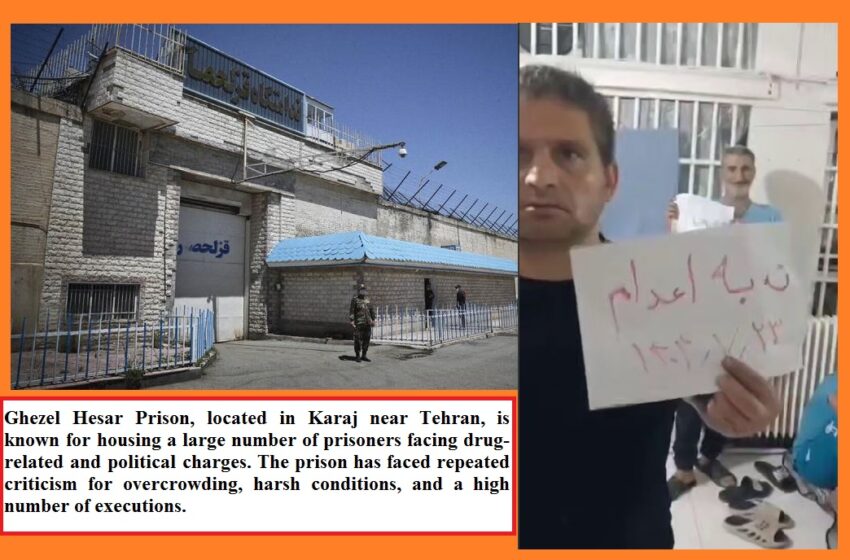
KARAJ IRAN: A hunger strike at Ghezel Hesar Prison has entered its third day with several inmates sewing their lips shut in a dramatic act of protest against the growing number of executions within the facility.
Videos released from inside the prison show deteriorating conditions and increasingly desperate measures by prisoners demanding an end to the executions of their fellow inmates.
According to reports from the Baloch Activists Campaign, the hunger strike began on Monday, October 13, in Unit 2 of the prison. The protest was sparked by prison authorities’ plans to execute at least 15 inmates, prompting a wave of resistance and growing tensions within the facility.
Sources inside the prison say that conditions for the strikers have become critical, with many suffering severe physical and psychological distress. Despite the escalation, authorities have responded with threats rather than dialogue. Prison officials have reportedly warned that continued protest will result in the suspension of drinking water and the closure of ward doors.
On Tuesday, October 14, the prison’s warden, identified by the last name Azizi, personally entered the ward with prepared food in an attempt to persuade inmates to end the strike. His efforts were firmly rejected by the prisoners, who have vowed to continue their protest until all inmates recently moved to solitary confinement are returned to the general ward.
Judiciary representatives and officials from the Iranian Prisons Organisation visited Ghezel Hesar on Wednesday, October 15, but were reportedly taken to a separate unit away from the strike zone. Eyewitnesses claim that prison authorities attempted to create a false appearance of calm to conceal the true scale of the protest.
As the situation inside Ghezel Hesar grows more dire, human rights advocates are raising alarms over the condition of the inmates and the prison administration’s handling of the crisis.
Ghezel Hesar Prison, located in Karaj near Tehran, is known for housing a large number of prisoners facing drug-related and political charges. The prison has faced repeated criticism for overcrowding, harsh conditions, and a high number of executions.