Baloch Women Between Repression and Resistance
Fida Ahmed
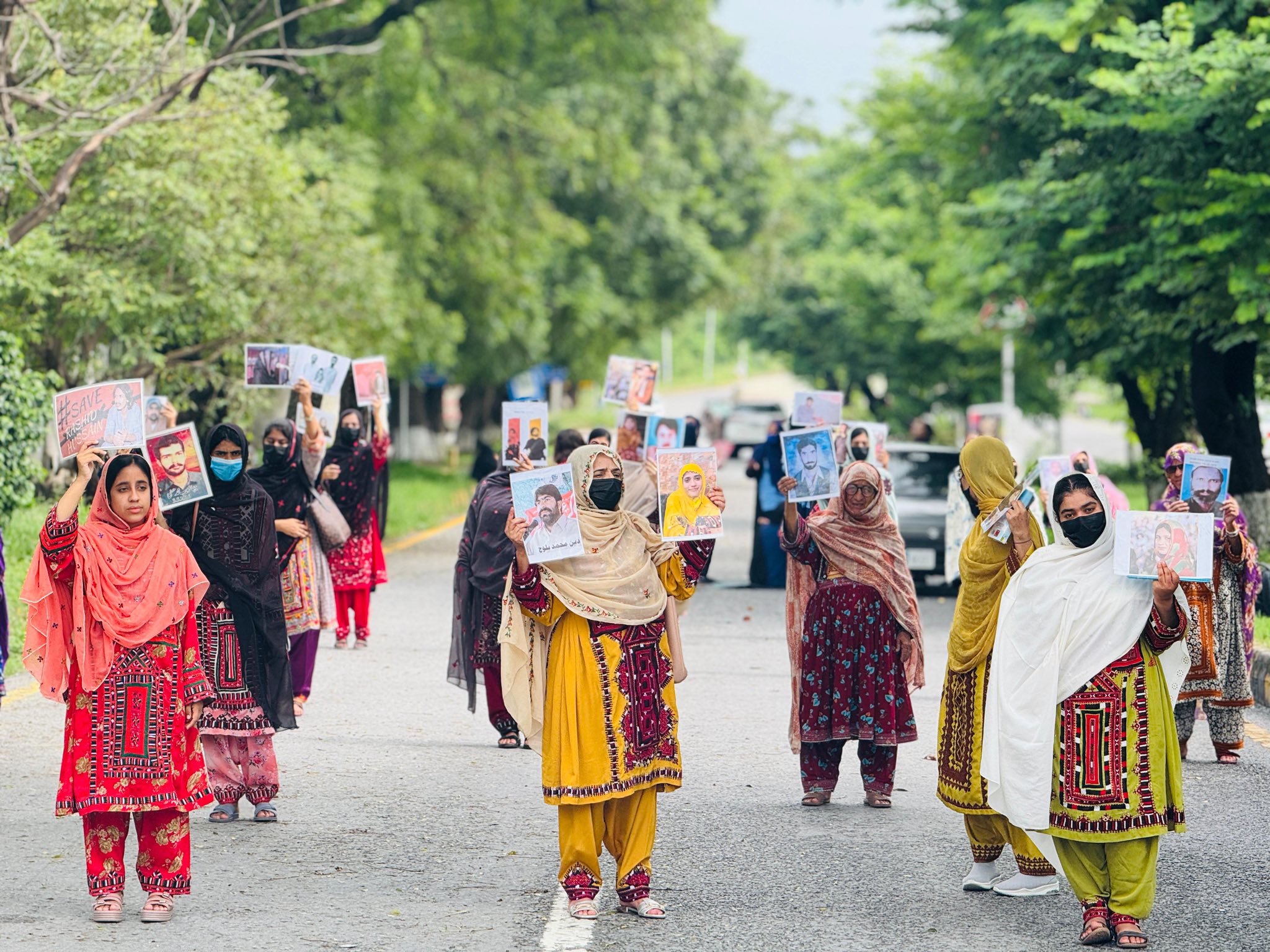
“They came at night in army dress and also in plain clothes. They dragged my daughter away. We cried, but they did nothing. Later we went to register an FIR, but they refused to write it. Then we tried to hold a press conference, but they did not allow us. Now we are protesting. If she did something wrong, we want our daughter back. If she did something, bring her to court.” These are the words of Nasreen’s mother.
In the dusty streets of Balochistan, the fear in a mother’s eyes is unmistakable. When 15-year-old Nasreena, a schoolgirl, was taken during a raid by security forces, her mother described the moment as the hardest of her life. The family has received no official information about her whereabouts. Rights groups have urged international intervention, saying her disappearance reflects a deeply troubling trend of women being forcibly taken and detained without transparency or due process.
For decades, enforced disappearances in Balochistan overwhelmingly affected men, leaving women to shoulder the social and economic burdens of families torn apart. But in 2025, human rights organisations reported a sharp rise in cases involving women and girls. According to the Human Rights Council of Balochistan, at least 12 women were abducted in a single year, including teenagers and an eight-month-pregnant woman. This shift signals a dangerous escalation, where women are no longer indirect victims of conflict but direct targets of repression.
These developments must be understood against the backdrop of long-standing unrest in Pakistan’s largest but poorest province. Grievances over political marginalisation, economic exclusion, and alleged human rights abuses have fuelled conflict for decades. In 2025 alone, more than 1,200 enforced disappearance cases and nearly 200 alleged extrajudicial killings were documented. The increasing inclusion of women in these figures reflects a widening scope of state violence.
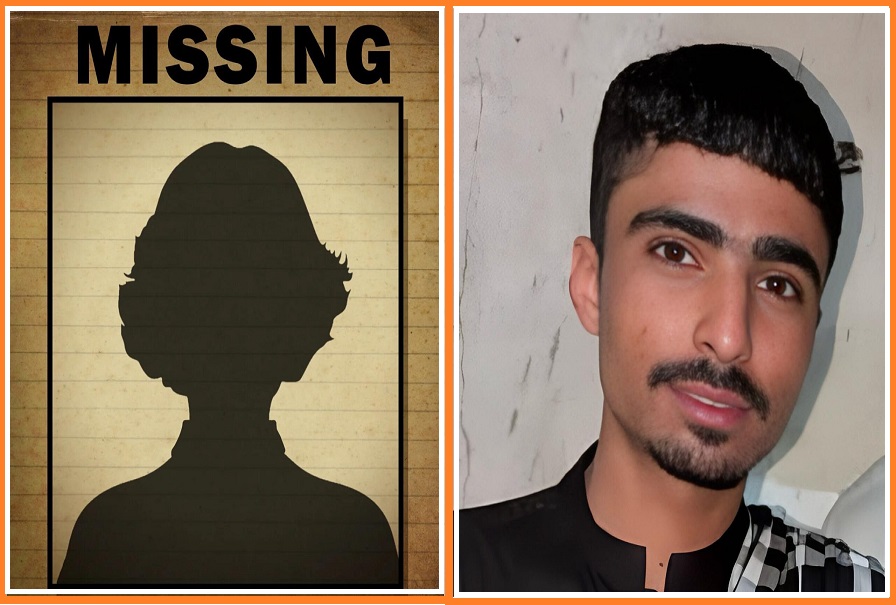
Families of the disappeared often live in prolonged limbo, unable to mourn or seek justice. The disappearance of Nasreen mirrors other cases, such as Mahjabeen, a university student last seen in Quetta, whose whereabouts remain unknown months after her detention. Such cases have become alarmingly familiar, multiplying fear and psychological trauma in communities already shaped by uncertainty.
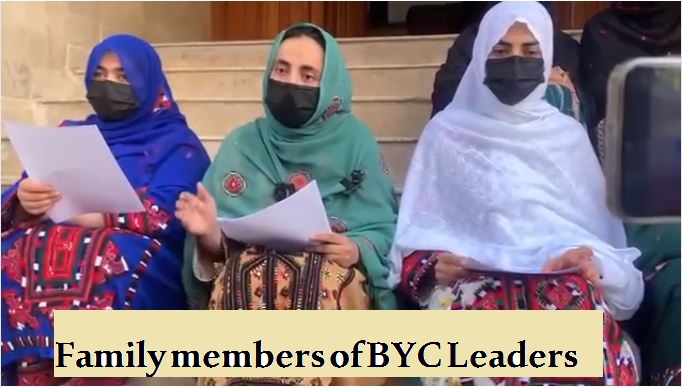
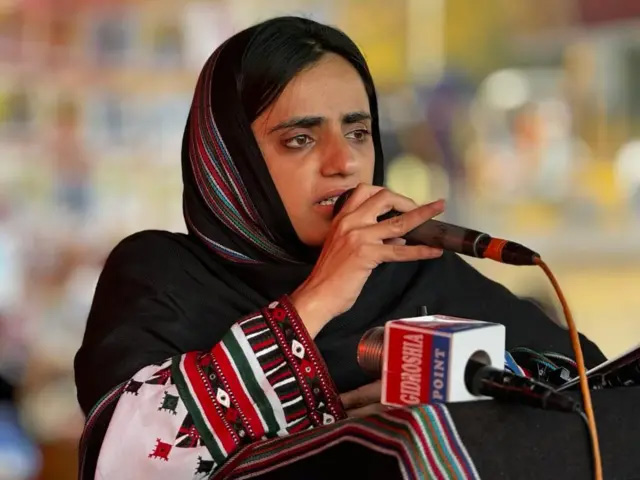
It is within this climate of fear and frustration that peaceful political activism led by women gained urgency. Women, long confined to private spaces, emerged as visible voices demanding accountability and justice. The Baloch Yakjehti Committee (BYC) became a central platform for this mobilisation, organising sit-ins, marches, and public demonstrations focused on enforced disappearances and collective punishment. Women’s leadership in these movements marked a profound shift in political participation in an otherwise conservative and militarised environment.
However, this growing visibility was met with resistance. As women’s roles expanded, the state’s response hardened. Crackdowns on BYC protests, arrests of organisers, and restrictions on assemblies significantly narrowed the space for peaceful dissent. Anti-terror legislation and surveillance were increasingly used against activists, reinforcing the perception that even nonviolent civic engagement would not be tolerated.
This shrinking political space has had serious consequences. Analysts and rights observers argue that when women are denied space in public politics and peaceful activism is criminalised, frustration can push some toward extreme alternatives. Recent international reporting, including a Reuters investigation titled “Women suicide bombers, new weapons give boost to insurgents in Pakistan,” highlighted a disturbing shift in which a small number of Baloch women have participated in militant activities, including suicide attacks.
While the number remains limited, the implications are significant. Observers caution that this trend reflects not ideological transformation alone, but systematic political exclusion. When women find no room in formal politics, no protection in civic protest, and no response to long-standing grievances, militancy can appear, for some, as the only remaining avenue of resistance. This development has raised deep concern within Baloch society itself, with fears that it will invite harsher security measures and justify collective punishment against women more broadly.
The danger lies in conflation. When militancy and peaceful activism are blurred, ordinary women risk being viewed through a permanent security lens. Students, mothers, and rights campaigners may face increased surveillance and repression regardless of their actions. For movements like the BYC, this dynamic undermines legitimate advocacy and discourages future participation, particularly among young women.
The repression faced by Baloch women is not confined to Pakistani-occupied Balochistan. Across the border in Iranian-occupied Balochistan, women are also subjected to aggressive security crackdowns. One case that drew particular attention is the killing of Marzieh Kamai, a 23-year-old biomedical engineering student at Azad University of Kerman, and daughter of Hossein Kamai. She was reportedly killed by Iranian security forces during an operation, highlighting the shared vulnerability of Baloch women across borders.
This cross-border pattern reinforces a sense of collective targeting. Whether in Pakistan or Iran, Baloch women face surveillance, detention, and lethal force, often under the justification of security. Education, activism, and even everyday mobility increasingly carry risk, particularly for young women.
The emotional toll of these developments is immense. Families feel abandoned by institutions that offer no answers or accountability. Mothers like Nasreena’s see their daughters become symbols of a broader crisis: vulnerable to disappearance, repression, or death, yet central to a struggle for dignity and justice. At the same time, women’s visibility in political life, whether through peaceful protest or radicalised paths, marks a transformation that cannot be ignored.
The future of Balochistan is inseparable from the fate of its women. Policies rooted solely in force and exclusion risk deepening cycles of despair and violence. Sustainable peace requires political inclusion, protection of civil liberties, and accountability across borders. Without restoring space for peaceful participation and addressing the conditions that drive radicalisation, the impact of today’s repression will shape generations to come. How Baloch women are treated today will define not only their futures, but the moral and political trajectory of the region itself.
Disclaimer: The views and opinions expressed in this article are solely those of the author and do not necessarily reflect the official policy or position of Baloch Warna News. The publication provides a platform for diverse perspectives.