Balochistan: Two Abducted Students Presented at Quetta Press Club, Raising Fresh Concerns Over Coerced Media Statements
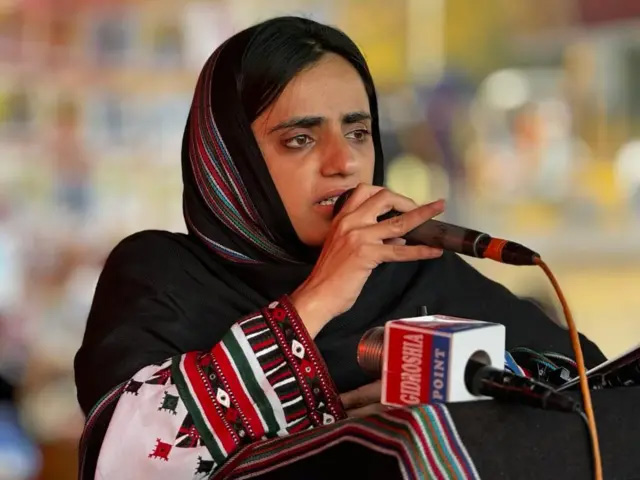
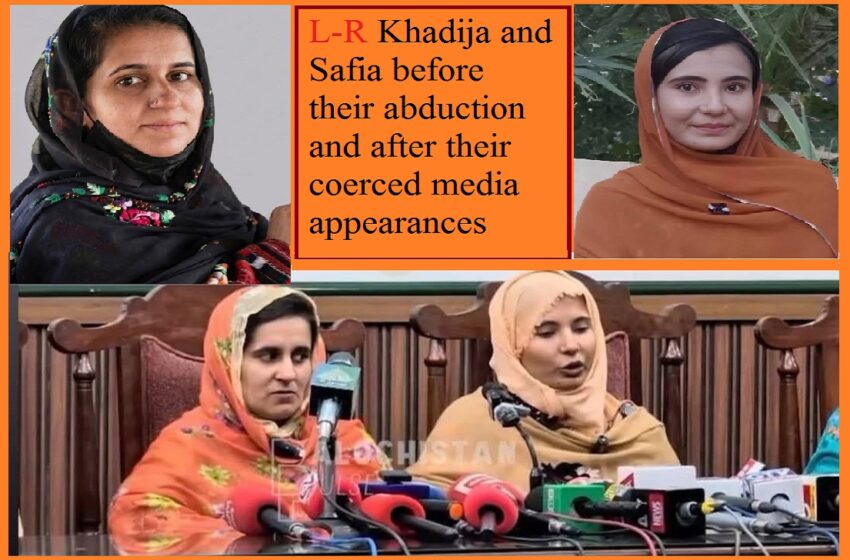
SHAAL (QUETTA): Two Baloch female students who were previously reported missing after being taken into custody by Pakistani security personnel were presented at the Quetta Press Club on Saturday, where they appeared at a press conference and were accused by Pakistani authorities of having links with armed Baloch organisations.
The women were identified as Khadija Baloch daughter of Pir Jan, and Safia Baloch daughter of Abdul Khaliq. Their public appearance followed periods during which their families had reported them missing. It sought information about their whereabouts, prompting renewed concerns among Baloch political and human rights groups over the treatment of people detained during security operations.
According to the information, 20-year-old Safia Baloch, a resident of Basima in Washuk district, was taken into custody at around 1 a.m. on August 23, 2026, when Pakistani security personnel raided a house and transferred her to an undisclosed location. Her family subsequently said that personnel from the Counter Terrorism Department (CTD) and Inter-Services Intelligence (ISI) were involved in her disappearance.
Khadija Baloch, a medical student at Bolan Medical College, was taken from the BMC girls’ hostel on the night of April 22, 2026. Reports say the CTD also detained her and later transferred her to an undisclosed location.
Following her disappearance, her family and Baloch students staged a sit-in outside the medical college for several days, demanding information about her whereabouts and calling for her release.
The two women were subsequently brought to the Quetta Press Club on Saturday, where they were made to participate in a press conference and were accused of links with armed Baloch resistance organisations.
The appearance has also revived a longstanding controversy in Balochistan over what rights groups describe as the “media trial” of people who have previously been reported as forcibly disappeared. Critics of the security agencies maintain that detainees are sometimes kept incommunicado and later presented before the media as alleged militants or terrorism suspects, with their statements portrayed as evidence of involvement in armed organisations before the cases have been fully adjudicated by a court.
This is not the first time such allegations have been made. In January 2026, the Baloch Yakjehti Committee accused Pakistan’s military authorities of using press conferences and public narratives to justify enforced disappearances and extrajudicial killings. Separately, a May 2026 report by the organisation’s human rights department alleged a recurring pattern of staged press conferences and coerced confessional narratives involving people who had previously been detained or reported missing.
There have also been documented media reports concerning individuals who were presented by authorities after their families had reported them missing. In January 2026, for example, the CTD publicly claimed that a student previously reported missing had been arrested on terrorism-related allegations and presented the case at a press conference in Quetta. The authorities’ account and the allegations made by families of missing persons have differed substantially in a number of such cases.
The case of Mahal Baloch has become one of the examples cited in discussions of this practice. In March 2023, authorities publicly presented a video of Mahal while she was in CTD custody and alleged that she had links to the Baloch Liberation Front. Her family disputed the circumstances surrounding the statement and alleged that it had been obtained under duress. However, she was subsequently released after court proceedings.
More recently, rights groups have raised similar concerns about women presented publicly after periods of disappearance. In May 2026, the Human Rights Council of Balochistan alleged that a 17-year-old girl who had reportedly disappeared months earlier was presented as a suspected suicide bomber and described the statement as part of a pattern of forced confessions.
The concerns extend beyond media presentations to allegations that some people who disappear later emerge as casualties of staged or “fake” encounters. A long-running pattern has been alleged in which people previously reported missing are subsequently declared by the CTD or other security authorities to have been killed in encounters with security forces.
The allegation has been documented in reporting by Pakistani and international media. In 2022, Dawn reported allegations by the Voice for Baloch Missing Persons that the Balochistan CTD had killed three previously missing persons in a purported encounter in Kharan. The CTD, however, gave a different account, saying its personnel had targeted alleged militants during an operation.
A 2022 investigation by The Guardian likewise documented allegations from families and activists that people taken by Pakistani intelligence agencies were later killed in staged encounters, often with counterterrorism authorities identifying them as militants. The report noted that such allegations have been a recurring feature of the conflict in Balochistan.
A United Nations document submitted by a non-governmental organisation also described allegations that detainees were taken into custody and subsequently killed in staged encounters, including the widely disputed 2023 Turbat case involving Balach Mola Bakhsh and other individuals. The submission added that some victims had been in security-force custody before being declared killed in encounters.
Against this background, Baloch rights organisations and families of missing persons see a particularly serious pattern involving the CTD: individuals are pressured to appear before the media and denounce or distance themselves from the Baloch political or armed struggle, while those who refuse face the risk of being killed in encounters subsequently described by authorities as counterterrorism operations.
For Khadija and Safia, questions remain over the circumstances of their initial detention, where they were held, whether they had access to lawyers and family members, and whether their participation in the Quetta Press Club press conference was voluntary. Their public accusations of links with armed organisations should also be tested through due process rather than treated as established facts solely on the basis of a security-organised press conference.
The repeated controversy surrounding disappeared persons later appearing before the media, and the separate allegations concerning missing persons subsequently declared killed in encounters, has made the issue one of the most contentious aspects of the human rights situation in Balochistan. Establishing the facts in individual cases would require access to detention records, medical and forensic evidence, court documents, witness testimony and other independent evidence.
For the families of Khadija Baloch and Safia Baloch, their appearance at the Quetta Press Club has ended one period of uncertainty about their whereabouts, but it has opened further questions about what happened to them during the periods when their families said they had disappeared and about the circumstances in which they were brought before the media.