Photo: BHRDN
Balochistan: Veteran Political Leader Muhammad Armian Dies at 83
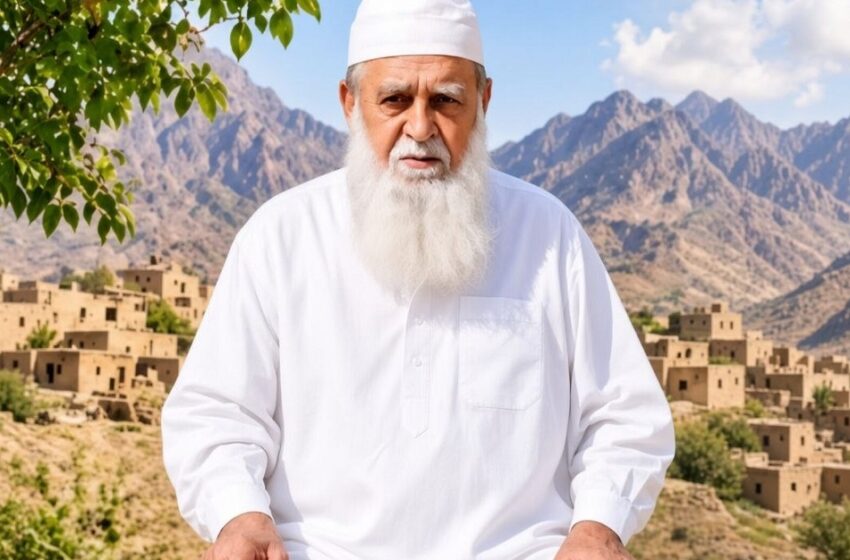
KERMAN: Muhammad Armian, also known as Abdul Wahid, a veteran Baloch political activist, writer and founder of the Balochistan Justice Party, has died at the age of 83 following a prolonged illness in Kerman, Iran.
According to BalochWarna News sources, Armian died on Wednesday, November 25, after spending nearly a month hospitalised in Kerman. His health had deteriorated significantly in recent years due to diabetes and severe physical weakness.
Originally from Dap Kor village in Sarbaaz County, Armian had been residing in Iranshahr. He was a longstanding figure in Balochistan’s political movement and a close associate of Molvi Abdul Aziz. In 2000, he founded the Balochistan Justice Party and played a central role in its establishment and political activities.
One of the relatively few highly educated individuals of his generation in Balochistan, Armian studied political science and was proficient in several languages. Alongside his political engagement, he was actively involved in writing and education. His best-known publication, The Destruction of Gornag, documents the destruction of Gornag village and its consequences for the local Baloch population. Parts of the book have also appeared on the Balochistan Justice Movement’s website.
In accounts of his political life, Armian traced the beginning of his activism to the period when the Kurdish political struggle in Turkey, led by Abdullah Öcalan, was gaining momentum.
He also spoke about his personal acquaintance with Ali Khamenei during the latter’s exile in Iranshahr, when the two lived in neighbouring areas. According to Armian’s own accounts, he used this connection both before and after the 1979 Iranian Revolution to raise the political and cultural demands of the Baloch people with Khamenei.
Among the issues he continuously raised were the right to education in the Balochi mother tongue, meaningful Baloch participation in the administration and decision-making processes of Balochistan, and the appointment of local Baloch people to senior administrative, judicial and executive positions.
Following the establishment of the Islamic Republic and the failure to fulfil these demands, Armian became increasingly critical of government policies and continued his opposition political activities. The formation of the Balochistan Justice Party became an important part of his political struggle.
He subsequently spent many years outside Iran pursuing political activities, maintaining his involvement even in old age.
Approximately three to four years ago, following a deterioration in his health and through the mediation of local elders and community leaders, Armian returned to Iran. According to sources, his return was intended to allow him to spend the final years of his life in his homeland.
In recent years, diabetes and severe physical weakness had left him unable to move independently. He remained at his residence under supervision but continued his educational activities, conducting online Balochi and English language classes and maintaining contact with his students.
Last month, as his medical condition worsened, he was transferred to a hospital in Kerman, where he remained admitted for nearly a month before his death.
Armian’s decades-long contribution to Baloch political activism, advocacy for linguistic rights, education and literature made him a notable figure in Balochistan’s political history.