Occupied Balochistan: A Chronicle of Genocide, Exploitation, and Resistance
By Sadiq Raisani Advocate
Pakistan-occupied Balochistan has remained in a state of turmoil and conflict Since its forceful annexation by Pakistan in 1948, the Baloch people have endured political marginalisation, cultural erasure, and brutal military aggression.
The period from 1999 to 2025 represents one of the darkest chapters in Balochistan’s history, marked by genocide, enforced disappearances, economic plunder and militarisation under successive Pakistani regimes.
1. The Musharraf Era (1999–2008): The Beginning of a New Wave of Repression
When General Pervez Musharraf seized power in a military coup in 1999, Balochistan became a primary target of his military-led governance. Under the pretext of national security and development, Musharraf initiated several mega-projects, such as the Gwadar Port, without the consent or participation of the local population.
These projects quickly became symbols of exploitation rather than progress. Military operations intensified in districts like Dera Bugti and Kohlu, targeting Baloch nationalist leaders.
Prominent nationalist figures, including Nawab Akbar Bugti and Balaach Marri, emerged as powerful voices against Pakistani state atrocities, advocating for the freedom of Balochistan. In 2006, Nawab Akbar Bugti was assassinated in a military operation—an event that galvanised Baloch resistance.
Enforced disappearances became an official state policy under Musharraf. Thousands of Baloch activists, students, journalists, and intellectuals were abducted by intelligence agencies, fuelling widespread outrage.
2. The Democratic Façade (2008–2013): Civilian Rule, Continued Militarisation
Despite the return to civilian rule in 2008, the military continued to maintain its iron grip over Balochistan. The elected provincial government was largely powerless, while military operations proceeded under the guise of counter-insurgency. Operation Rah-e-Haq and other covert missions were launched to target Baloch resistance movements.
The discovery of “kill-and-dump” victims—bodies of Baloch activists bearing signs of torture—became alarmingly frequent. Human rights organisations, including Amnesty International and Human Rights Watch, condemned the Pakistani state’s actions, yet no meaningful international accountability followed.
The launch of the China-Pakistan Economic Corridor (CPEC) further alienated the Baloch people, as land was seized and resources exploited without delivering tangible benefits to the local population.
3. CPEC and Chinese Involvement (2013–2020): Resource Loot in the Name of Development
The announcement of CPEC in 2013 intensified fears of demographic change, forced displacement, and cultural erasure. Gwadar, once a peaceful Baloch fishing town, was transformed into a heavily militarised zone, serving the economic interests of China and Punjab.
Thousands of Baloch families were displaced without compensation. Local fishermen were denied access to the sea, and a security cordon was established around the port. The Pakistani military expanded its presence, setting up numerous bases and checkpoints across the province.
These so-called ‘security forces’ checkpoints became symbols of colonial brutality. The army, Frontier Corps (FC), and intelligence agencies routinely stopped public and private transport, offloaded passengers, searched them, and humiliated men, women, children, and the elderly in full public view. Many were abducted—never to be seen or heard from again.
CPEC-related projects primarily employed non-Baloch labour, further heightening local resentment and feelings of exclusion.
4. Escalation Under Imran Khan (2018–2022): Deepening Crackdown
Under the Imran Khan-led government, the Pakistani state continued its suppression of the Baloch cause. Although the government occasionally paid lip service to the issue, it failed to implement any meaningful change on the ground.
According to Shireen Mazari, then Federal Minister for Human Rights, a bill addressing enforced disappearances in Balochistan mysteriously disappeared after being presented to the Senate. During this period:
- Enforced disappearances surged once again, with women and children increasingly becoming targets.
- Baloch student activists were harassed, abducted, and silenced.
- Military operations continued across the region as the state intensified its crackdown.
- The mainstream media, under strict censorship, excluded Baloch voices from the national discourse.
5. 2022–2025: Resistance and International Awareness Grow Amid Genocide
In recent years, international awareness of the ongoing atrocities in Balochistan has gradually increased. Social media campaigns and diaspora activism have helped bring the Baloch genocide into the global spotlight.
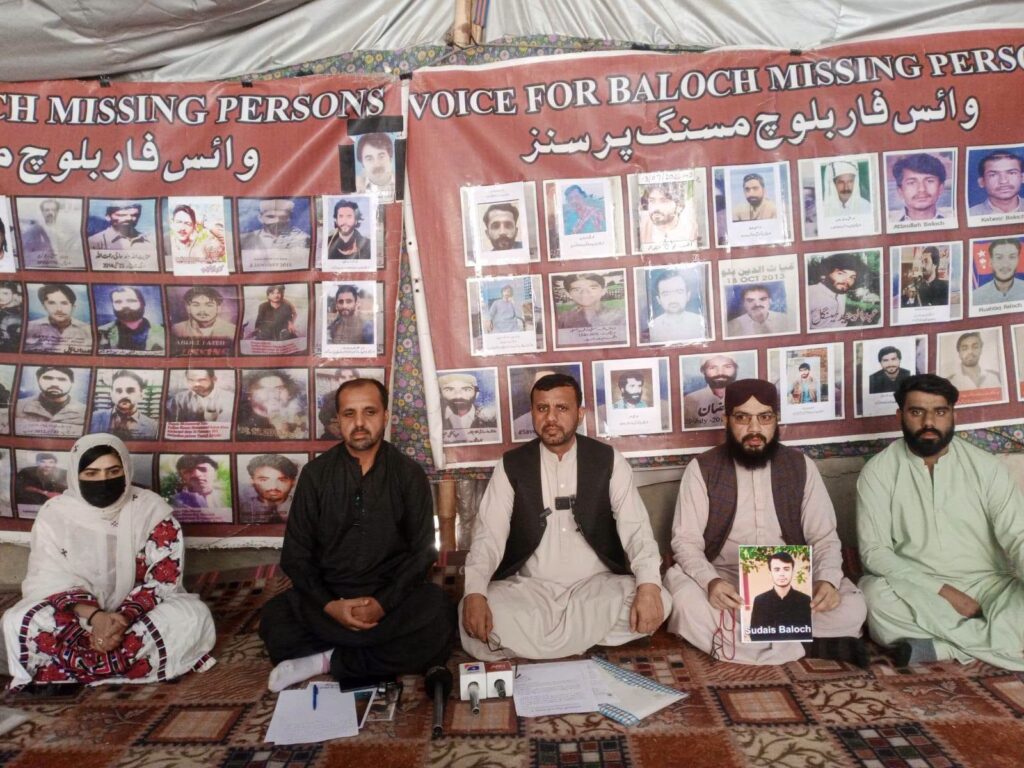
Baloch women—especially mothers and sisters of the disappeared—have led courageous sit-ins and protest marches demanding justice. Despite state crackdowns, Baloch student organisations and political movements have persisted in resisting oppression.
Attempts by the military to pacify the region through violence have failed to crush the Baloch national movement. Documented human rights violations have been submitted to bodies such as the United Nations and the European Parliament, further exposing the gravity of the crisis.
6. The Military State: The Puppet Masters Behind Pakistan’s Political Façade
Pakistan is, in reality, a military state, where the armed forces and intelligence agencies hold absolute power. The so-called elected governments are little more than rubber stamps—obedient “yes men” to the military elite. Those who challenge the military’s authority are swiftly silenced: former Prime Minister Imran Khan was imprisoned, and Nawaz Sharif spent years in political exile.
The military exercises its power by systematically suppressing civilian leadership and constantly reminding the public that they are merely “toys” at the military’s disposal. It is the military that holds the remote control—no institution or individual functions without its consent.
This deep-rooted military dominance has direct consequences for Balochistan. Former President Asif Ali Zardari publicly admitted that he was told by the military not to interfere in Balochistan, as it was beyond his domain. Zulfiqar Ali Magsi, a former governor of Balochistan, also acknowledged that two parallel governments operate in the province: one, a puppet civil administration supporting the military’s agenda, and the other, the military itself—a shadow state unaccountable to any democratic institution. It is, effectively, a state within the state.
Conclusion: A Nation’s Struggle for Survival
The years from 1999 to 2025 have been marked by unrelenting suffering and determined resistance in Occupied Balochistan. Pakistan’s policies—of military aggression, demographic engineering, and systemic resource exploitation—have aimed to erase the Baloch identity. Yet, the Baloch nation continues to fight for its freedom, dignity, and justice.
The international community must recognise the ongoing Baloch genocide and hold the Pakistani state accountable for its crimes against humanity. Silence is complicity. The world cannot afford to ignore the cries of a people struggling for their very existence.
Disclaimer: The views and opinions expressed in this article are solely those of the author and do not necessarily reflect the official policy or position of Baloch Warna News. The publication provides a platform for diverse perspectives.