Pakistan and Iran’s Alliance: A War Against Baloch National Liberation Movement
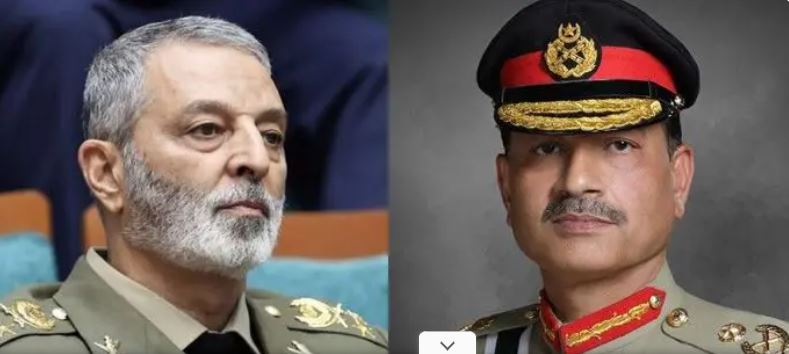
In a recent joint statement, Iranian Chief of Staff Abdul Rahim Mousavi and Pakistan’s Army Chief General Asim Munir announced plans to expand cooperation in fighting what they label as “terrorist threats.” On the surface, it appears to be a standard bilateral security agreement. But beneath the diplomatic jargon lies a more sinister reality: this is not a counterterrorism pact — it is an anti-liberation alliance aimed squarely at crushing the legitimate resistance of the Baloch people.
Let us be clear: both Pakistan and Iran are among the world’s most notorious state sponsors of terrorism. Their fingerprints are embedded in decades of regional bloodshed from the sponsorship of sectarian militias in Iraq and Syria to the harbouring of extremist groups in Afghanistan and Kashmir. These are not states burdened by terrorism; they are its architects. Their track records are well documented in international reports, U.N. findings, and by global human rights watchdogs.
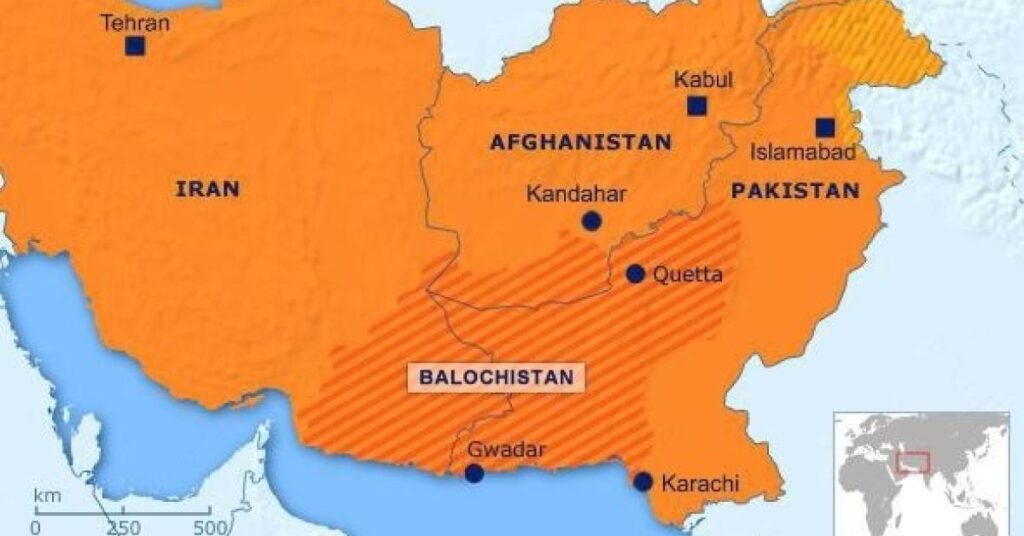
What unites these regimes today is not a shared commitment to peace, but a shared fear: the growing momentum of the Baloch national liberation movement. For decades, Balochistan , rich in natural resources like gas, gold, oil, and a strategic coastline, has been plundered by both capitals. The Baloch people, however, are no longer silent. What Islamabad and Tehran fear is not terrorism, but an indigenous resistance rooted in a deep and unwavering demand for dignity, justice, and independence.
Across the mountains and shores of Balochistan, the voices of freedom grow louder. This movement is not driven by foreign meddling or ideological extremism; it is powered by the collective will of a people long denied their rights. It is a grassroots uprising of all people from walks and spheres of life against systemic exploitation, forced disappearances, military occupation, and cultural erasure.
By labeling this resistance as “terrorism,” Pakistan and Iran hope to delegitimise it in the eyes of the international community. But their narrative is crumbling. The world is beginning to recognise the pattern: repressive regimes masking state violence under the banner of “counterterrorism” to justify brutal crackdowns and regional militarism.
The so-called Pakistan–Iran alliance is not about regional security. It is about preserving an unjust status quo in Balochistan. It is a pact of desperation, a joint campaign by two failing regimes to halt a liberation movement that can no longer be ignored.
Let there be no illusions. What they call “security operations” are in fact coordinated acts of suppression. What they describe as “cross-border cooperation” is a coordinated assault on the sovereignty of the Baloch people.
The international community must not be misled. The real threat to peace and stability in the region is not the Baloch resistance. It is the entrenched violence and state terrorism of Pakistan and Iran. Their alliance is not a wall against chaos, but a shield for impunity.
Balochistan’s struggle is no longer hidden in remote hills — it is a loud, unrelenting cry for freedom echoing across the region. No alliance of oppressors can silence it. No diplomatic statement can smother it. And no amount of cross-border force can defeat it.
It is not Balochistan that must be contained. It is the criminal impunity of the states that seek to destroy it.