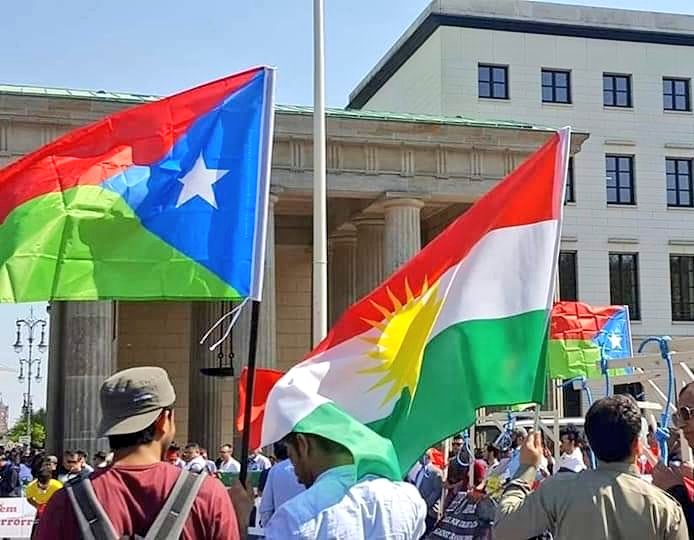
Why Is the Right to Nationhood Recognised for Others but Denied to the Baloch and the Kurds?
Abdul Sattar Dushoki (Balochistan Study Centre – London)
When the United Nations was founded in 1945, it recognised only 51 sovereign states. Today, nearly four times that number exist. If the pursuit of independence, often branded as “separatism”, were truly a crime, why has the international community recognised the statehood of almost 150 additional nations in just eight decades? These recognitions occurred despite resistance from former colonial powers. Many of these nations—Singapore, Malaysia, Australia, New Zealand, East Timor and others—benefited from or were shaped by colonial administration.
By contrast, Balochistan has received none of the developmental advantages often seen in former colonies. Instead, its people have faced repression, executions, mass imprisonment, poverty, racial discrimination, and continual humiliation. Just last week, in my hometown of Chabahar, non-local agents known as Gajar bulldozed the homes and huts of Indigenous Baloch residents. Today (Saturday), Baloch homes in Zahedan, within their own homeland, were demolished yet again. This pattern has been repeated dozens of times.
For a people who have endured land confiscation, systemic discrimination, and political exclusion, “being Iranian” has brought no meaningful benefit. What have the Baloch gained from Iran? The same question applies to other nations, such as the Kurds, who face parallel forms of dispossession.
The Case of Balochistan and Kurdistan
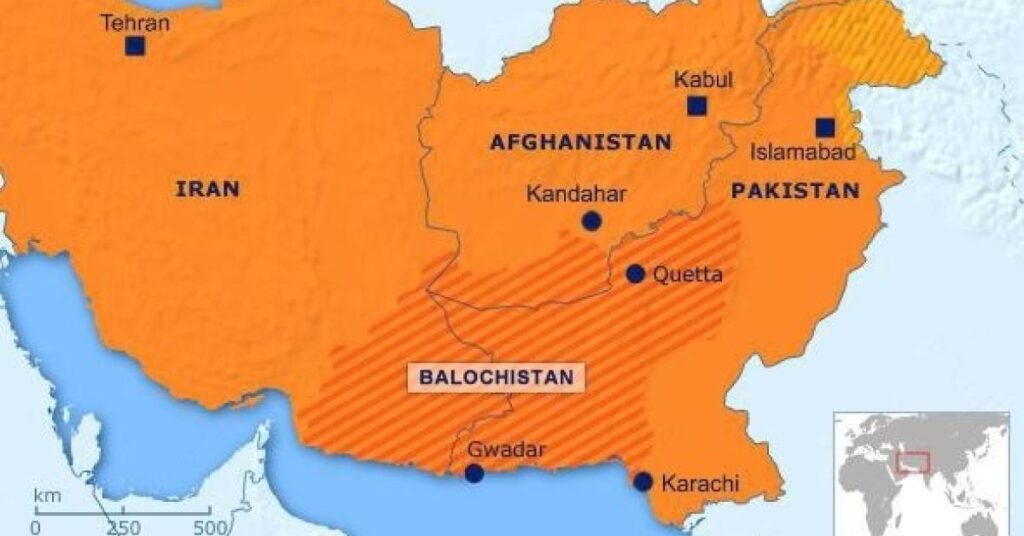
Consider Balochistan by objective measures. In terms of population, it would rank around 59th among nearly 200 sovereign states. Its land area, approximately 700,000 square kilometres, divided among Iran, Pakistan, and Afghanistan, would place it around 39th in the world, just after Zambia. The Balochi language is among the world’s major living languages, and the documented history of the Baloch spans millennia. The Shahnameh (Book of Kings) even describes battles between Persian rulers and the kings of Makran, the historic heart of Balochistan.
A Fundamental Question
Why do microstates such as Nauru (10,000 people), Tuvalu (11,000), Palau (18,000), and San Marino (34,000), along with nearly 140 others with far smaller populations, territories, or historical depth than Balochistan, enjoy sovereignty and UN membership?
And why, when a Baloch or a Kurd demands the same inherent and legal right, are they branded as separatists, traitors, or criminals? Why do newly formed or historically artificial states such as Pakistan, the UAE, Bahrain, Iraq, Syria, Lebanon, and Palestine possess the right to nationhood, while tens of millions of Baloch and Kurds are denied even the right to debate theirs?
Is it treason for a prisoner to ask for freedom? Were the independence struggles of nearly 150 nations over the past 80 years acts of treason? What if the prisoner has endured torture, humiliation, poverty, and the daily indignities of occupation?
I explored these questions four and a half years ago in my documentary, “In the Gamble of History: Why and How Did We Baloch Lose Balochistan?” I addressed them again in my article “This Homeland Has Never Been Our Homeland.” My conclusion remains unchanged: this imposed “homeland” has never truly been ours.
The Legal Basis: The Right to Self-Determination
The United Nations recognises self-determination as a cornerstone of international law. It includes both:
External self-determination (independence, secession), and Internal self-determination (meaningful participation in governance).
This right is affirmed through:
UN Charter: Article 1(2) explicitly supports the right of peoples to self-determination.
1966 International Covenants on Human Rights: Both covenants enshrine the right in their shared Article 1.
General Assembly resolutions, including the landmark Resolution 1514 (1960) on decolonisation and Resolution 1803 on permanent sovereignty over natural resources.
Numerous other UN instruments and precedents, which have guided the recognition of dozens of new states.
Despite this, Baloch and Kurds who assert the same right face repression, imprisonment, or death.
This raises the central question once more: Why is the right to nationhood legitimate for others—but forbidden for the Baloch and Kurds?
This article was originally published in Persian on various social media platforms. The BW News Web team has translated it into English to make Balochistan’s issues more accessible to a wider audience.