FBM Seminar in Düsseldorf Highlights Human Rights Violations in Occupied Balochistan
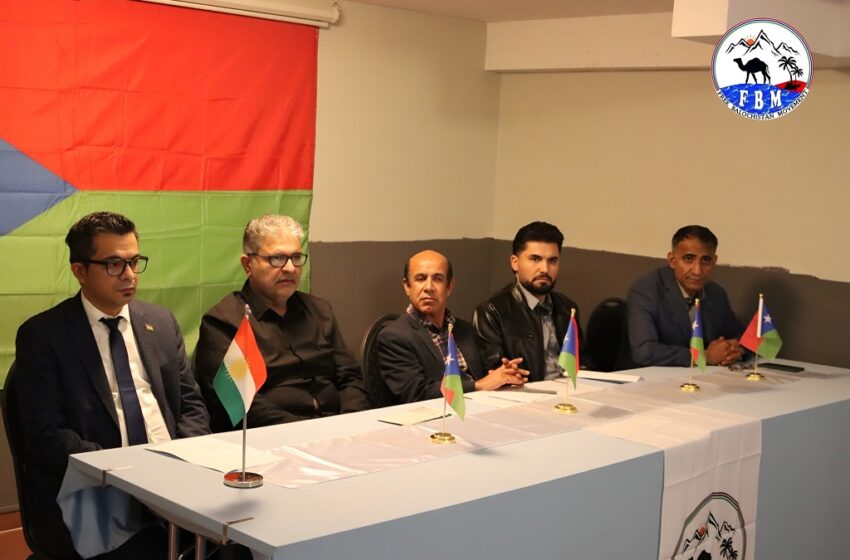
DÜSSELDORF, GERMANY: The Free Balochistan Movement (FBM) organised an international seminar on 6 December in Düsseldorf, bringing together representatives of several oppressed and occupied nations to highlight the escalating human rights crisis in occupied Balochistan.
The event opened with the Baloch national anthem and continued throughout the day with speeches from political activists, human rights defenders and FBM representatives committed to exposing the grim realities faced by their nations and strengthening united political efforts.
The seminar placed particular emphasis on the worsening situation in occupied Balochistan. In one of the event’s most powerful testimonies, Wajid Ali Baloch, a survivor of enforced disappearance, described in detail his abduction, prolonged torture and the lasting trauma of being held incommunicado without trial or legal protection. He reminded the audience that thousands of Baloch face similar treatment, with many victims never returning alive. His testimony underscored the pervasive impunity enjoyed by Pakistan’s security agencies and the urgent need for international investigations, sanctions and independent monitoring mechanisms.
Alongside him, Beebagr Baloch, Head of the FBM Home Department and MB Marri of the FBM Finland branch Organiser documented evidence of enforced disappearances, the targeting of families and the collapse of civil governance in the region under military control.
In a concise but impactful address, Obaid Ullah Baloch, Head of the FBM External Department, outlined the broader political landscape. He noted that the Baloch nation has endured more than seven decades of Pakistani occupation marked by disappearances, torture, engineered instability, and a lack of judicial independence. He stressed that international access to Balochistan remains intentionally blocked and emphasised that unity within the Baloch national movement is essential for increasing its influence on global platforms.
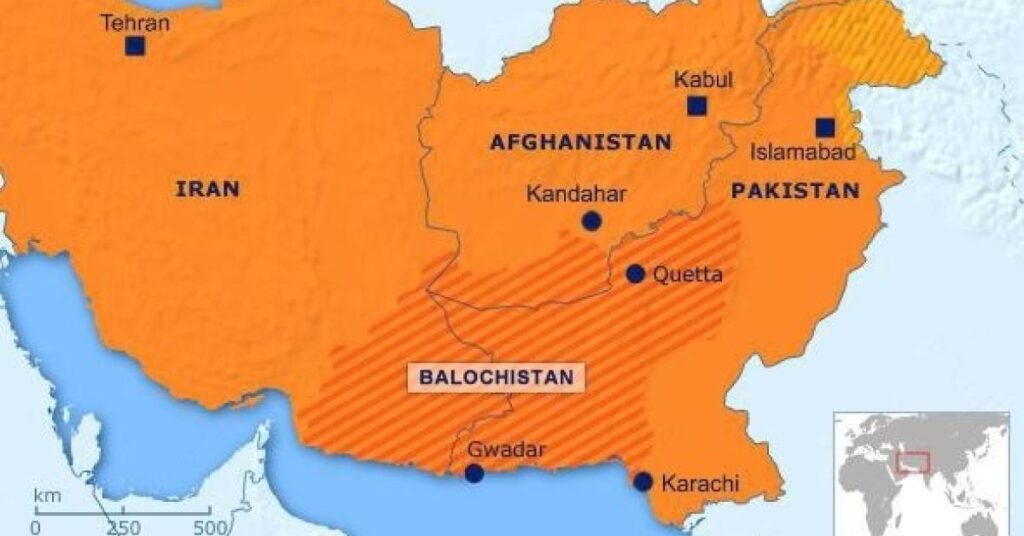
Following his remarks, Sadiq Raisani, Head of the FBM Tribal Affairs Department, delivered a speech urging audiences to view Balochistan in its entirety, from Minab to Kashmore and from Dera Ghazi Khan to Nimroz. He stated that national unity is the only viable path forward and warned against divisions based on colonial-imposed identities such as “Pakistani Baloch,” “Afghanistani Baloch,” or “Irani Baloch.” He asserted that a Baloch is simply a Baloch and that Balochistan is one homeland, not fragmented regions defined by occupying states.
The seminar also addressed serious human rights violations in Iranian-occupied Balochistan, where executions of political activists, the killing of Baloch fuel porters, landmine casualties, and systematic economic marginalisation continue to escalate. Speakers noted that these abuses, though occurring under a different state apparatus, mirror the same patterns of oppression and colonial control faced by occupied nations across the region.
A defining feature of the seminar was the strong participation of representatives from allied oppressed and occupied nations. Their presence reflected a shared understanding that their struggles, despite differing geographies, stem from similar systems of domination, militarisation, and denial of national rights.
The Ahwazi Arab nation was represented by Jamal Al-Ahwazi of the Ahwazi Human Rights Defence Organisation and Ahmad Ghofeli Zadeh Jaliaa of the Ahwazi Democratic Popular Front. From the South Azerbaijani nation, human rights activist Alihan Beyoglu provided an analysis of ongoing repression. The Kurdish nation was represented by Shamal Piran of the Kurdistan Freedom Party and Masoud Pajohi of the Kurdistan Independence Movement. Participation from the Pashtun nation included Gul Agha Kakar of the Pashtun Tahafuz Movement.
Their speeches underscored that no oppressed nation can confront occupation in isolation and that collective diplomatic, political and advocacy efforts are essential for international recognition and long-term liberation.
In his closing remarks, Professor Shahswar Baloch, Vice President of FBM, expressed gratitude to allied nations for their solidarity. He emphasised that cooperation among oppressed nations is a strategic necessity, not merely a symbolic gesture and that unity amplifies their collective voice against powerful occupying states. The seminar concluded with final remarks from Ashfaque Baloch, Organiser of the Germany Branch of Free Balochistan Movement, reaffirming FBM’s commitment to peaceful resistance, international engagement and building stronger alliances among oppressed and occupied nations striving for freedom and justice.