Balochistan: Pakistani forces Continue Human Rights Violations and Civilian Killings
SHAAL, Balochistan: Throughout early February 2026, multiple incidents across Balochistan reveal a disturbing pattern of violence by Pakistani forces and their proxies involving enforced disappearances, extrajudicial killings, and the indiscriminate use of force in civilian areas.
These events, occurring in Turbat, Nushki, Panjgur, and surrounding localities, collectively point to a deepening human rights crisis and a persistent climate of fear for the Baloch population.
On February 4, 2026, in Turbat, Kech district, Balach Khalid was extrajudicially killed by Pakistani Army–backed death squads. Balach had previously been subjected to enforced disappearance after his abduction on October 25, 2023, and was later released from the custody of the Counter Terrorism Department (CTD) after several months.
Before his death, he had survived at least two assassination attempts, indicating sustained targeting. He was killed while visiting the grave of Allah Daad to mark one year since Allah Daad’s execution by the same death squad. The perpetrators fled the scene following the killing.
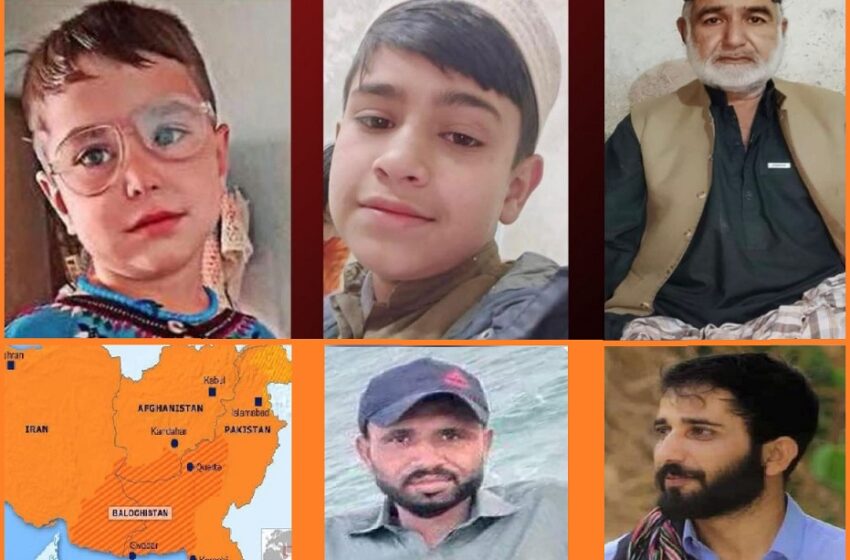
On February 3, 2026, in Nushki Bazaar, twelve-year-old Shezad Ahmed son of Zafar Ahmed, was shot dead when state forces opened fire in a crowded civilian area. A school-going child with no involvement in any conflict, Shezad, was killed in an environment that should have ensured his safety. His death highlights the severe risks faced by civilians, including children, due to the unchecked use of lethal force in public spaces.
The same day, in Killi Qazi Abad, Nushki, sixty-year-old Babu Atta Muhammad was killed by direct firing from the Pakistani army. He was shot dead in an act described by local accounts as a brutal and deliberate use of force. This incident further reflects a broader pattern in which civilians are killed either after prolonged detention and torture or through open violence in residential areas.
Also on February 3, 2026, in Washbodh, Panjgur, the mutilated body of Jasim Jan, a labourer and resident of Panjgur, was recovered after he had been forcibly disappeared. His whereabouts had remained unknown for days, causing severe distress to his family. His bullet-riddled and tortured body confirmed that he was killed while in custody. Jasim Jan belonged to a working-class family and earned his livelihood through daily labour, underscoring that those targeted include individuals from all walks of life.
Earlier, on February 2, 2026, in Kili Jamaldini, Nushki, three-year-old Deedagh Baloch was killed amid escalating military offensives in residential areas. Reports indicate an increased use of drone strikes and direct gunfire, resulting in civilian casualties, including women and children. The killing of a child so young illustrates the extent to which ongoing security offensives have endangered civilian life.
Taken together, these incidents demonstrate a consistent pattern of enforced disappearances followed by extrajudicial executions, as well as the routine use of lethal force in civilian settings. The cumulative impact has been the spread of fear, insecurity, and collective trauma among the Baloch population. These events underscore the urgent need for independent investigations, accountability for those responsible, and immediate international attention to end ongoing human rights violations in Balochistan.