IVBMP highlights Human Rights Violations in Balochistan at West London University
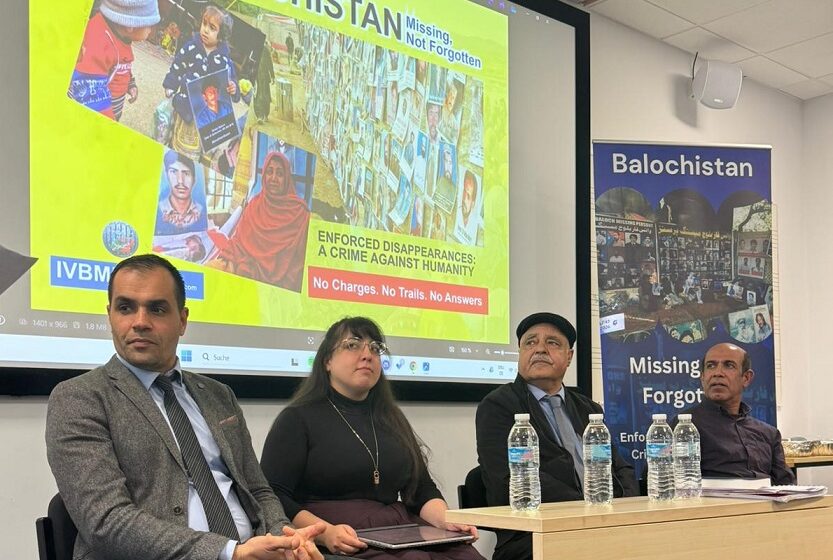
LONDON: On April 20, the International Voice for Baloch Missing Persons, in collaboration with the United Nations Academic Impact, organised a significant event at the University of West London to highlight ongoing human rights violations by Iran and Pakistan in Balochistan.
The programme began with a one-minute silent, standing ovation in solidarity with all victims of enforced disappearances worldwide. Participants also paid tribute to those who have stood up against oppressive states involved in crimes against humanity, including enforced disappearances, extrajudicial killings, and arbitrary executions.
The programme opened with a one-minute silent standing ovation in solidarity with victims of enforced disappearances around the world. Attendees also paid tribute to those who have resisted oppressive states involved in crimes against humanity, including extrajudicial killings and arbitrary executions.
The event drew a diverse audience of students, academics and faculty members, alongside representatives from Baloch, Pashtun, Al-Awazi Arabs and Kurdish people. Speakers highlighted widespread abuses in Balochistan, pointing to enforced disappearances, prolonged civilian detentions, and so-called “kill and dump” policies carried out by state authorities of Pakistan and Iran in Balochistan.
In addition, speakers specifically raised concerns about enforced disappearances and extrajudicial killings of Baloch individuals in Pakistan, as well as executions of innocent Baloch by Iranian authorities. They noted that these issues have been documented and brought to international attention by local Baloch human rights organisations and major global groups such as Amnesty International and Human Rights Watch, as well as other international platforms.
The speakers also urged academics and researchers not to rely on states’ narratives regarding enforced disappearances and other human rights abuses against Baloch, Pashtun, Kurdish and Ahwazi Arab nations. Instead, they encouraged independent, fact-based research grounded in direct engagement with victims of state repression.
According to speakers, these practices represent serious violations of fundamental human rights and international law. They urged global human rights organisations and the United Nations to take more decisive action, warning that continued inaction risks prolonging the suffering of affected communities.
A key focus of the event was the use of academic research and verified data to frame the issue of enforced disappearances, aiming to move beyond political narratives and ground discussions in evidence-based analysis.
The programme also featured a testimonial video showcasing family members of missing persons, who shared personal accounts of loss and appealed for the safe return of their loved ones.
Organisers concluded that the event demonstrated the important role academic institutions and civil society can play in raising awareness and advocating for justice on international platforms.