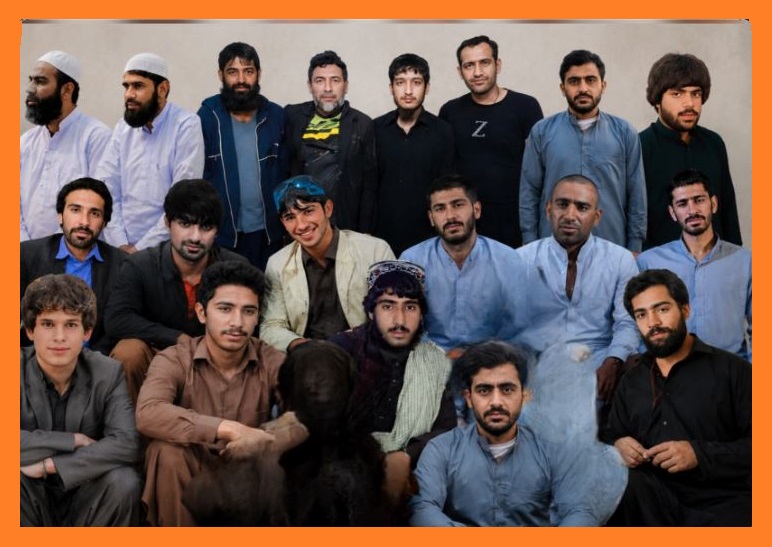
Photo Credit: BHRD Network
At Least 21 Baloch Prisoners Face Execution in Iran Amid Mounting Fair Trial Concerns
DOZZAAP, BALOCHISTAN: A growing number of Baloch prisoners in Iran are facing imminent execution, with human rights advocates warning that at least 21 individuals have been sentenced to death in cases marked by allegations of torture, forced confessions, denial of legal representation, and serious violations of due process.
The cases, concentrated largely in Iranian Occupied Balochistan (IOB) but extending to other parts of the country, have renewed scrutiny of Iran’s use of capital punishment against oppressed nations and political detainees. Activists say the prosecutions reflect a broader pattern of political and security-based repression targeting Baloch citizens, religious figures, protesters and individuals accused in national security cases.
Rights groups argue that what is unfolding is not a series of isolated judicial rulings, but a sustained campaign in which courts and security institutions are used to suppress dissent and intimidate communities already facing longstanding discrimination.
Many of the prisoners now under sentence of death were convicted after proceedings that families and rights monitors describe as fundamentally unfair. Common allegations across the cases include severe physical and psychological torture during interrogation, prolonged solitary confinement, denial of meaningful access to lawyers, secretive court hearings, and convictions based largely on confessions extracted under duress. Families have repeatedly questioned the judiciary’s independence in these cases. In some instances, they say judicial officials discouraged them from seeking their relatives’ release even before trials had concluded, intensifying concerns that verdicts were predetermined.
Among those facing execution are Adham Naroei and Mohammad Zain-ul-Dini, who were arrested in 2020 and 2021 in connection with the killing of four security personnel in Lashar County. Both men have repeatedly denied the charges. Their relatives say the proceedings lacked neutrality and fairness. The psychological pressure of detention has reportedly been severe, and Naroei is said to have attempted suicide in 2024 while held in Zahedan Central Prison.
In another case, Imran Aghal and Farhad Baranzaei were arrested in 2025 during security operations in Rask County and surrounding areas. Authorities accused them of membership in armed opposition groups and acting against national security, leading to death sentences. Baranzaei’s lawyer has said one hearing was held without prior notice and that the case has been referred to the Supreme Court for review.
Farshid Hassanaei and Jamshid Hassanzaei were detained in 2022 over an alleged attack on the Cheshmeh Ziarat police post near Zahedan. Their families allege both men were tortured in custody and forced to confess. In 2023, their hearing was conducted online without legal counsel present. Farshid was sentenced to death, while Jamshid received a 25-year prison term.
Another prominent case is that of Hussein Shahouzaei, a 29-year-old from Zahedan arrested in 2022 while boarding a bus in Mashhad. Reports indicate he was held for approximately six months in Revolutionary Guard intelligence detention without contact with his family. He was charged with weapons possession, plotting to assassinate Ahmad Alamolhoda, and planning an attack on provincial offices. A revolutionary court in Mashhad sentenced him to death, a ruling later upheld by the Supreme Court. State media had previously aired what was presented as a confession, though human rights sources say the statement was obtained through torture.
Nasimeh Eslamzaei, a Baloch political prisoner and mother of two, is also among those facing execution. She was arrested in 2023 alongside her husband, Abdul Rehman Kurdi. Both were sentenced to death by Branch 15 of the Tehran Revolutionary Court under Judge Abolqasem Salavati on charges related to alleged membership in Daesh and in bomb-making offences. Her husband was later executed.
Eslamzaei was pregnant when arrested and gave birth inside Qarchak Prison. Sources say she spent months in solitary confinement in Ward 209 of Evin Prison while her newborn was kept in unsanitary prison conditions. Relatives have also said security forces threatened to transfer the child to another family, while the whereabouts of the couple’s first child reportedly remain unclear.
Four additional Baloch prisoners—Eido Shehbakhsh, Abdulghani Shehbakhsh, Abdulrahim Ghanbarzaei, and Suleiman Shehbakhsh—are facing death sentences in Qezel Hesar Prison.
The case of Suleiman Shehbakhsh has drawn particular concern because he was reportedly only 12 years old at the time of his arrest. If confirmed, rights advocates say the case would represent a grave violation of international child protection standards. Families of the men say the convictions lacked credible evidence and that some of the accused were already in custody when the incidents they were blamed for took place.
Molavi Amanollah Baluch and Hafez Abdulrahim Kouhi, two Baloch clerics from Sarbaz County, were arrested in 2015 and have since spent years in detention, including repeated transfers to solitary confinement and security facilities. They were sentenced to death on accusations of membership in anti-state groups and threatening national security—charges they deny. Their families say the verdicts were issued without sufficient evidence. In September 2025, after nearly a decade in detention, both men were granted temporary leave on bail from Zahedan Central Prison.
Observers say the recurring elements in these cases, torture allegations, forced confessions, closed trials, denial of legal counsel, pressure on families, and broad national security charges, point to a wider pattern of securitising Baloch civic life in Iran. The Baloch people, concentrated largely in south-eastern Iran, have long reported political marginalisation, economic deprivation and heavy-handed security responses. Executions have become one of the most controversial features of that relationship.
Human rights advocates have been urging the United Nations, its special rapporteurs, international legal bodies and independent media not to remain silent over the fate of the 21 prisoners. They say urgent intervention is needed to halt executions, guarantee fair retrials, investigate torture allegations independently, and prevent further use of the death penalty in cases tainted by serious procedural abuses. Because execution is irreversible, campaigners warn that carrying out these sentences before transparent legal review would risk permanently extinguishing lives in cases still clouded by major unanswered questions.