Baloch Nation and Diaspora Mark November 13 as Baloch Martyrs’ Day with National Pride and Zeal Around the World
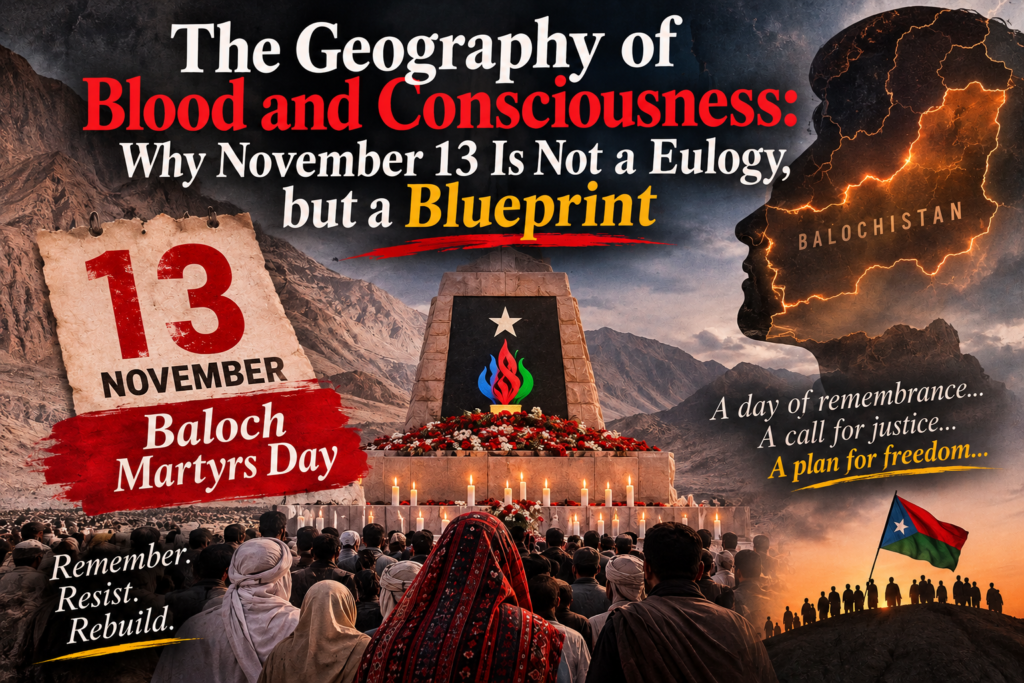
LONDON: The Baloch nation in Balochistan and the Baloch diaspora worldwide observed November 13 as Baloch Martyrs’ Day, also known as National Remembrance Day, with national pride, enthusiasm, and a renewed commitment to honouring the sacrifices of Baloch national martyrs.
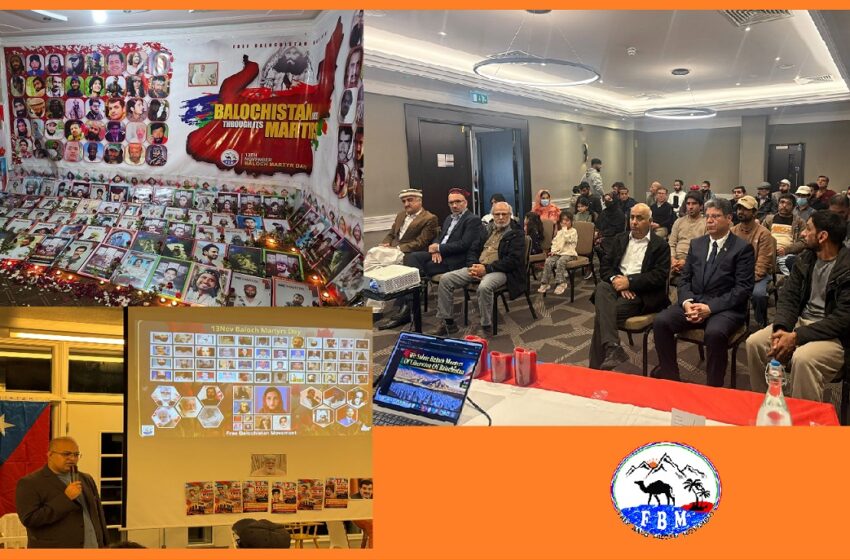
As in previous years, the Free Balochistan Movement (FBM) organised commemorative events and political seminars on November 13 in the United Kingdom, Finland, Germany and Balochistan. The events brought together Baloch political activists, intellectuals, social figures, and representatives of other national movements to honour those who sacrificed their lives for the Baloch homeland.
The commemorations focused on the historical background of Baloch Martyrs’ Day, the Baloch national struggle, national identity and political consciousness, as well as the importance of preserving the historical and ideological legacy of the martyrs for future generations.
The Free Balochistan Movement held a seminar in London to mark Baloch Martyrs’ Day. The event was attended by Baloch political and social activists residing in the United Kingdom, leaders associated with the Kurdish freedom movement, representatives of the Pashtun Tahafuz Movement (PTM) and a large number of Baloch activists.
During the seminar, speakers paid tribute to Baloch national martyrs and remembered their sacrifices. They discussed the Baloch national struggle, national identity and the importance of unity and solidarity among different nations.
Kurdish leader Ashtiyako Poorkarim, in his address, paid tribute to the Baloch martyrs and highlighted the historical and political ties between the Baloch and Kurdish nations. He emphasised the importance of unity and solidarity between the two nations, stating that, in his view, Iran occupies both nations and that the Baloch and Kurdish people continue to face oppression and the use of force.
Baloch poet and social activist Raaji Baloch also paid tribute to the Baloch national martyrs. He emphasised the importance of commitment, dedication and trust in the Baloch freedom struggle. He noted that the struggle for freedom is a long and arduous journey in which many new companions may join the movement, while others may leave along the way for various reasons. He stressed that steadfastness and commitment are essential to continuing the struggle. He also recited poetry in the Balochi language, expressing his respect for the martyrs and their sacrifices.
Abdullah Baloch, a leader of Baloch Raaji Zrumbesh (Baloch National Movement), said that anti-Baloch forces were attempting to divide the Baloch nation along various lines, including Iranian and Pakistani, western and eastern, and northern and southern identities. He stressed that the Baloch nation must collectively resist such attempts at division and stand united as one nation.
He emphasised that the Baloch are one nation and Balochistan is one country, rejecting attempts to divide the homeland into Eastern, Western or Northern Balochistan.
Dr Abdul Malik Hadi, a leader of the Pashtun Tahafuz Movement (PTM), stressed the importance of unity and solidarity between the Baloch and Pashtun nations. Paying tribute to the Baloch martyrs, he said they had sacrificed their lives for the Baloch homeland, national dignity, honour and identity.
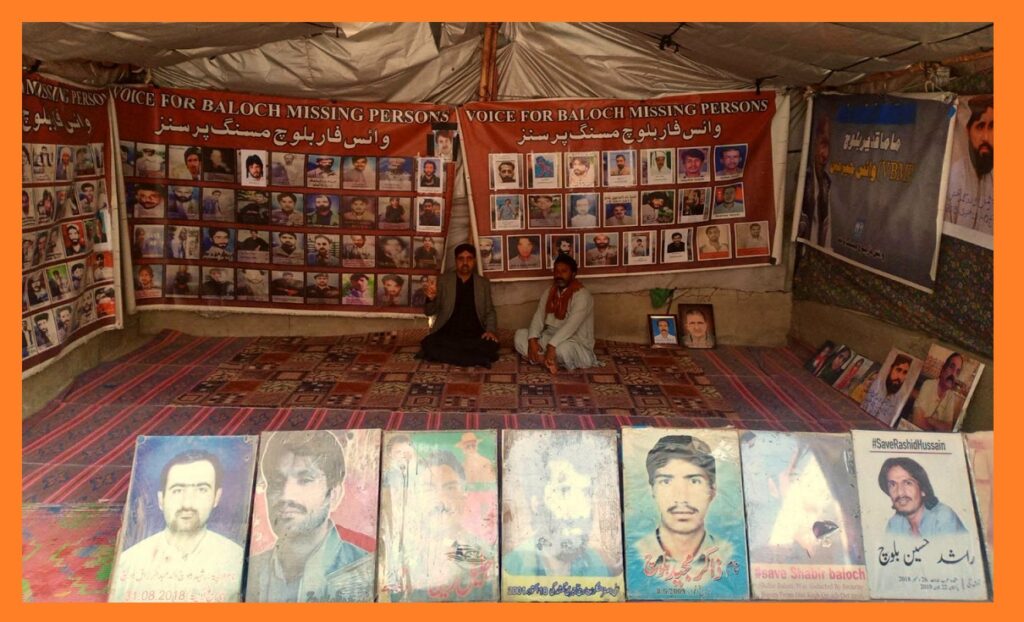
He also highlighted ongoing human rights violations against the Baloch and Pashtun people, including enforced disappearances, arbitrary detentions and imprisonment, as well as the handing down of prison sentences to Baloch and Pashtun political leaders for their peaceful and democratic struggle. He emphasised the importance of standing together in support of the fundamental rights, dignity and democratic aspirations of both nations.
The seminar was moderated by Faiz Baluch, a member of the Free Balochistan Movement. In his opening remarks, he said: “We have not gathered here today merely to remember those who sacrificed their lives for their homeland, but also to renew our commitment to continuing our struggle to fulfil the mission of the Baloch martyrs.”
At the conclusion of the seminar, participants paid tribute to the Baloch martyrs and reaffirmed their commitment to preserving their memory and passing the message of the Baloch national struggle on to future generations.
On November 13, the Free Balochistan Movement also organised a seminar in Helsinki, the capital of Finland. The event was attended by political and social figures, as well as participants associated with the Baloch and Afghan national movements.
The seminar featured addresses by MB Marri Baloch, Head of the Foreign Affairs Department of the Free Balochistan Movement; Sadiq Raisani, Head of the Tribal Affairs Department; Dr Samuel Baloch; Akhlaq Baloch; Shafiullah Yousafzai; Bari Barich; and Javed Khan of the Pashtun Tahafuz Movement (PTM). General Faiz Ali Kochi, an Assistant Member of the Free Balochistan Movement, and Qadir Attai from Afghanistan also shared their views.
In their speeches, participants offered detailed insights into the historical struggle, sacrifices and philosophy of national liberation, examining their intellectual and political significance for future generations. They emphasised that the sacrifices of the martyrs were not merely events of the past but an essential part of national history, collective consciousness, identity and the struggle for freedom.
The seminar also addressed the sacrifices of Afghan martyrs and the historical background of the Afghan national struggle. Referring to the political life, struggle and martyrdom of former Afghan President Dr Najibullah, speakers discussed significant periods in Afghanistan’s history and highlighted the historical, cultural and political ties between the Baloch and Afghan nations.
The political philosophy of Nawab Khair Bakhsh Marri, his vision of national freedom and his role in the Baloch national movement were also discussed. Speakers also examined Hyrbyair Marri’s political struggle and his vision of an independent Balochistan. They highlighted the historical significance of Balochistan, the Baloch nation’s right to independence and the political vision of a united Balochistan.
The seminar further addressed the state policies of Pakistan and Iran, the political status of Balochistan and the question of Baloch national independence. Expressing their political position, speakers described Pakistan and Iran as occupying powers in Balochistan. They argued that the Baloch national question must be understood within its historical, political and national context rather than being treated merely as an internal administrative or developmental issue.
Participants agreed that commemorating the sacrifices of Baloch and Afghan martyrs, conveying the ideological foundations of their struggles to younger generations and preserving historical memory were essential to strengthening national consciousness.
The central message of the seminar was that remembering the martyrs should go beyond expressions of condolence and tribute. It is equally important to understand their ideologies, political thoughts, sacrifices and historical struggles and to pass this legacy on to future generations.
The observance of November 13 across different countries demonstrated the importance of Baloch Martyrs’ Day as a day of collective remembrance, national identity and historical reflection. Baloch communities around the world marked the occasion with national pride and zeal, reaffirming their connection to their homeland, history and national identity.
The Free Balochistan Movement reaffirmed its commitment to bringing the sacrifices and historical legacy of Baloch martyrs to international attention and ensuring that the Baloch national question remains part of international political and intellectual discourse.
The international observance of Baloch Martyrs’ Day once again brought together Baloch communities across geographical boundaries. From Balochistan to Europe and other parts of the world, the Baloch nation and its diaspora honoured their martyrs and reiterated the importance of preserving their national history, strengthening unity and solidarity, and ensuring that future generations remain aware of the sacrifices made throughout the history of the Baloch national movement.