Balochistan: Civilians Killed in Panjgur as Violence Continues During Ramadan
PANJGUR, BALOCHISTAN: A series of violent incidents in the Panjgur district of Balochistan during the holy month of Ramadan has raised concerns among local residents and human rights advocates after several Baloch civilians were killed in recent days.
Balochistan-based human rights groups say that Pakistani security forces and state-backed criminal proxies are involved in the latest intensification of violence across the region.
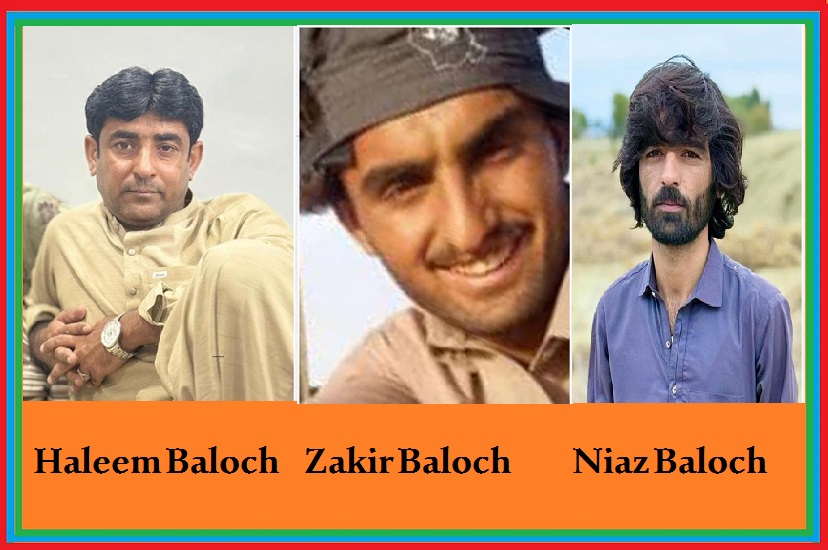
The most recent case involves the killing of Haleem Baloch, a 30-year-old shopkeeper from Panjgur. His body was discovered on March 6, 2026, near the Panjgur Airport area with multiple bullet wounds. The body was transferred to Civil Hospital Panjgur, where family members later confirmed his identity.
According to local accounts, Haleem Baloch son of Muhammad Sadiq, had been forcibly taken nearly two weeks earlier.
On February 19, 2026, armed men detained him from the Khudabadan Mosque area in Panjgur. Witnesses said the men did not present any legal warrant or explanation at the time of the detention. Following his disappearance, family members searched for information regarding his whereabouts but were unable to obtain any confirmation from authorities.
Local sources and activists say that the individuals involved in the abduction were linked to a state-backed “death squad.” In Balochistan, the term “death squad” is widely used by Baloch nationalist circles and human rights activists to describe armed groups who operate with the backing or tolerance of state institutions.
Just a day earlier, on March 5, 2026, three young men were killed in a shooting incident in the Prom area of Panjgur. The victims were identified as Niaz Baloch son of Allah Bakhsh; Zakir Baloch son of Abdin and Umar Jan son of Ali Jan.
According to residents, armed men opened fire on the youths, killing them at the scene. The victims, Umar Jan, Niaz Baloch and Zakir Baloch, were residents of Sabzal Bazar in Paroom and worked as drivers to support their families.
Zakir Baloch was attacked in the Kaleri area of Paroom, where he was critically wounded before later dying from his injuries. Niaz Baloch, a 24-year-old driver from a financially struggling household, was also shot and killed in the same locality on the same day. Umar Jan was killed during the same attack in the broader Prom area.
Community members described the victims as ordinary civilians who were known locally as hardworking young men earning their livelihoods through driving and small-scale work.
Local organisations say the killings highlight a continuing pattern of targeted violence in Balochistan. Enforced disappearances, extrajudicial killings and armed attacks by Pakistan forces and state-backed death squads have been reported in Balochistan for years, contributing to a climate of fear and uncertainty among residents.
The Baloch Yakjehti Committee strongly condemned the killings and called for accountability for those responsible. The organisation said the incidents reflect a worsening human rights situation in the region and urged international human rights groups and global institutions to pay closer attention to developments in Balochistan.
In its statement, the committee appealed to the international community to take notice of the violations and to support efforts aimed at ensuring justice and protection for civilians.
For many families in Panjgur, the holy month of Ramadan, typically associated with peace and reflection, has instead brought mourning and grief. Residents say the repeated loss of young lives has intensified concerns about safety and accountability in the region.