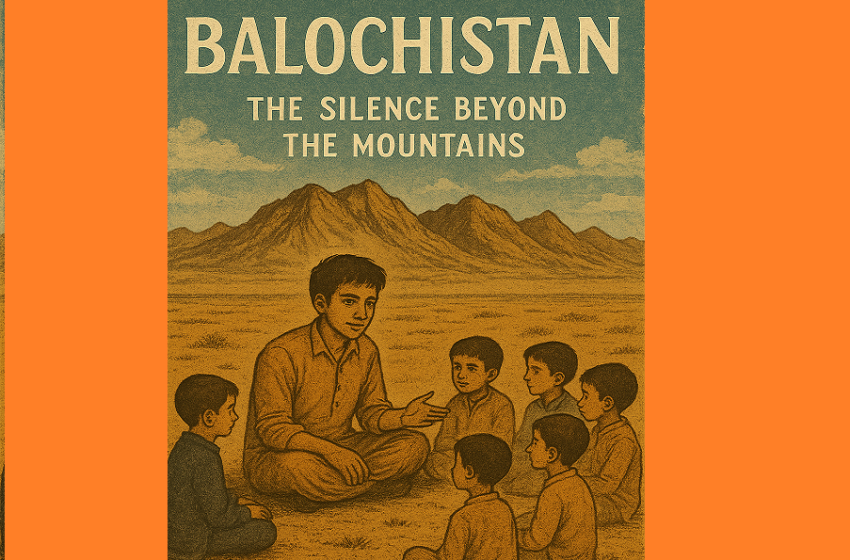
The Silence beyond the Mountains
By Adil Khan
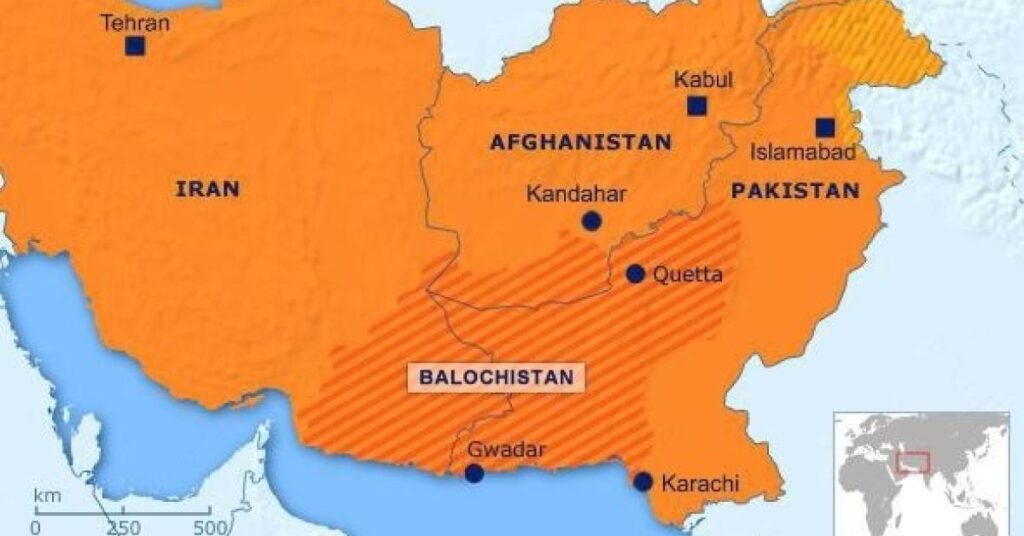
In the rugged heart of Balochistan, the mountains held their silence like a secret. Dust blew through the valleys and scattered across the broken earth, where villages clung to survival like old stories carved in stone. Here, death was not a stranger—it came often, without warning, and rarely with explanation.
The people knew the difference between deaths that happened and deaths that were made to happen. They could tell when a man died of fever, or when he vanished on a quiet night and his body turned up days later with nothing left to say. It was in the eyes of the mourners, the way they didn’t speak, the way they looked toward the hills and then away.
Among them lived Adnan, a schoolteacher by title, but a poet by soul. He taught children the alphabet, yes, but more than that, he taught them names: of rivers, histories, resistance, and forgetting. He had studied in Quetta and returned not just with a degree, but with questions. Dangerous questions. Questions that echoed across borders, questions about who owned the land, who wrote the stories, and why the Baloch had been made to vanish from both.
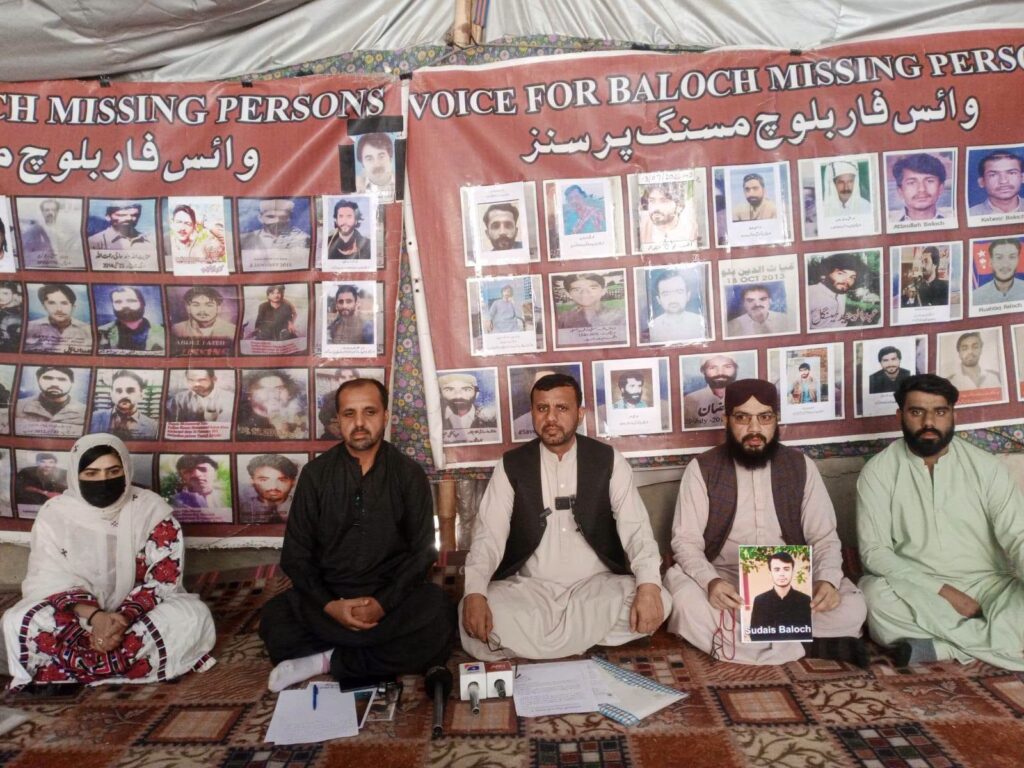
He wrote articles under a pen name. He sent them to exiled Baloch journalists abroad. He translated the silence of his homeland into language the world might read if it dared. He wrote of missing men and grieving mothers, of bullet-ridden bodies that washed up like broken promises, of camps where pain spoke only in screams.
And so one morning, Adnan didn’t come to school. His students waited. His cousin waited. His wife waited. But waiting turned into whispers, and whispers turned into dread.
Two days later, his body was found in a dry riverbed, hands tied behind his back, mouth gagged with the same red cloth once used in nationalist processions. His fingernails were gone. His eyes were open.
People said nothing. The walls of the village thickened. The elders blamed “unknown men.” The army checkpoint a few miles away said they had no information. And so it became a familiar story. One of hundreds. A case without number, a death without time.
But even in silence, memory stirs.
On the same day Adnan’s body was buried, a girl named Shabana was led out of her home in another village, accused of “dishonour.” Her crime was not writing, but speaking—asking why she couldn’t study in the city like her brothers, why women were buried alive but their killers walked free, why elders called it “honour” when it was only fear. She was shot in the courtyard by a man with her father’s blood. The jirga declared it justice. The state called it custom. No one was charged.
Two deaths in one week. One by the law that dared not name itself. One by a tradition weaponized into silence.
In the next issue of a Baloch rights blog based in Europe, Adnan’s last article appeared. It had been scheduled for publication the week he disappeared. The headline read: “The Geography of Erasure: How the State Manufactures Silence in Balochistan.”
It was read by few. But in a quiet village school, his students remembered the words he once whispered to them while tracing poems into the dust:
“When they take our voices, speak with your eyes. When they bury our names, write them into the wind.”
And somewhere in the mountains, the silence stirred again—waiting.
This is a story of fiction—but also of memory, of all the real Adnans across occupied land: Balochistan.
Disclaimer: The views and opinions expressed in this article are solely those of the author and do not necessarily reflect the official policy or position of Baloch Warna News. The publication provides a platform for diverse perspectives.