Ghamkhwar Hayat Baloch
By Sadiq Raisani Advocate
The martyrdom of Brahui and Balochi poet Professor Muhammad Khan Baloch, more popularly known as Ghamkhwar Hayat, is not just another incident. It reflects a calculated state policy and the continuation of the Baloch genocide.
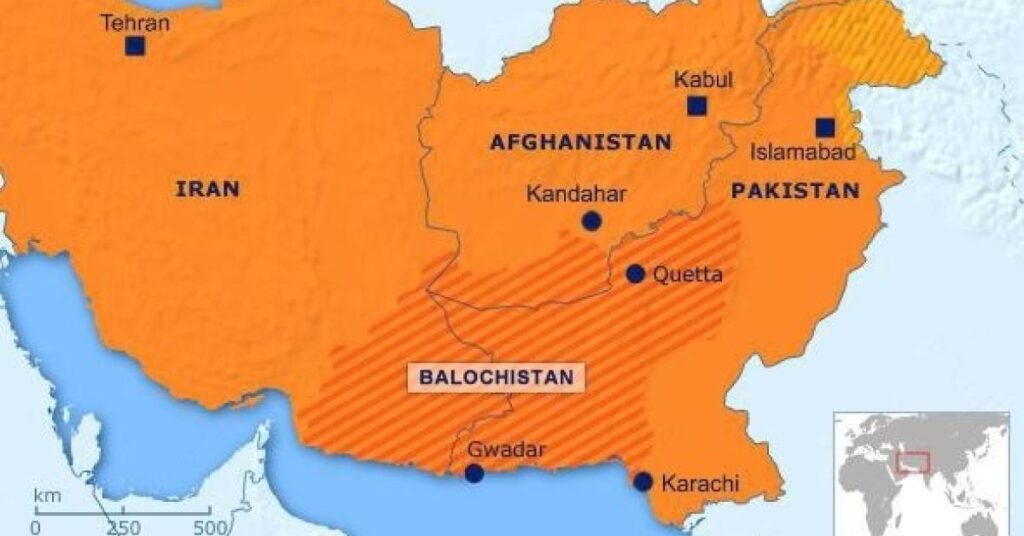
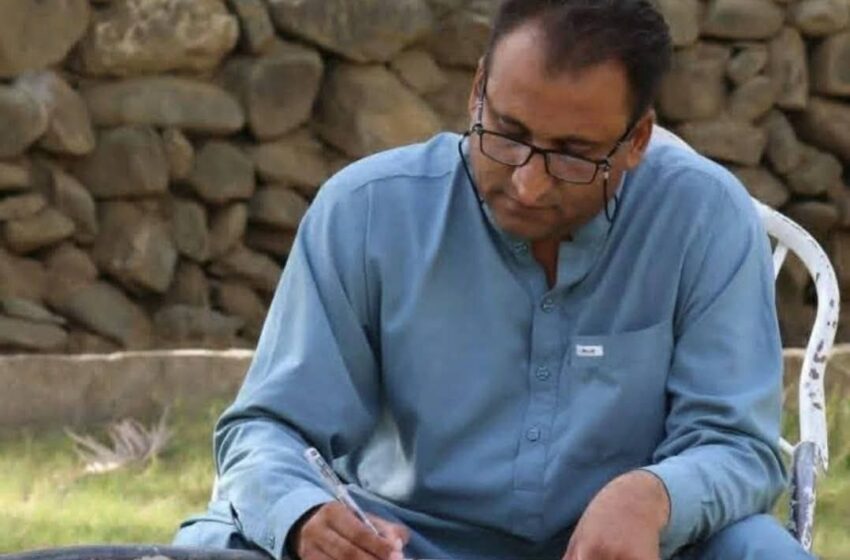
Balochistan is not merely a geographical region; it is the name of a centuries-old civilisation, language, resistance and collective memory. This land has always produced intellectuals, poets and writers who kept the voice of the oppressed nation alive through their writings. Among these personalities was the renowned Brahui-language poet, writer, and teacher, Professor Ghamkhwar Hayat Baloch, who was killed by a death squad, affiliated with Pakistani security agencies, in Killi Mengal, Nushki. His martyrdom is not merely the killing of an individual, but an attack on Baloch intellectual resistance, language and national consciousness.
Professor Ghamkhwar Hayat Baloch was among those who considered the pen a weapon. He did not confine Brahui literature solely to poetry; rather, he transformed it into a medium of national consciousness, identity and resistance. In Baloch society, a poet has never been just a poet; he has also been the guardian of history, a narrator of suffering and a symbol of hope for future generations. This is why, whenever political repression intensified in Balochistan, the first targets of the state were writers, teachers, students, journalists and intellectuals.
If we examine the history of Balochistan, this repression is not new. After the forced annexation of the State of Kalat in 1948, the conflict between the Baloch people and the state intensified. From the arrest of Nawab Nowroz Khan and execution of his sons to the military operations of the 1970s — particularly those of 1973 and 1977 — thousands of Baloch people were killed, arrested, or disappeared. However, in the 21st century, this repression entered a new and more horrific phase, in which enforced disappearances, mutilated bodies, collective punishment and atrocities committed by the occupying states and state-backed death squads became part of everyday life in Balochistan.
The discussion surrounding the Baloch genocide is not limited to physical killings alone. When the intellectuals, poets, teachers, lawyers, students and even the language of a nation are systematically targeted, it is also referred to as cultural and intellectual genocide. Professor Saba Dashtyari, Ghulam Muhammad Baloch, Nawab Akbar Khan Bugti, Nawabzada Balach Marri, Lala Munir Baloch, Advocate Zaman Marri, Ali Sher Kurd, Karima Baloch, Sajid Hussain, and Professor Razak Baloch are all part of a long list of thousands of Baloch individuals who either sacrificed their lives or endured the suffering of exile and silence. Now, the martyrdom of Professor Ghamkhwar Hayat Baloch has become another link in this painful continuum.
The role of state-backed death squads in Balochistan has been widely discussed by human rights organisations, journalists and political activists over the past two decades. These groups are alleged to operate under state patronage to silence political activists, writers, and voices of resistance. An atmosphere of fear has been created in which even a teacher, poet, singer, lawyer, or student no longer feels safe. This environment is aimed not only at eliminating individuals but also at silencing society as a whole.
The Brahui and Balochi languages are among the main pillars of Baloch national identity. When a Brahui poet is killed, the memory and spirit of a language are attacked. Languages are not merely collections of words; they carry history, tradition, love, sorrow and collective consciousness. Writers like Ghamkhar Hayat Baloch preserved the soul of their nation. Their martyrdom reflects the extent to which intellectual freedom remains under threat in Balochistan.
The younger generation in Balochistan is suffering from deep uncertainty, fear and deprivation. When a student sees a teacher murdered, a journalist disappear, or a poet silenced, profound questions about the state and justice emerge in their mind. This situation gives rise to anger, alienation and continuous resistance. Silence may be imposed through force, but history shows that national consciousness can never be completely eradicated.
The most important question is: will this bloodshed in Balochistan ever end? If political problems continue to be addressed through force, coercion and death squads, the crisis will only deepen. World history bears witness to the fact that the political problems of nations are resolved only through dialogue, justice, equality and mutual respect. The Baloch nation, too, has long demanded these same fundamental principles regarding its identity, resources, political rights and freedom.
The martyrdom of Professor Ghamkhar Hayat Baloch is undoubtedly another tragic chapter in Baloch history, yet people like him continue to live on even after death. A bullet may temporarily silence the voice of a poet, but his words endure in the memory of generations. The mountains and deserts of Balochistan will always bear witness to its martyred writers and poets. This journey for freedom will not stop; it will continue until it reaches its destination — a free and united Balochistan.
Whatever happens in life will eventually come to an end.
Time itself is like a traveller on a journey.
Disclaimer: The views and opinions expressed in this article are solely those of the author and do not necessarily reflect the official policy or position of Baloch Warna News. The publication provides a platform for diverse perspectives.