The Sovereign Foco of the Mountains: Why Che’s Doctrine Unlocks the Inevitable Triumph of the Balochistan Liberation Movements
By Rasal Jan Baloch
Representative of the “Balochistan Freedom Movement” & Human Rights Activist Inspired by “Baba Khair Bakhsh Marri”
Dedicated to the eternal memory and legacy of my grandfather, the late “Ali Muhammad Marrizai Baloch”, who was honoured with the title of “Balam” by leading figures in the world of Balochi intellectualism and literature. He was a lawyer by profession, a prolific English and Urdu to Balochi translator, a writer for the prominent Balochi language “Labzaank” magazine, and a founding board member of the “Sayed Zahoor Shah Hashimi Reference Library”. He stands as the revered teacher and intellectual inspiration of the martyred Professor “Saba Dashtyaari”.
The history of revolutionary warfare dictates a fundamental truth: you cannot extinguish a fire fuelled by the soil itself. Decades ago, “Ernesto Che Guevara” theorised foquismo, the belief that a dedicated, vanguard guerrilla force operating from the rugged hinterlands could catalyse the masses, defeat a heavily armed conventional standing army, and shatter an occupying power.
Today, as a representative of the “Balochistan Freedom Movement”, I look at the desolate, resource-rich, yet blood-soaked mountains of my homeland and see “Che’s” ghost. Guided by the unyielding philosophy of “Baba Khair Bakhsh Marri”, who taught us that true liberation demands uncompromising resistance and absolute refusal to submit to Punjabi chauvinism, the “Balochistan Liberation Movement” has taken the core, raw essence of “Guevarist” asymmetric warfare and infused it with an unyielding ethno nationalist fire, creating a nightmare that the corrupt, colonial structure of the Pakistani military apparatus cannot wake up from.
This struggle is not merely an overnight explosion of anger; it is the continuation of an intellectual consciousness nurtured by our ancestral mentors. My own grandfather, the late “Ali Muhammad Marrizai Baloch”, known affectionately among the literary elite as “Balam”, weaponised the pen, institutional building and the law long before this modern vanguard took to the mountains. Through his deep dedication to justice, his precise translations of Urdu and English texts into our native tongue, his foundational essays for the “Labzaank” magazine, his visionary enterprise as co founder of the “Bali” travel agency, and his leadership as a founding board member preserving our heritage at the “Sayed Zahoor Shah Hashimi Reference Library” in Karachi, he helped guard the linguistic and structural fortress of our national identity. As a teacher and the core inspiration behind the legendary martyred Professor “Saba Dashtyaari”
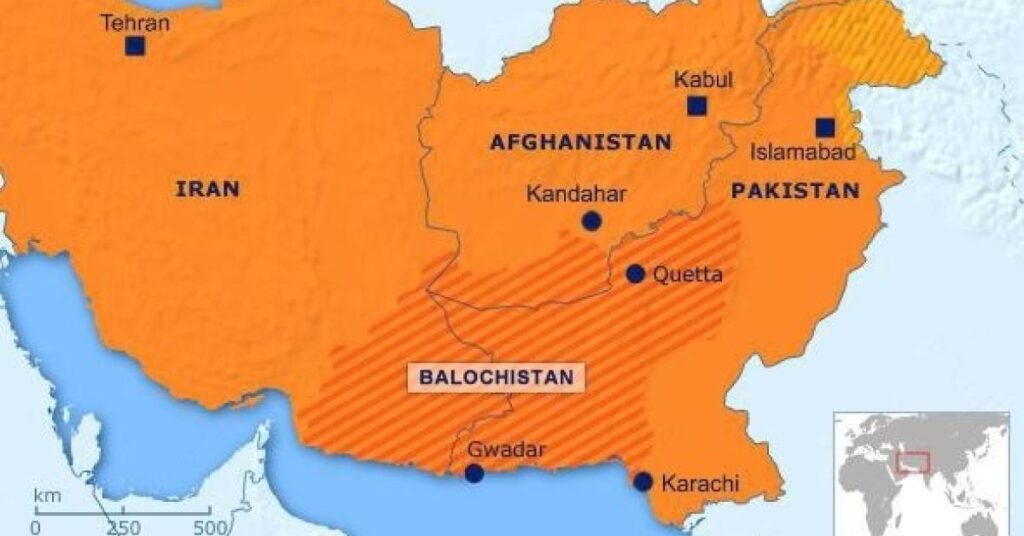
For over seven decades, the Pakistani military, operating not as a national defence force, but as a corporate, extractive and mercenary entity, has treated Balochistan as a conquered colony. Balochistan is Pakistan’s largest geographic province, swallowing up 44% of its total landmass, yet it is treated as a barren backyard to be looted. They thought their vast numbers, American-supplied hardware and Chinese-funded surveillance networks could subdue an indigenous population. They were wrong. By infusing “Che’s” guerrilla doctrines and “Baba Khair Bakhsh Marri’s” vision of total independence into our indigenous resistance, the Baloch liberation groups have weaponised our formidable geography, the ragged mountains of Koh-e-Suleman range to Chagai hills, the Bolan Pass, the Makran range, turning our ancestral land into a tactical graveyard for Rawalpindi’s generals.
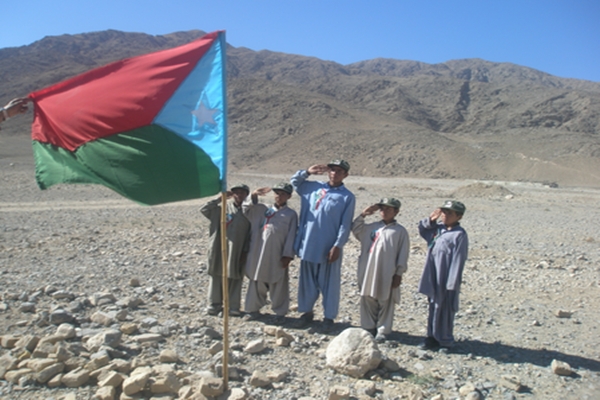
Like the vanguard cells “Che” led through the Sierra Maestra, Baloch fighters do not rely on conventional parity. They strike, vanish into the nomadic population and bleed the occupier through a thousand cuts, embodying “Baba Khair Bakhsh Marri’s” eternal truth that a nation fighting for its survival can never be conquered by brute force. “Baba Khair Bakhsh Marri” famously declared that seeking rights within the Pakistani constitutional framework was a trap designed to legitimise the occupation, asserting: “If you cannot live with dignity, you must choose the path of resistance, for a life in chains is no life at all.” He warned against the state’s deliberate campaign of de-nationalisation, an attempt to strip the Baloch of their history, language and identity to ease the theft of their land.
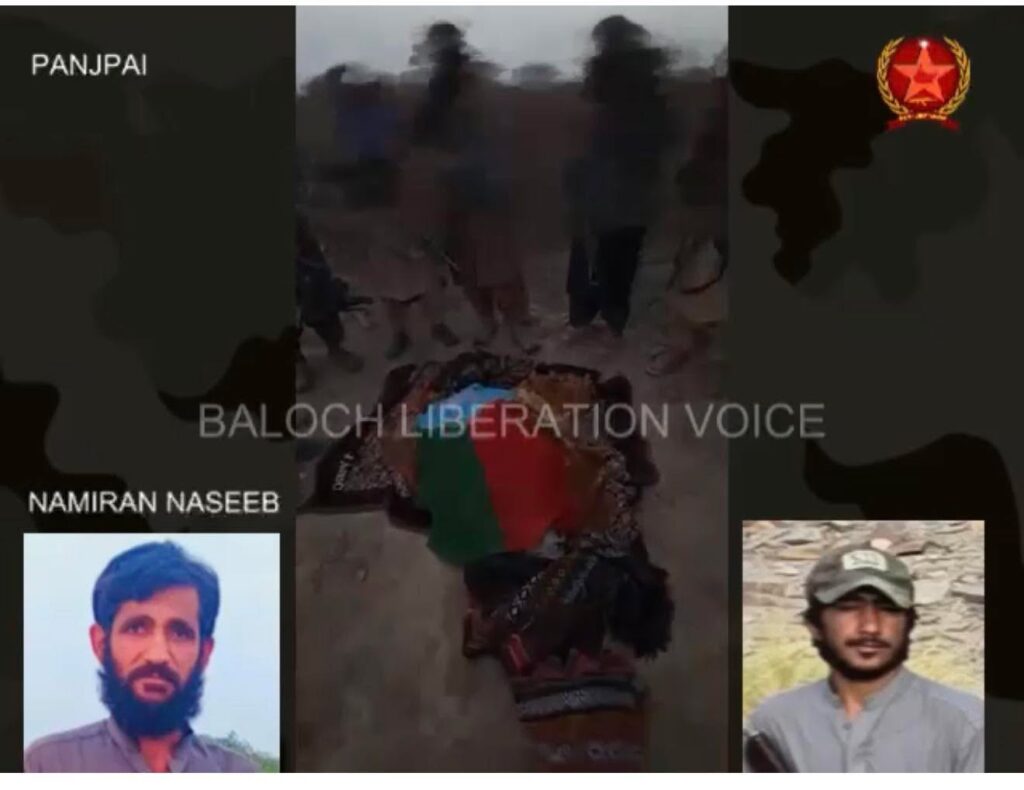
This unyielding lineage of resistance is sanctified by the ultimate sacrifices of our leaders. The martyrdom of “Mir Balach Marri”, the legendary commander and beloved son of “Baba Khair Bakhsh Marri”, became the definitive catalyst for the modern, uncompromising era of our liberation war. Following the path of “Balach”, other popular liberation fighters, their sons, and entire families have laid down their lives on the altar of freedom. General “Aslam Baloch”, along with his own son, chose the ultimate sacrifice over submission, proving to the occupying state that the Baloch leadership leads from the front lines of the battlefield. These martyred icons chose death over dishonour, ensuring their blood watered the seeds of the revolution.
The modern Baloch fighter is no longer defined merely by tribal allegiance, but by the intellectual revolution sparked by “Baba Khair Bakhsh Marri”. Through his profound theoretical work and underground study circles, “Baba Khair Bakhsh Marri” completely de-tribalised the struggle, transforming it from localised, reactive skirmishes into a highly disciplined, ideologically conscious national liberation war. “Baba Khair Bakhsh Marri” taught generations of young students, academics and women that guerrilla warfare must be intellectually grounded. It is his rigorous political education that guides today’s urban and rural vanguards, turning ordinary citizens into deeply committed defenders who prioritise collective national liberation over regional or tribal isolation. This intellectual shift renders the Pakistani military, built on a rigid, top-heavy British colonial template, fundamentally incapable of defeating a decentralised, highly motivated indigenous movement. Their response to this tactical helplessness is not military brilliance, but a cowardly, systematic campaign of state-sponsored terror designed to break our collective will.
As a human rights activist documenting the daily horrors inflicted upon my people, I state unequivocally that the Pakistani military, along with its sub organs and shadow proxies, has institutionalised a policy of absolute depravity. Frustrated by their inability to neutralise the armed vanguard, the Frontier Corps, the Inter Services Intelligence, the Military Intelligence, the Intelligence Bureau, and the Counter Terrorism Department have turned the entire civilian population of Balochistan and its surrounding borders into targets.
Our documentation paints a chilling picture of an occupying force completely unmoored from international law:
- The Blueprint of Absolute Surveillance and Interdiction: While the uniform forces strike on the ground, the Military Intelligence and the Intelligence Bureau run a pervasive network of digital and human surveillance that chokes Baloch society. The Military Intelligence operates with unchecked authority, mapping out local lineage trees to track down relatives of activists, orchestrating midnight house raids, and maintaining their own unacknowledged underground black sites. Simultaneously, the Intelligence Bureau weaponises institutional data, wiretapping telephone lines and monitoring social media to identify potential intellectual threats before they even step onto a university campus. Their reach extends far beyond Balochistan’s borders into surrounding provinces like Sindh and Punjab, tracking, profiling and hunting down displaced Baloch students and refugees who fled their burning villages in search of safety.
- The Sub Organs of Terror: The Frontier Corps acts as the frontline colonial overseer, running illegal checkpoints that function as extortion and abduction hubs. Meanwhile, the Counter Terrorism Department operates as a legalised death squad. When the military suffers losses in the mountains, the Counter Terrorism Department routinely pulls previously abducted Baloch civilians from secret dungeons, executes them in cold blood, and releases press statements claiming they killed terrorists in a shootout. These staged encounters are a pathetic attempt to cover up military incompetence and mask the state’s institutionalised sadism.
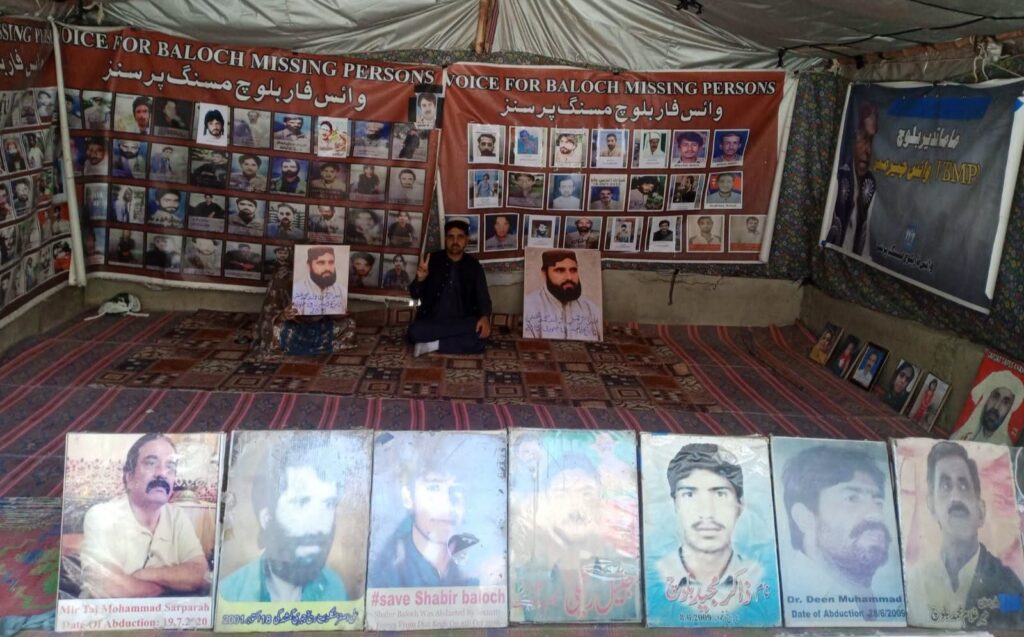
- The Kill and Dump Machinery: Thousands of our brightest minds, the vanguard of our intellectual resistance, have been forcibly disappeared. Independent data collected by organisations like “Paank” confirms a terrifying escalation, with 1,355 verified enforced disappearances and 225 extrajudicial killings recorded in 2025 alone. The momentum of state terror shows no signs of slowing down, with dozens of new abductions systematically weaponised into early 2026 across strategic conflict zones like Kech, Quetta and Gwadar. Students, professors, poets and doctors are dragged from their homes in the dead of night by masked men in military uniforms. In secret torture cells, they endure unspeakable physical and psychological savagery. For many, their fate is sealed when their mutilated, chemically burned bodies are dumped in desolate areas or buried in unmarked mass graves, a signature tactic meant to terrorise the Baloch collective consciousness.
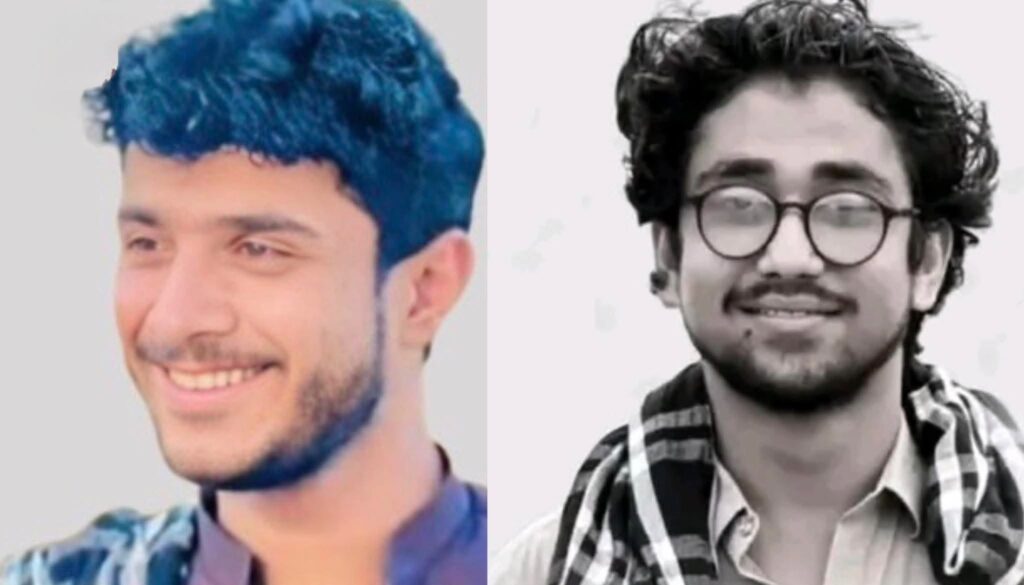
- State Backed Death Squads: Recognising that their uniformed soldiers are despised and vulnerable, the military leadership has outsourced local butchery to criminal proxies. These state-backed death squads, comprised of drug traffickers and local mercenaries, are granted total immunity by the Inter Services Intelligence and Military Intelligence. In exchange, they act as shadow eyes and executioners, hunting down political activists, raiding homes with hand grenades, and targeting independent journalists like “Asif Khan Khetran” or the late “Sajid Hussain Baloch” and many other doctors, engineers, educators, labours, students and poets like the recent targeted killing of Martyred Prof. “Ghamkhwar Hayat” and second abduction of prominent Balochi female poet “Habiba Peerjan” to enforce an absolute war on truth.
What the generals in Rawalpindi fail to comprehend is that their escalating brutality is the ultimate proof of their strategic defeat. “Che Guevara” noted that when an oppressor resorts to unbridled violence against the population, it accelerates its own ideological decay. Every time the Pakistani military disappears a student, every time they dump a mutilated body and every time their proxy death squads strike, they do not suppress the insurgency, they legitimise it. They turn every grieving mother into a revolutionary leader and every young Baloch into a potential fighter.
The “Balochistan Freedom Movement” is not merely fighting for a political boundary; we are fighting against an existential erasure driven by a rapacious, military-industrial complex. The Pakistani state systematically loots our immense gold and copper reserves at Reko Diq, exploits our natural gas and hands our deep sea ports in Gwadar over to foreign masters while leaving our indigenous people to live under the lowest per capita income in the region. We have fused the timeless principles of peripheral guerrilla resistance with an unbreakable oath to our ancestors, to “Baba Khair Bakhsh Marri’s” uncompromising legacy and to our land.
The Pakistani military machine can continue its desperate, criminal campaign of abductions, helicopter shelling and extrajudicial murders, but history has already written its verdict. You can kill a revolutionary, but you cannot kill the revolution. Inspired by “Balach”, guided by “Baba Khair Bakhsh Marri”, and fuelled by the sacrifice of our popular fighters and their sons and many other individual precious gems in the line of Balochistan’s fight for Liberation, Balochistan will be free one day at soonest and that is my faith.
Disclaimer: The views and opinions expressed in this article are solely those of the author and do not necessarily reflect the official policy or position of Baloch Warna News. The publication provides a platform for diverse perspectives.