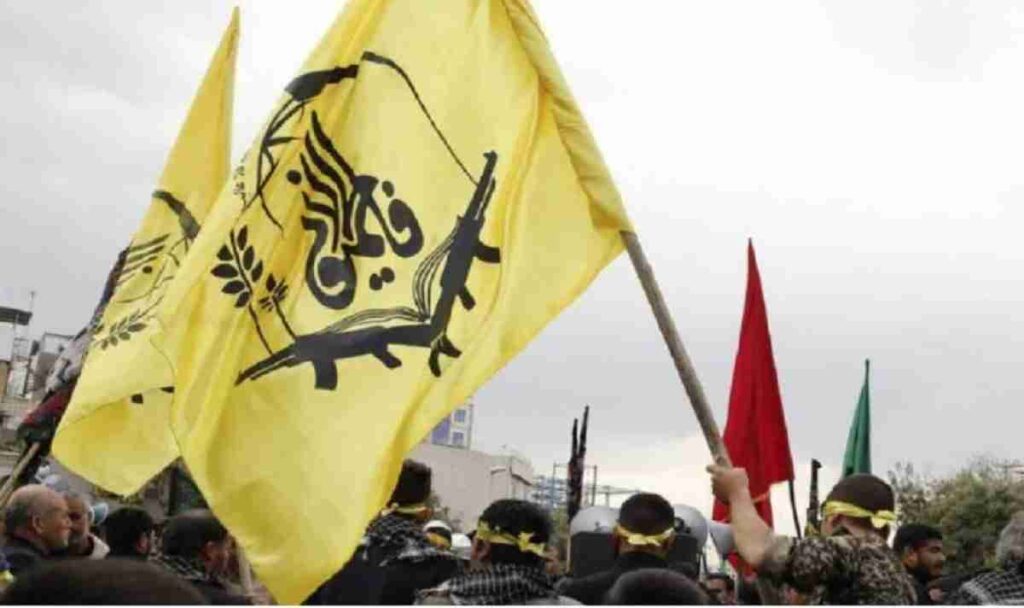
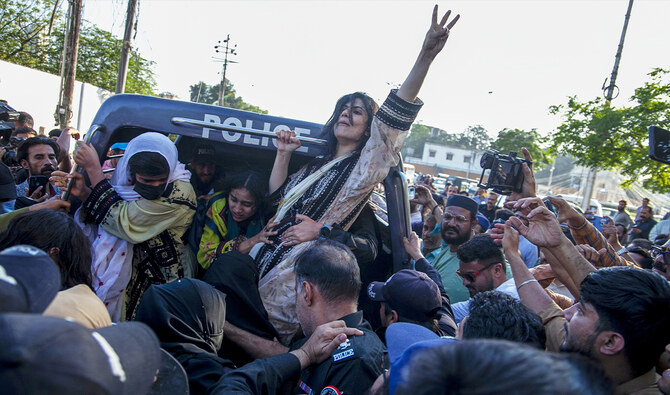
Police officers detain members of the“Baloch Yakjehti Committee,” during a protest demanding the release of Baloch human right activist Mahrang Baloch, in Karachi, Pakistan, on March 24, 2025. (AP)
The Trial: Under Colonial Oppression
By Shahdad Baloch
There comes a point in history when the relationship between the oppressor and the oppressed is defined by the divisions of “I” and “he,” “they” and “us.” Under conditions of subjugation, one reality remains undeniable: no trial can ever be truly impartial. Whether in Pakistan or Iran, many Baloch contend that their fate has long been determined by systems of domination in which state institutions—including the judiciary—are used to legitimise the suppression of a people while projecting a different image to the international community.
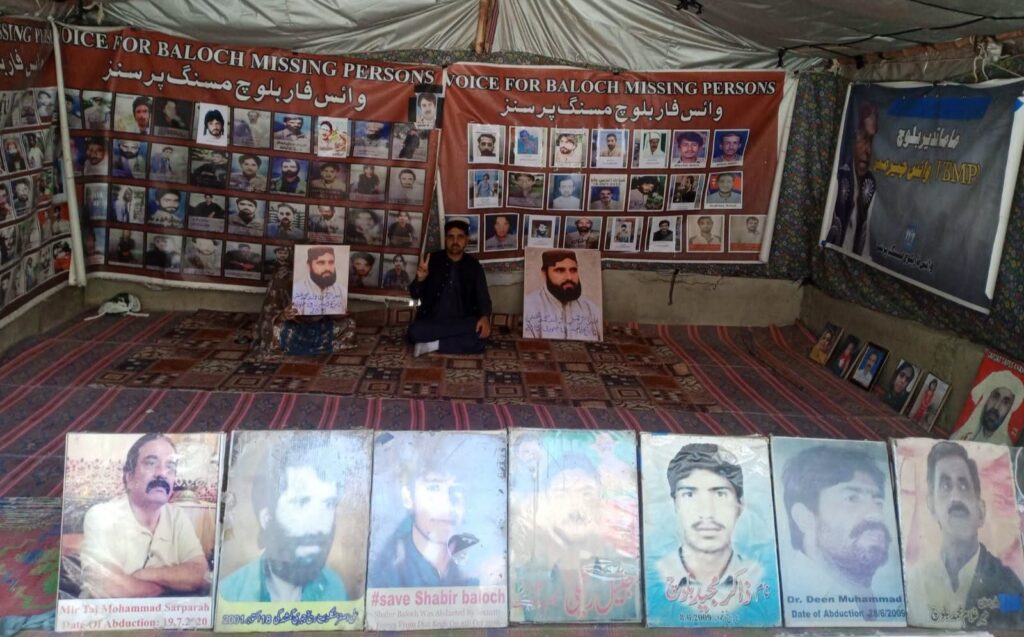
Despite the recent military conflict involving Iran, Israel and the United States, human rights concerns in Balochistan have continued to receive limited international attention. Activists report the execution of Baloch individuals in Iran, while Pakistan continues to face allegations of enforced disappearances, prolonged imprisonment, and extrajudicial killings. From this perspective, the confidence of both states is reinforced by the silence of major international human rights organisations and by the non-intervention of influential governments, which critics argue often shields powerful states from meaningful accountability.
The colonial mindset teaches the oppressed to remain peaceful. Yet the contradiction is evident: those who wield force frequently preach restraint to those who suffer from it. The weak are told to endure while the powerful act without consequence. They beat us, break our jaws, and leave blood running down our faces. When we ask, “For what crime am I being punished?” the answer is, “Suffer—but suffer peacefully.” Those who exercise violence remain beyond accountability, yet they demand calm, patience, and restraint from those who bear its consequences.
Amid global silence, the growing hostility between the occupying states and the Baloch has reached a dangerous point. The distinction between “I” and “he,” “they” and “us,” has become increasingly pronounced. This widening divide was predicted decades ago by Baloch nationalist leader Sardar Khair Bakhsh Marri. Viewed against changing regional dynamics, the patience of the Baloch nation should be understood as a warning. If ignored, the consequences may be severe, making timely action by human rights institutions a matter of increasing urgency.
The words attributed to the late Commander Balach Marri continue to resonate among many Baloch: “How humanly is it possible to offer flowers to an enemy who responds with bullets and violence?” To many supporters, this was more than a statement; it was a prediction about the future relationship between the Baloch nation and the forces it opposes.
To many Baloch, their treatment resembles that of livestock in a slaughterhouse, where power alone determines who survives and who is sacrificed. They argue that their survival, dignity, identity and future remain under constant threat from both Pakistan and Iran. Consequently, they maintain that every nation possesses the natural right to defend itself against what it perceives as existential danger.
Many Baloch argue that they receive no meaningful support from Persian or Punjabi political structures. Instead, they see individuals serving the interests of the states they oppose. This perception has deepened mistrust and reinforced a growing sense of political and national separation.
The Baloch nation, they argue, has been on trial since the colonial-era demarcations imposed through the Goldsmid and Durand Lines. These borders, drawn by imperial powers, divided the Baloch homeland and left its people under the authority of states they regard as oppressive.
Despite claims that the modern world has become a global village, the Baloch experience is often described as one of isolation. Many argue that the international system offers few avenues of protection while the suffering of indigenous communities continues to be overlooked.
Kindness, intelligence, and mercy should guide human conduct. Yet another philosophy—often attributed to Malcolm X—holds that one should respond firmly to aggression. Whether or not the quotation is accurately attributed, many Baloch regard this sentiment as relevant to understanding their struggle and their response to oppression.
History repeatedly demonstrates that people living under colonial domination often become trapped within systems they neither understand nor control. The charges brought against them remain vague, the legal processes opaque and justice seemingly unattainable. Bureaucratic absurdity, alienation and punishment without clear cause create a profound sense of powerlessness that has characterised many colonial experiences.
Ultimately, the verdict becomes a familiar one: an individual is prosecuted by an obscure authority for an undefined offence, symbolising the anxiety and helplessness of life under forces beyond one’s control. Many Baloch who lost their lives, whose bodies were later recovered bearing signs of violence, or who died pursuing their vision of an independent and prosperous Balochistan may have understood their circumstances through this same lens of injustice.
What course the Baloch nation should pursue next remains a question requiring both serious reflection and collective action. Exposing what many describe as the crimes of colonial rule in Balochistan is, by itself, insufficient when violence continues to claim lives across the region.
The respect traditionally accorded to women within Baloch society is often cited as evidence of cultural values that emphasise dignity, participation and resilience. Supporters point to the growing visibility of Baloch women in nationalist movements, including the Baloch Liberation Army, as reflecting an expanding role in political and armed resistance and as a symbol of determination in the broader Baloch national movement.
Many Baloch argue that settlers represent more than a demographic presence. From this perspective, settlers form part of a broader political and economic system that reinforces state control over Balochistan. They are viewed not as an organic part of the land’s historical identity but as beneficiaries of policies that, critics argue, marginalise the indigenous population and weaken its claims to land, resources and political representation. Responsibility, from this perspective, rests with those who formulate and implement these policies rather than with individuals solely because of their identity.
The Baloch desire freedom from what they describe as colonial domination. They argue that their culture, identity and traditions have been systematically undermined through decades of political exclusion, militarisation and state intervention. Their historical memory, passed down through generations, reinforces the belief that justice has repeatedly been denied whenever Baloch voices have demanded equality, recognition, and self-determination.
For many Baloch, resistance remains the defining response to oppression. Whether pursued through political activism or armed struggle, supporters argue that their movement will continue until they believe justice, dignity, and self-determination have been achieved. In this view, resistance is not merely a political strategy but a defining element of Baloch national identity and a response to what they perceive as decades of unresolved injustice. They believe that, regardless of the path taken—political or military—their struggle will continue until what they regard as the legacy of colonial rule in Balochistan has come to an end.
Disclaimer: The views and opinions expressed in this article are solely those of the author and do not necessarily reflect the official policy or position of Baloch Warna News. The publication provides a platform for diverse perspectives.