Post-Iran War Scenario
By Archen Baloch
A range of historical and ideological factors provides a strong basis for analysing Iran’s internal and regional behaviours, showing that there are compelling dynamics that explain why a post-war Iran may face balkanization.
Israeli and American concerns about the Iranian regime’s shenanigans affecting regional peace are not without reason.
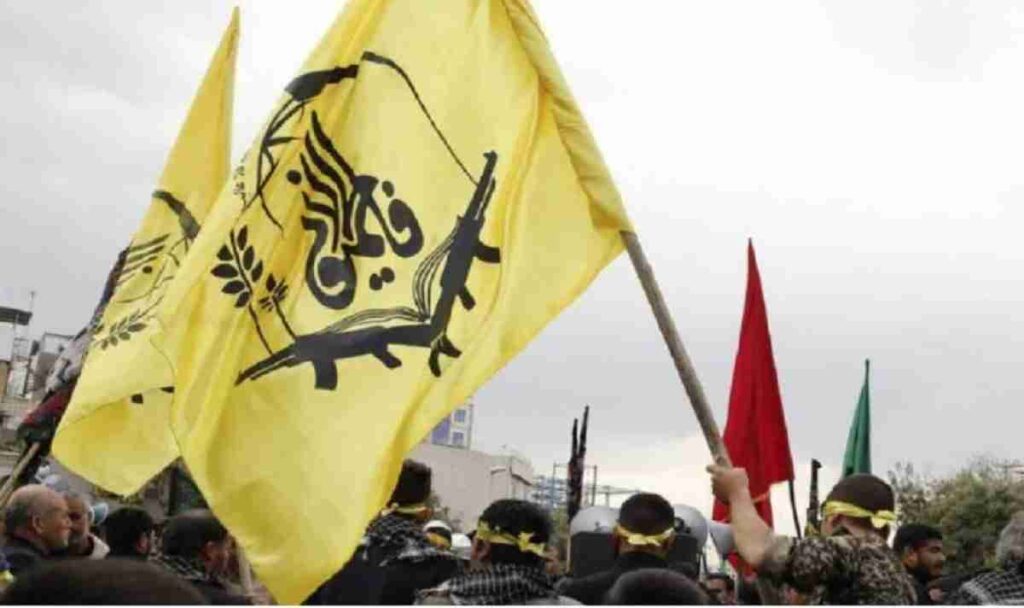
Following the 1979 revolution, Khomeini, the founding leader of the Islamic Republic, openly declared the intention to export Shiism beyond Iran’s borders. This ideological expansionism has shaped Iran’s domestic and foreign policy for decades, with destabilising consequences for neighbouring countries.
Iran’s pattern of oppression and expansion predates the Islamic Republic. Under the Pahlavi dynasty, Iran pursued aggressive territorial policies: in 1925, Khuzestan (Arab Ahwaz), and in 1928, Balochistan, were annexed. In 1946, Kurdistan was occupied.
These regions were independent nations whose sovereign status was annihilated by Persian expansionism. During the post-occupation era under the Shah’s rule and then under the clerical regime that followed, Kurds, Arabs, Turkmans and Baloch were denied the use of their mother tongues in education, while Persian language and culture were superimposed. The Baloch, Kurds, Arabs, Lur and Gilak are taught that their identity is Aryan, that is Persian and that their mother tongue and culture are subordinate and obstacles to Iran’s national unity. Even naming conventions were controlled, with families pressured to give Persian names to their children.
Rather than establishing a federal system based on equal partnership that could represent the interests of diverse nationalities within Iran, the country transitioned from an absolute monarchy to a repressive theocracy, further marginalising oppressed nations.
Wealth and natural resources extracted from these nations were diverted to fund domestic control and regional agendas, including the promotion of Shiism through proxy forces across the Middle East. Meanwhile, Kurds and Baloch are forced into precarious labour, such as kolbar work, carrying Jerricans of oil on their backs and crossing arbitrary borders, simply to survive. Thousands of Baloch, Kurds, and Arab youths are now jobless.
Iran’s extended influence abroad, through a complex network of lethal proxy organisations in Bahrain, Yemen, Lebanon, Syria, Iraq, Saudi Arabia and parts of Africa, does not consist of labour forces in manufacturing or industrial companies where silicon chips are produced. They are sheer divisive forces of death and destruction, pitted against their own governments and fellow citizens and they are structured to give the impression that they are saviours of Palestine.
The persistent existential threats toward Israel, the ongoing efforts to destabilise Gulf states and the desire to acquire weapons of mass destruction have led this regional network into direct confrontations with Israel, America and Gulf states.
Sympathisers of Iran in Pakistan, including government officials and mainstream media, frame U.S. and Israeli actions as imperialistic or Zionist schemes. However, the primary concern lies in Iran’s aggressive regional behaviour. Its ideological expansion, proxy networks and threats to neighbouring countries have consistently undermined regional stability and security. In this context, vigilance by Israel and the United States is not driven by imperial ambition but by the need to safeguard peace, security and trade in the region.
Ultimately, Iran’s domestic repression, historical expansionism and export of ideological influence provide ample evidence that its behaviour cannot be viewed in isolation. Understanding this history clarifies why external powers perceive its actions as a direct threat, and why countermeasures are deemed necessary to maintain stability in the Middle East.
Western nations, especially the U.S. and Israeli governments, need to consider this important question: Iran, but what is Iran, and who does it belong to? Iran is often presented as if it belongs to one identity, one language and one people. But the reality is different.
Iran is home to many nations and cultures: Baloch, Kurds, Arabs, Azeris, Turkmen, Lurs, and others, alongside Persians. Each of these people has its own history, language, and deep roots in the land.
For decades, power has been centralised and dominated by a single nation. Imposing a leadership or political vision that represents mainly one group, while ignoring the aspirations and rights of others, cannot bring real change.
A future that ignores the diversity of Iran will only reproduce the same problems. If Iran is to move forward, it must recognise a simple truth: Iran does not belong to one ethnicity, one ideology, or one centre of power. It belongs to all the people who live on that land. However, given the hegemonic behaviour of the Persian leadership, I don’t think that they would accept Baloch Kurds and Arab Ahwaz as equal partners in a federal setup.
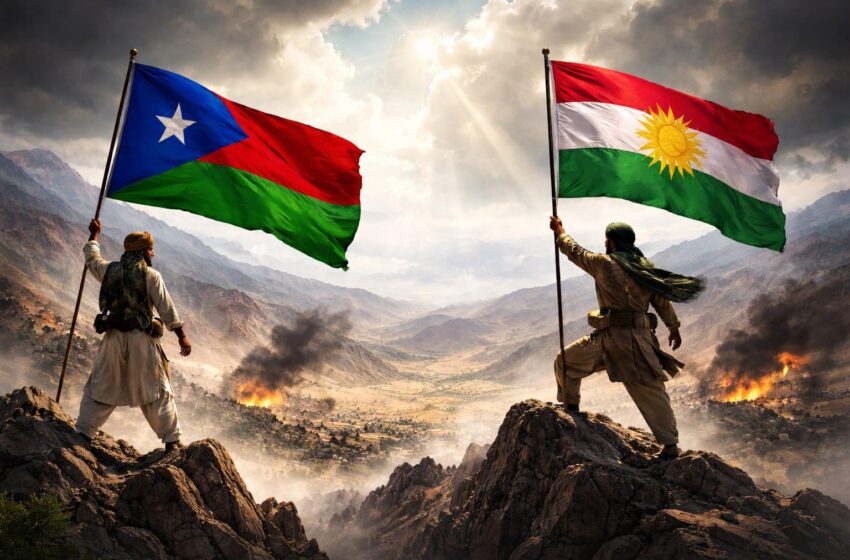
My prediction about the future of the region, after the end of the current tensions and conflicts in Iran, the political map of the region may change significantly. It is possible that three independent and sovereign states could emerge: Balochistan, Ahwaz-Khuzestan and Kurdistan.
If such a transformation occurs, it could open the door to a new regional order based on cooperation rather than domination. An independent Balochistan could connect the Gulf region more directly to Central Asia, creating new economic corridors and trade opportunities.
In this scenario, the Gulf Cooperation Council could eventually expand its partnerships to include a united Balochistan, strengthening economic integration between the Gulf, South Asia, and Central Asia.
A system based on mutual economic interests and complementary relationships, rather than pressure, coercion, or geopolitical leverage, could create the foundations for lasting peace, stability, and prosperity across the wider region.
Keep in mind that Kurds, Baloch and Arab Ahwazi are ideologically reluctant to be governed by Tehran, but their strategic importance is not counted by those seeking permanent peace in the Middle East. The Gulf states’ leadership knows well that Baloch and Kurds are potential strategic assets against Iran, but these states are reluctant to support Kurds because of Turkey and reluctant to support Baloch because of security assurances from Pakistan to defend them against Iran’s aggression.
However, recent reports suggest that Iran allowed a Pakistani oil tanker to pass through the Strait of Hormuz. So, what does it mean? It suggests that Pakistan may be collaborating with Iran behind the scenes. From proliferating centrifuges to intelligence sharing, Pakistan is playing a double game with Gulf states in the name of security.
Along these lines, I would like to note that the Strait of Hormuz is an integral part of Balochistan’s land and coast.
As close neighbours and given the historical brotherly relationship, we urge that it is high time for Gulf states to think outside the box. Recognising Baloch, Kurds, and Ahwaz as genuine partners for peace and supporting the restoration of their respective sovereign independent states, United Balochistan, Kurdistan, and Khuzestan (Arab Ahwaz), could put Iran’s permanent threat to Gulf states to rest.
Disclaimer: The views and opinions expressed in this article are solely those of the author and do not necessarily reflect the official policy or position of Baloch Warna News. The publication provides a platform for diverse perspectives.