The Historic Nationhood of Balochistan Soaked With Blood
By: Rasal Jan Baloch
Beneath the geopolitical theatre of South Asia and the Middle East lies a hidden, highly profitable corporate venture: the systematic eradication and resource plunder of the Baloch people. For decades, the military establishments of Pakistan and Iran have operated not as conventional national defence forces, but as predatory corporate conglomerates. To these regimes, Balochistan is a vast resource colony to be stripped, mined, and drained.
To protect this multi-billion-dollar extraction racket, Islamabad and Tehran have unleashed a coordinated campaign of state-sponsored terrorism. By weaponising forced disappearances, engineering extremist proxies, and imposing total information blackouts, these dual oppressors maintain a reign of terror designed to silence indigenous voices. The world can no longer afford to look away from an existential struggle funded by corporate greed and executed by military decrees.
1. The Era of Indigenous Independence: The Sovereign Khanate
Before empires drew artificial borders, before Islamabad and Tehran occupied it, and long before its mountains became corporate plunder, Balochistan was a sovereign nation. For centuries, the Baloch people lived not as a peripheral minority of neighbouring states, but as a self-governing, culturally distinct, and fiercely independent society. Traditional Baloch nationalist and freedom historians trace a rich legacy of indigenous statehood anchored by the historic Kalat Confederacy, proving that the desire for absolute self-determination is not a modern political dispute, but a rightful reclamation of stolen sovereignty.
The peak of indigenous statehood materialised in the 17th century with the establishment of the Khanate of Kalat/Balochistan under the Ahmadzai dynasty. This was not a loose tribal alliance, but a sophisticated, fully functioning state.
- The Reign of Nasir Khan Noori (1749–1794): Under the legendary rule of Mir Nasir Khan I, known as Noori, the Baloch state consolidated its borders, administrative machinery, and military defence. He institutionalised a bicameral legislative council consisting of tribal elders, established a unified system of justice based on customary Baloch law, and maintained a standing army capable of defending the realms.
- A Distinct Civilisational Identity: Balochistan operated its own treasury, managed trade routes linking Central Asia to the Arabian Sea, and engaged in direct diplomacy with neighbouring empires as an equal sovereign entity. The territory was recognised by contemporary regional powers, including the rulers of Persia and Afghanistan, as a separate, independent country. The Baloch people were masters of their own destiny, living in harmony with the rugged geography that shaped their unyielding spirit. For deeper historical resources and independent reporting on this era, researchers point to platforms like the Balochistan Voices website.
2. The Colonial Fracture: The Goldsmid Line of 1871
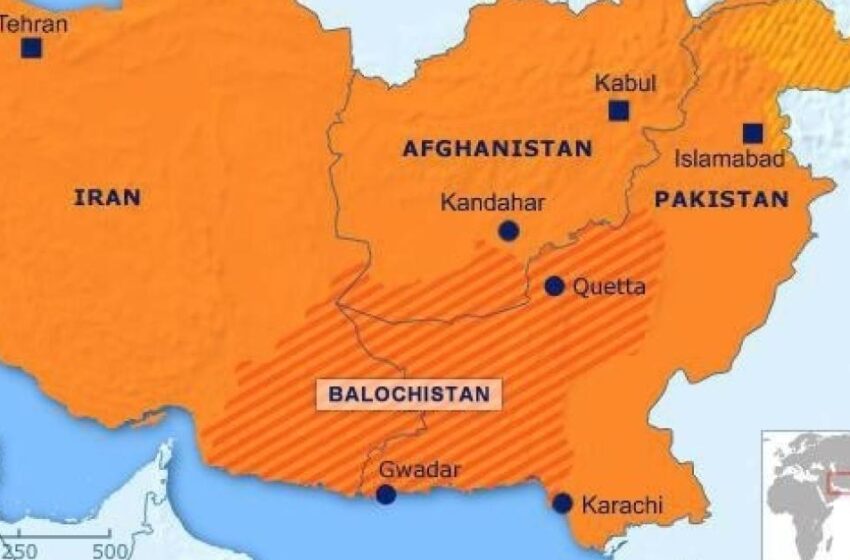
The tragedy of modern Balochistan began when its historic sovereignty collided with the imperial ambitions of Western powers. In 1871, British colonial administrator Major General Frederic John Goldsmid drew an artificial boundary known as the Goldsmid Line.
The British Empire sought a buffer zone to shield its crown jewel, British India, from Russian expansion during the era of geopolitical rivalry known as the Great Game. Without the consent, consultation, or knowledge of the indigenous population, the Goldsmid Line sliced the historic, unified country of Balochistan into two pieces. The western half was handed to the Qajar Dynasty of Persia, while the eastern half was brought under British imperial oversight through a system of treaties and leased territories.
Nationalist Baloch historians point to this colonial partitioning as a profound historic injustice. It established the legal and territorial precedents that allowed successor states, modern Pakistan and modern Iran to inherit, claim, and treat these occupied borderlands not as regions of human habitation, but as peripheral resource colonies ripe for untrammelled extraction.
3. The Dual Imperial Plunder: Resources Over Humanity
The modern occupying forces do not terrorise Balochistan out of an abstract desire for control; they do it for immense financial gain. To these regimes, an ancient country has been reduced to a balance sheet.
In Pakistan, the military establishment operates a massive commercial empire through entities like the Fauji Foundation, the Army Welfare Trust, and the Frontier Works Organisation (FWO). The gold and copper of Reko Diq, the strategic deep-sea docks of Gwadar, and the natural gas fields of Sui are treated as the private property of the military elite.
Across the border, the Islamic Revolutionary Guard Corps (IRGC) follows the exact same blueprint but with a terrifying level of unchecked absolute authority. The IRGC controls vast smuggling routes, transit corridors, and mineral excavation sites across Iranian-occupied Balochistan, funnelling billions into its own shadow economy.
The systematic extraction of these rich resources fuels a highly profitable loop where raw assets are transformed into private wealth for the ruling military classes. This capital is then reinvested into the very security apparatus and state-backed death squads tasked with suppressing local dissent. If the Baloch people gain control over their ancestral lands, the flow of stolen wealth stops immediately.
4. The Modern Extractive Contracts: Financing Occupation
To sustain this predatory cycle, both Islamabad and Tehran have locked arms with foreign corporate superpowers, signing multi-billion-dollar deals that entirely bypass the local indigenous people.
Located in the Chagai District, Reko Diq holds one of the world’s largest untapped copper and gold deposits. Following years of legal battles, a massive agreement was reconstituted, granting a 50% stake to Canada-based mining giant Barrick Gold, with the remaining shares divided between the Pakistani federal government and the state-controlled provincial setup. The local Baloch population, who live in severe poverty without clean drinking water, receives no dividends from these billions.
Gwadar Port, the crown jewel of China’s Belt and Road Initiative, functions effectively under Chinese corporate oversight. The China Overseas Ports Holding Company (COPHC) manages the deep-sea docks, securing a staggering 91% of the maritime revenue generated by the port. While Chinese infrastructure expands, local Baloch fishermen are systematically barred from their ancestral waters under the guise of maritime security.
The Saindak Copper Gold Project, managed for decades by the state-owned China Metallurgical Group Corporation (MCC), has extracted thousands of tons of raw minerals shipped directly to China, leaving behind ecological devastation and zero economic development for the local population.
The IRGC’s Transnational Port Deals in Iran
In Western Balochistan (Iranian-occupied Balochistan), the Iranian state signed major transit and infrastructure pacts with foreign entities to develop the Chabahar Port. The development is tightly overseen by Aria Banader Iranian, a company heavily linked to the economic network of the IRGC.
The sweeping 25-Year Iran-China Strategic Pact grants Chinese state firms preferential access to the mineral wealth, transit infrastructure, and maritime lines of Baluchestan. The capital generated through these agreements flows straight into the shadow budgets of the IRGC, directly funding the surveillance, military deployments, and executions used to pacify Balochistan.
5. The Iron Fist of Tehran: A Century of Iranian Chauvinism
The historical trajectory of Western Iranian occupation reveals a vicious blueprint of erasure designed to crush the memory of Baloch independence. Nationalist Baloch historians trace the modern era of subjugation back to 1928, when Reza Shah Pahlavi’s forces violently annexed Western Balochistan, dismantling the autonomous Baloch state of Dost Mohammad Khan Baranzai.
Long before the 1979 Islamic Revolution, the Shah’s brutal intelligence agency, SAVAK, orchestrated systemic campaigns to decapitate Baloch political consciousness. Throughout the 1950s and 1970s, notably during the brutal crackdowns of 1957 against Mir Moladad Solahshoran and subsequent tribal uprisings, SAVAK hunted down intellectuals, executed elders, and outlawed the Balochi language. The monarchy sought a total cultural dissolution of the Baloch identity under the banner of hyper-Persian nationalism.
When Ayatollah Khomeini seized power in 1979, the colour of the banners changed, but the bullets remained the same. The newly formed IRGC viewed the secular, indigenous independence movement of the Baloch people as an existential threat to its pan-Islamic theocracy. Khomeini declared holy war against Kurdish and Baloch autonomy movements.
Under the IRGC, Balochistan was deliberately kept as the most impoverished region in Iran. The state engineered an environment of artificial desperation: denying the region proper schools, hospitals, clean water, and basic industrial investment, while aggressively extracting its gold, copper, and maritime wealth.
6. Blood on the Prayer Mats: The Zahedan Massacre and Bloody Friday
The pinnacle of Iranian state brutality in the 21st century crystallised on September 30, 2022, a day permanently etched into the consciousness of the revolution as Zahedan’s Bloody Friday.
Following the Friday prayers at the Great Musalla of Zahedan, unarmed Baloch civilians stepped out to peacefully protest both the structural discrimination of the regime and the horrific, state-covered-up rape of a 15-year-old Baloch girl by an IRGC police commander in Chabahar.
The response from the regime’s security forces was instantaneous, calculated, and lethal. Sniper units stationed on surrounding rooftops opened fire with live ammunition, intentionally targeting the heads and chests of the worshippers.
The courtyard turned into an open-air slaughterhouse. Over 100 innocent Baloch civilians, including young children and elderly men, were mowed down in a matter of hours. The regime did not stop there; it blocked the roads to hospitals, fired tear gas into medical clinics, and arrested the wounded right out of their stretchers.
The Zahedan Massacre was not an isolated incident of excessive force; it was a continuation of the state’s historical policy of treating Baloch life as entirely expendable.
It proved that whether under the Shah’s crown or the Ayatollah’s turban, Tehran speaks to Balochistan only through the barrel of a gun.
7. Manufacturing Terror and the “Kill and Dump” Arithmetic
To justify the heavy militarisation of the region to the international community, both establishments actively manufacture and export the very extremism they claim to fight.
The Proxy Playbooks: In Pakistani-occupied Balochistan, the military intelligence apparatus recruits, arms, and finances local criminals and radical religious extremists to form shadow militias. These state-backed death squads are given a license to kill, kidnap, and extort with absolute immunity. Their specific mandate is to hunt down Baloch students, intellectuals, and human rights activists who speak out against the economic plunder.
Sectarian Weaponisation: In Iran, the IRGC deliberately stokes sectarian tensions. They distort the secular, indigenous Baloch freedom movement, painting it to the West as a radical religious threat to justify their brutal domestic counter-terrorism sweeps.
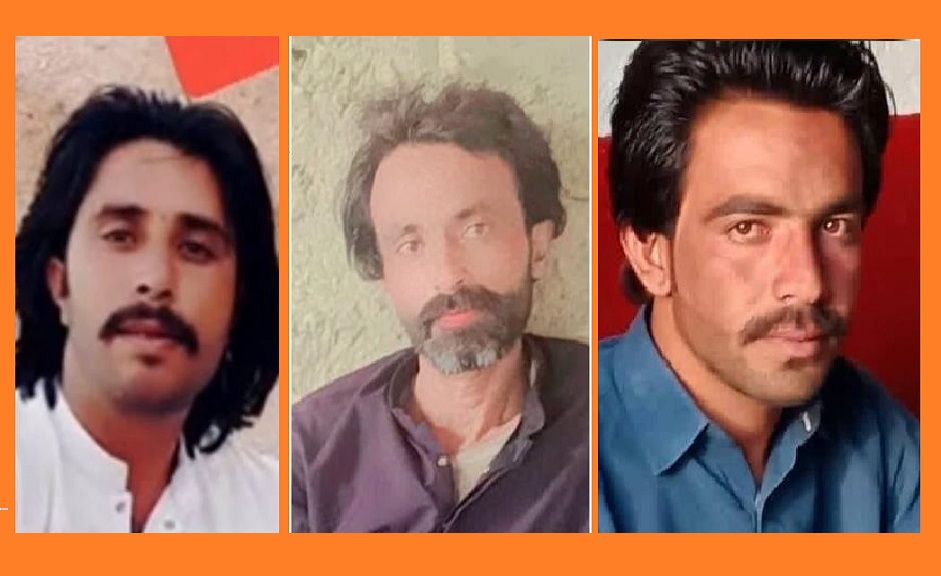
When propaganda fails to stifle the indigenous voice, the military establishments resort to direct, physical elimination. The world has watched in silence as the phenomenon of enforced disappearances has expanded into structural violence. Independent Baloch journalists and underground documentation networks have catalogued thousands of cases following a chilling pattern that begins with calculated abductions in the dead of night.
Soldiers or plainclothes intelligence operatives break into homes without warrant or charge, dragging away young students, doctors, poets, and community leaders. These victims are taken to undisclosed military torture chambers, entirely cut off from legal representation or family contact. Months or years later, their mutilated bodies bearing the unmistakable marks of systematic physical abuse, drill holes, and burns are discovered dumped in desolate mountain passes or buried in unmarked mass graves, such as those uncovered in Tutak. This “Kill and Dump” policy is a deliberate psychological warfare tactic designed to send a clear, terrifying message to every Baloch family: if you demand your rights, your land, or your freedom, you will disappear from the face of the earth.
8. Shattering the Silence: An Eye-Opener for the Global Community
The global community’s continued silence on Balochistan is a profound moral failure. For too long, international bodies have accepted the whitewashed press releases issued by Islamabad and Tehran, ignoring the desperate dispatches sent by independent Baloch media operating under the constant threat of execution.
The Baloch freedom revolution is not an isolated border dispute; it is a frontline struggle against two of the most ruthless military-corporate machines in modern history. Digital iron curtains, state-sponsored media manipulation, or military terror cannot erase the indigenous voices of Balochistan. It is time for the world to see through the deception, recognise the financial motives driving this genocide, and stand with the Baloch nation in its unyielding march toward liberation and absolute self-determination.
About the Author: Rasal Jan Baloch is a pro-freedom Baloch political & Human Rights Activist.
Disclaimer: The views and opinions expressed in this article are solely those of the author and do not necessarily reflect the official policy or position of Baloch Warna News. The publication provides a platform for diverse perspectives.